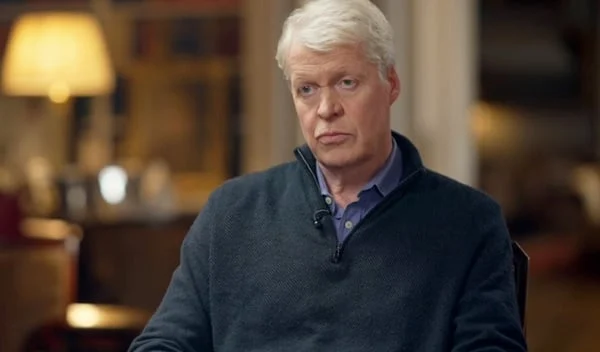
The recent disclosures by Charles Spencer, the 9th Earl Spencer and younger brother of the late Diana, Princess of Wales, have reignited long-standing debates regarding the internal dynamics of the British Royal Family during one of its most turbulent eras. Nearly three decades after the death of the Princess in 1997, Earl Spencer has provided fresh, controversial insights into the immediate aftermath of the tragedy, particularly focusing on his interactions with the man who is now King Charles III. These revelations, contained within his latest literary work, have sparked a significant media firestorm, pitting the personal recollections of a grieving brother against the guarded, institutional narrative of Buckingham Palace.
The core of the current controversy centers on the period surrounding the funeral of Diana, Princess of Wales. Earl Spencer alleges that, in the frantic days following the fatal car crash in Paris, he engaged in a heated telephone exchange with the then-Prince of Wales. According to Spencer, the conversation escalated into what he described as "overflowing anger" from the Prince, specifically regarding the involvement of young Princes William and Harry in the funeral procession. Spencer, who had famously promised in his eulogy to safeguard the two princes from the same pressures that plagued their mother, claims he advocated for their exclusion from the public glare of the walk to Westminster Abbey. He alleges that the response from the future monarch included a callous dismissal of Diana’s legacy, a charge that has been categorically denied by royal representatives.
The Chronology of Conflict: From Althorp to Westminster
To understand the weight of these claims, one must look at the historical timeline of the Spencer-Windsor relationship. The Spencer family, possessing a pedigree that rivals the House of Windsor, has historically maintained a complex proximity to the throne. Charles Spencer, born on May 20, 1964, grew up alongside his sister Diana at the Althorp Estate in West Northamptonshire. Their childhood was marked by the distinct privilege of the British aristocracy; their mother, Frances Shand Kydd, and father, John Spencer, provided an environment that was deeply rooted in the traditions of the British landed gentry.
The connection between the Spencers and the royals was solidified early on, with the late Queen Elizabeth II serving as Charles Spencer’s godmother. However, as Diana entered the royal fold in 1981, the tension between the public image of a fairytale marriage and the private reality of a crumbling union began to influence the Spencer family’s perception of the monarchy. The timeline of their disillusionment is punctuated by Diana’s explosive interviews in the 1990s, the eventual divorce in 1996, and the tragic conclusion in August 1997. It is within this final, traumatic chapter that Earl Spencer’s new claims reside, suggesting that the friction between his family and the Palace did not dissipate with the Princess’s death, but rather intensified in the immediate hours following the news.
The Anatomy of the Allegations and the Palace Response
The specific allegation that the then-Prince of Wales remarked, "we will soon forget her," serves as the primary catalyst for the current public discourse. Such a claim, if accepted as fact, would represent a profound breach of the expected decorum between a grieving sibling and the bereaved husband. In response, Buckingham Palace has adopted a strategy of firm refutation, albeit without engaging in a protracted public debate.
In a rare and pointed statement, representatives of the Royal Household hinted that the Earl’s account is colored by the "pain of fraternal grief," suggesting that the passage of time and the intensity of the trauma may have clouded his memory. This response, which Spencer has characterized as a form of "gaslighting," marks a departure from the traditional "never complain, never explain" mantra often attributed to the late Queen Elizabeth II. By accusing the King of manipulative rhetoric, the Earl has moved the conflict from the private sphere of family grievance to the public arena of psychological and political critique.
Fact-Based Analysis: The Sociopolitical Context
The implications of these revelations extend beyond a mere family dispute; they touch upon the evolving transparency of the modern monarchy. Historically, the British Royal Family has been insulated from the type of granular criticism that the Earl is now providing. However, the rise of "tell-all" memoirs and the shifting expectations of public figures have fundamentally altered the landscape.
From a sociological perspective, the tension between the Earl and the King represents a conflict between two modes of duty: the institutional duty of the Crown and the familial duty of the Spencers. The Earl’s background as a journalist—having served as a correspondent for NBC News—provides him with a unique set of skills to navigate the media landscape. His education at Eton College and Magdalen College, Oxford, instilled in him an analytical rigor that he has applied to his family history. When he writes about the royals, he does so not merely as an aggrieved brother, but as a chronicler of history who views his own family’s narrative as essential to the broader story of the United Kingdom.
The Role of Althorp and the Spencer Legacy
Althorp House, acquired by the Spencer family in 1508, remains a silent witness to these historical developments. As the ancestral seat, it serves as the physical manifestation of the Spencer family’s status. The estate, situated approximately 75 miles north of London, is where the late Princess was laid to rest, making it a site of pilgrimage for those who remain loyal to her memory. The fact that the Earl has chosen to speak out while maintaining his role as the custodian of this estate is significant. It underscores his perceived responsibility to preserve the "real" history of his sister, in opposition to what he perceives as the sanitized or distorted version offered by the royal institution.
The Broader Impact: Public Perception and the Monarchy
The public response to these claims has been deeply divided. Proponents of the Earl argue that his transparency is a necessary corrective to decades of carefully curated royal imagery. They contend that by highlighting the coldness he experienced from the royal center, he is humanizing the experience of those who have been marginalized by the monarchy’s rigid structures.
Conversely, critics and some royal commentators have questioned the timing and the motivation behind these disclosures. They argue that revisiting events from 1997, particularly through the lens of a new book, risks damaging the monarchy during a period of transition under King Charles III. There is also a concern regarding the impact of these claims on Princes William and Harry. The media, in its assessment, has noted that these revelations may be seen as a "dagger to the heart" of the two princes, who have spent their lives attempting to navigate the complexities of their mother’s legacy while maintaining their own roles within or outside of the royal family.
Evaluating the Institutional Tension
The tension between the Earl and the King is emblematic of a broader struggle within the British establishment. The monarchy, while theoretically a symbolic institution, is inherently political, and the influence of family figures such as the Spencers creates a competing narrative that the Palace must manage. The "gaslighting" claim, in particular, has resonated with modern audiences familiar with psychological terminology, turning a historical dispute into a contemporary social issue.
Statistically, while the monarchy continues to enjoy a majority of support within the United Kingdom, the demographic shifts among younger generations suggest that the institution is increasingly scrutinized for its transparency and internal conduct. The Earl’s willingness to challenge the monarch directly—a man who is both the head of state and the father of his nephews—reflects a decline in the deference once afforded to the Sovereign.
Conclusion: A Legacy Defined by Conflict
As the discourse continues, the narrative of the House of Windsor remains inextricably linked to the tragic events of 1997. Whether the Earl’s claims are viewed as a necessary truth-telling mission or as a persistent grievance, they serve as a reminder that the personal lives of royalty are rarely separated from their public functions. The rift between the Spencer family and the British monarchy is not merely a footnote in history; it is an ongoing narrative that continues to shape the public’s understanding of the King and the enduring shadow cast by the late Princess of Wales.
For the historian, the current situation offers a case study in the malleability of memory and the power of narrative. For the public, it remains a compelling, if uncomfortable, look behind the gilded curtains of an institution that is struggling to balance its ancient traditions with the modern, unrelenting demand for total transparency. As both parties continue to hold their positions, the legacy of the late Princess remains the contested ground upon which this modern drama is played out, ensuring that the questions raised by Earl Spencer will persist in the national consciousness for years to come.