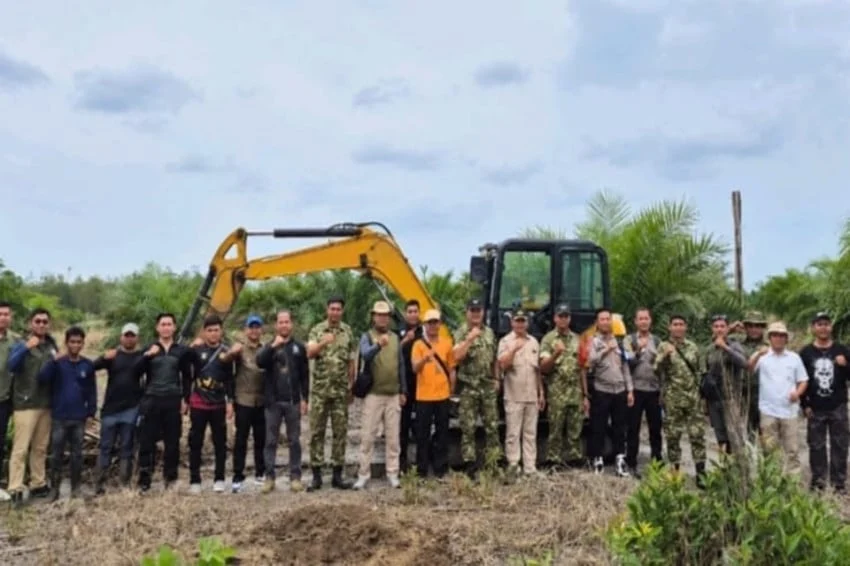
The Ministry of Forestry, acting in concert with a comprehensive multi-sectoral coalition comprising the Indonesian National Armed Forces (TNI), the Indonesian National Police (Polri), the Attorney General’s Office, regional government authorities, and local communities, has successfully executed a major enforcement operation to clear 88 hectares of illicit oil palm plantations situated within the ecologically sensitive boundaries of the Lamandau Wildlife Reserve in Central Kalimantan.
This decisive environmental enforcement action underscores the central government’s intensifying crackdown on unlawful land clearing, agricultural encroachment, and ecological degradation within protected forest areas and conservation zones across the archipelago. The operation targeted commercial agricultural activities that had been operating in direct violation of forestry laws and national conservation statutes, signaling a zero-tolerance policy toward environmental crimes that threaten Indonesia’s remaining biodiversity hotspots.
Comprehensive Multi-Agency Coordination and Execution
The complex field operation was spearheaded by the Ministry of Forestry’s Directorate General of Law Enforcement for Forestry—specifically operating through the Directorate of Forest Criminal Enforcement and the Kalimantan Regional Office for Forest Law Enforcement—alongside the Directorate General of Natural Resources and Ecosystem Conservation (KSDAE) via the Central Kalimantan Natural Resources Conservation Center (BKSDA).
Operational success on the ground relied heavily on robust inter-agency synergy. Key institutional stakeholders participating in the sweep included the Sukamara Regency Government, the Military District Command (Kodim) 1014/Pangkalan Bun, the Sukamara Regency Police Resort (Polres), the Sukamara State Prosecutor’s Office, the Sukamara-Lamandau Sustainable Forest Management Unit (KPHP), as well as active participation from the residents of Kartamulia Village and local indigenous customary leaders.
Deploying a coordinated strategy of physical dismantling and environmental restoration, the joint task force successfully eradicated 11,180 mature oil palm trees. Furthermore, the operation achieved critical compliance without major civil unrest, as 43 distinct parties who had previously laid claim to and exploited the protected conservation zone voluntarily agreed to cease all commercial and agricultural activities. Additionally, 28 functional working huts and temporary shelters erected within the reserve were independently dismantled by the unauthorized occupants themselves under the supervision of law enforcement personnel.
Chronology of the Lamandau Enforcement Case
The comprehensive sweep and subsequent dismantling of illegal plantations within the Lamandau Wildlife Reserve did not occur in a vacuum; rather, it represents the culmination of a rigorous investigative process initiated by forestry authorities.
The immediate catalyst for the enforcement action was the diligent follow-up investigation into a severe forest and land fire incident that occurred within the boundaries of the Lamandau Wildlife Reserve. The fire drew the attention of the Directorate of Forest Criminal Enforcement, prompting an immediate forensic probe into the root causes of the ecological disaster, which authorities quickly linked to agricultural clearing and land preparation activities.
During the intensive investigative phase, Civil Servant Investigators (PPNS) attached to the Ministry of Forestry summoned and examined 43 illegal cultivators and encroachers. Through methodical interrogation and evidence gathering, investigators established clear culpability regarding the unauthorized occupation and conversion of conservation land for commercial palm oil production. This evidentiary foundation paved the way for the coordinated inter-agency eviction and eradication operation.
Persuasive Diplomacy and Indigenous Engagement
A defining characteristic of the Lamandau Wildlife Reserve operation was the deliberate integration of persuasive dialogue and cultural diplomacy alongside conventional law enforcement measures. Recognizing the socioeconomic sensitivities and the importance of community relations, authorities actively engaged local residents and traditional stakeholders prior to and during the execution phase.
Central to this community-centric approach was the involvement of the Demung, a respected traditional leader within the local Dayak indigenous community. By fostering constructive dialogue between state authorities and indigenous community representatives, the operation successfully bridged potential gaps in understanding. This collaborative engagement fostered a shared awareness regarding the long-term ecological and legal consequences of unauthorized land usage. As a direct result of this respectful, communicative framework, the encroachers agreed to a voluntary cessation of their illegal farming operations, mitigating the risk of confrontation and establishing a cooperative precedent for future conservation enforcement efforts.
Broader National Context: The Push Against Environmental Crime
The raid in Central Kalimantan aligns with a broader, highly publicized national campaign aimed at reclaiming state forest areas from illegal exploitation. In recent years, the Indonesian government has elevated environmental governance to a top-tier national priority, targeting systemic violations involving mining operations and agricultural cartels operating without proper legal permits inside designated forest estates, conservation areas, and wildlife sanctuaries.
The Lamandau operation reflects the government’s ongoing strategic focus on enforcing regulatory compliance across the forestry and plantation sectors. Unregulated agricultural expansion has historically driven widespread deforestation, diminished carbon sequestration capacities, and exacerbated critical environmental hazards, most notably recurrent peatland and forest fires that generate severe transboundary haze and catastrophic biodiversity loss.
Ecological Significance of the Lamandau Wildlife Reserve
The Lamandau Wildlife Reserve holds exceptional ecological and conservation value for both Central Kalimantan and the Republic of Indonesia as a whole. Spanning vast expanses of lowland tropical forests, riverine habitats, and extensive peat swamp ecosystems, the reserve serves as an indispensable sanctuary for a wide array of endemic, rare, and endangered wildlife species.
Most notably, the Lamandau Wildlife Reserve is globally recognized as a premier release and rehabilitation site for the Bornean orangutan (Pongo pygmaeus), a critically endangered primate species whose survival is heavily dependent on the preservation of contiguous, undisturbed forest cover. Beyond orangutans, the sanctuary harbors diverse populations of proboscis monkeys, clouded leopards, false gavials (tomistoma), and hundreds of avifaunistic species.
The intrusion of commercial oil palm plantations into this fragile ecosystem poses an existential threat to its integrity. Agricultural encroachment fragments vital wildlife corridors, introduces agricultural chemical runoff into pristine river systems, degrades peat hydrology, and drastically increases vulnerability to catastrophic anthropogenic fires during prolonged dry seasons. Consequently, the reclamation of the 88 hectares of illegally occupied land is viewed by conservation biologists as a vital milestone in restoring ecological connectivity and protecting the sanctuary’s resident wildlife populations.
Socioeconomic Implications and Regulatory Compliance
The enforcement action in Sukamara Regency highlights the persistent tension between expanding commercial agricultural commodities, such as palm oil, and the strict enforcement of national spatial planning and conservation laws. While the palm oil sector remains a cornerstone of the national economy and a vital source of rural employment, the Indonesian government has increasingly drawn a hard line against operations that bypass legal frameworks, evade taxation, and violate environmental protection statutes.
By compelling unauthorized cultivators to abandon their holdings, authorities are sending a clear, deterrent signal to speculators and illegal land grabbers who seek short-term commercial gains at the expense of national ecological security. The voluntary dismantling of structures and the felling of thousands of oil palm trees demonstrate that federal and regional authorities possess the institutional resolve to enforce the rule of law within remote protected areas.
Future Outlook and Sustained Monitoring
Following the successful execution of the joint operation, officials from the Ministry of Forestry, the Central Kalimantan BKSDA, and regional law enforcement agencies have emphasized that monitoring and surveillance activities within the Lamandau Wildlife Reserve will be intensified.
Preventing the re-occupation of cleared lands remains a primary operational challenge for conservation managers. To ensure the permanent cessation of illegal activities, authorities plan to establish enhanced patrol routes, engage local communities as active stewards of the forest, and implement targeted ecosystem restoration programs. These restoration efforts will likely involve active reforestation initiatives to rehabilitate the damaged soil, restore native flora, and re-establish the ecological functions of the reclaimed acreage.
Ultimately, the collaborative operation in Central Kalimantan stands as a notable case study in modern Indonesian conservation management—demonstrating that effective environmental protection requires not only stringent legal enforcement and inter-agency unity, but also respectful engagement with local communities and traditional stakeholders to achieve sustainable, long-term ecological preservation.