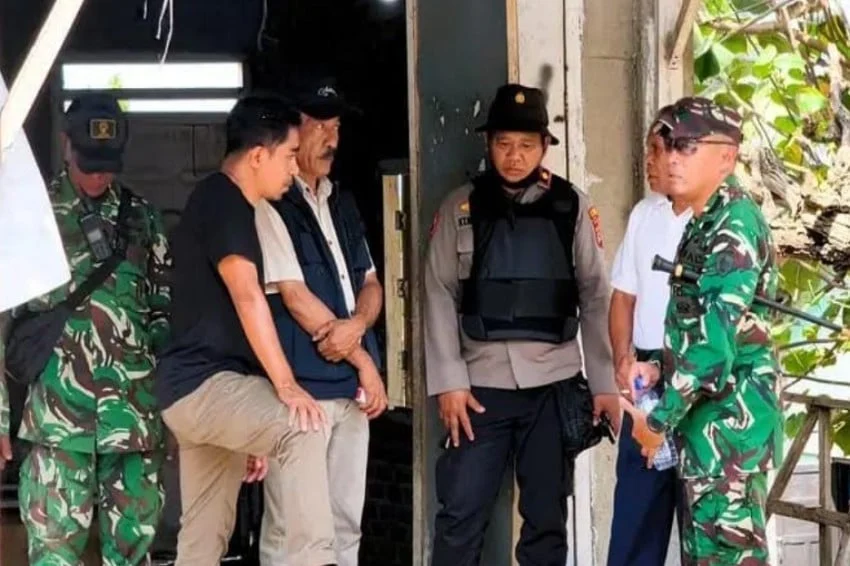
JAKARTA – In response to the escalating violence and loss of life in Adonara Timur District, Flores Timur Regency, East Nusa Tenggara (NTT), the Indonesian Minister of Human Rights, Natalius Pigai, has issued a directive for the NTT Regional Office of the Ministry of Human Rights, in conjunction with the Minister’s Special Staff, to prioritize a culturally sensitive approach in resolving the bloody clashes. This directive underscores the government’s commitment to addressing the conflict, which has resulted in significant casualties and material damage, emphasizing the need for a nuanced and community-centric resolution over purely law enforcement-based strategies.
The clashes, reportedly occurring between residents of two villages, have led to a tragic toll, with preliminary reports indicating at least three fatalities. Beyond the loss of life, numerous individuals sustained injuries, and dozens of homes were reduced to ashes, plunging the affected communities into a state of crisis and displacement. The gravity of the situation has prompted a direct intervention from the highest levels of the human rights ministry, signaling the government’s recognition of the deep-seated nature of the conflict and the imperative for a swift yet sustainable resolution.
Minister Pigai’s directive stems from a proactive stance, aiming to gain a comprehensive understanding of the post-conflict landscape and to identify the most effective steps for facilitating a peaceful resolution. This involves not only direct engagement but also a thorough assessment of the community’s needs and the underlying causes that fueled the violence. The findings from these on-the-ground observations are intended to serve as a crucial foundation for subsequent coordination efforts with local government authorities, customary leaders, religious figures, and all relevant stakeholders. This collaborative approach is envisioned as a means to foster trust, ensure accountability, and prevent the recurrence of such devastating events.
H2: The Grim Toll of Adonara Timur’s Conflict
The conflict in Adonara Timur has cast a dark shadow over the vibrant community, leaving a trail of destruction and profound grief. The initial reports paint a harrowing picture of escalating violence, culminating in a tragic loss of life. While specific details regarding the exact number of injured and the precise extent of property damage are still being meticulously compiled by authorities, the preliminary figures of three deceased and dozens of homes destroyed are indicative of the severity of the confrontations. This highlights a critical breakdown in community relations and the urgent need for intervention.
The socio-economic impact of such a conflict is multifaceted and long-lasting. Beyond the immediate trauma and grief experienced by the victims and their families, the destruction of homes signifies the loss of livelihoods, shelter, and the very fabric of community life. Families displaced by the violence face immense challenges in rebuilding their lives, often grappling with psychological distress, economic hardship, and the uncertainty of their future. The burning of homes not only represents a physical loss but also the destruction of memories, cultural heritage, and the sense of security that a home provides.
H2: A Call for Culturally Grounded Reconciliation
Minister Pigai’s assertion that a cultural approach is significantly more effective than a purely law enforcement-driven resolution is rooted in a deep understanding of Indonesia’s diverse societal structures and traditional conflict resolution mechanisms. He stated, "Based on our experience in handling cases in the region, we assess that an approach through cultural solutions is far more effective than the police." This statement is not merely a preference but a strategic recommendation informed by past experiences and a recognition that many inter-community disputes in Indonesia are deeply intertwined with customary laws, social norms, and ancestral traditions.
In many Indonesian communities, traditional leaders and elders hold significant authority and respect. Their involvement in mediating disputes can be far more impactful than external intervention, as they possess an intimate knowledge of the local context, the history of the conflict, and the cultural sensitivities involved. The "living mechanisms" of dispute resolution prevalent within these communities, such as customary councils or traditional arbitration processes, are often designed to achieve restorative justice rather than punitive outcomes, focusing on repairing relationships and restoring social harmony.
The Minister’s emphasis on cultural solutions suggests a belief that addressing the root causes of the conflict, which may include historical grievances, land disputes, or social inequalities, requires a process that respects and integrates the community’s own values and traditions. This approach aims to foster a sense of ownership over the resolution process, thereby increasing the likelihood of its long-term success and preventing future escalations. It acknowledges that while law enforcement plays a role in maintaining order, it may not always be sufficient in healing deep-seated community rifts.
H3: Background and Potential Triggers of the Adonara Timur Conflict
While the immediate reports focus on the tragic outcomes, understanding the background and potential triggers of the Adonara Timur conflict is crucial for a comprehensive analysis. Adonara Island, and Flores Timur in general, is characterized by a strong sense of community identity and a rich tapestry of cultural practices. Conflicts, when they arise, can often be traced back to historical land ownership disputes, competition over resources, or perceived affronts to community honor or customary law.
The specific context of a clash between two villages suggests a pre-existing dynamic that may have been exacerbated by a particular incident. This could range from a minor altercation that spiraled out of control due to underlying tensions, to a more deliberate act of aggression. Without specific details on the immediate catalyst, it is difficult to pinpoint the exact trigger. However, the involvement of multiple villages points to a potential network of alliances and rivalries that can quickly draw in larger segments of the population.
Historically, such conflicts in rural Indonesian settings have sometimes been linked to economic disparities, competition for arable land, or access to water resources. In some instances, traditional leadership structures themselves can become points of contention, with disputes over succession or authority contributing to wider community divisions. The presence of "adat" (customary law) plays a significant role in shaping social interactions and dispute resolution, and deviations from or perceived violations of these customs can often be potent triggers for conflict.
H2: The Government’s Multi-pronged Response Strategy
Minister Pigai’s directive signifies a strategic and comprehensive approach by the Ministry of Human Rights. The involvement of the Kanwil Kemenham NTT and the Minister’s Special Staff underscores the seriousness with which the government is treating this matter. Their immediate task is to gather accurate information, assess the immediate needs of the affected population, and lay the groundwork for a sustained peace-building effort.
The planned monitoring on the ground is not merely an observational exercise. It is intended to provide a holistic picture of the post-conflict environment, allowing for the identification of critical needs such as emergency shelter, food, medical assistance, and psychological support for those affected by the violence. Crucially, this monitoring will also aim to identify the underlying factors that contributed to the conflict, enabling the development of targeted interventions.
The subsequent coordination with local government, customary leaders, and religious figures is a cornerstone of the proposed strategy. This collaborative framework is essential for ensuring that any resolution is not only accepted by the community but also sustainable in the long term. By engaging these key figures, the government aims to leverage their influence and local knowledge to facilitate dialogue, build trust, and foster a sense of collective responsibility for peace.
H3: The Role of Customary Law and Community Leaders
The emphasis on cultural solutions directly points to the pivotal role of customary law and community leaders in resolving the Adonara Timur conflict. In many parts of Indonesia, customary law, or "hukum adat," provides a framework for social order and dispute resolution that predates and often coexists with formal legal systems. These customary practices are deeply embedded in the cultural identity of the communities and are often seen as the most legitimate and effective means of achieving reconciliation.
Customary leaders, such as village elders, traditional chiefs, or respected figures within the community, are typically entrusted with upholding these laws and mediating disputes. Their authority is often derived from their lineage, wisdom, and deep understanding of community values. Their involvement in the resolution process can lend significant weight to any proposed solutions, ensuring that they are perceived as fair and just by the community members.
The "living mechanisms" of dispute resolution mentioned by the Minister refer to these traditional processes. These might include community meetings, dialogues mediated by elders, or ceremonies designed to appease spirits or restore balance. These mechanisms often prioritize reconciliation, forgiveness, and the restoration of social harmony over punishment. By integrating these traditional approaches with government support, the Ministry of Human Rights aims to create a resolution that is both culturally appropriate and effective in preventing future violence.
H2: Broader Implications and the Path Forward
The resolution of the Adonara Timur conflict holds broader implications for inter-community relations and conflict management in Indonesia. The government’s explicit endorsement of a cultural approach signals a potential shift in how such disputes are addressed, acknowledging the limitations of purely legalistic or security-focused interventions. This approach, if successful, could serve as a model for resolving similar conflicts in other regions of the country, where cultural nuances and traditional governance structures play a significant role.
The ultimate goal, as articulated by Minister Pigai, is to restore normalcy and security for the affected communities. This involves not only addressing the immediate aftermath of the violence but also working towards long-term reconciliation and the prevention of future conflicts. This will likely entail ongoing dialogue, community empowerment initiatives, and efforts to address any underlying socio-economic factors that may have contributed to the tensions.
The success of this endeavor will depend on the effective collaboration between all stakeholders, including the government at various levels, local authorities, community leaders, and the affected residents themselves. The commitment to respecting human rights throughout the resolution process is paramount, ensuring that justice is served and that the dignity of all individuals is upheld. As the situation in Adonara Timur unfolds, the international community will also be observing how Indonesia navigates this complex challenge, with the hope that a peaceful and lasting resolution can be achieved, allowing the communities to rebuild and thrive once again. The Minister’s hopeful statement, "We hope the situation in Adonara will soon be conducive so that the community can return to its normal activities," encapsulates the aspirations of all involved.