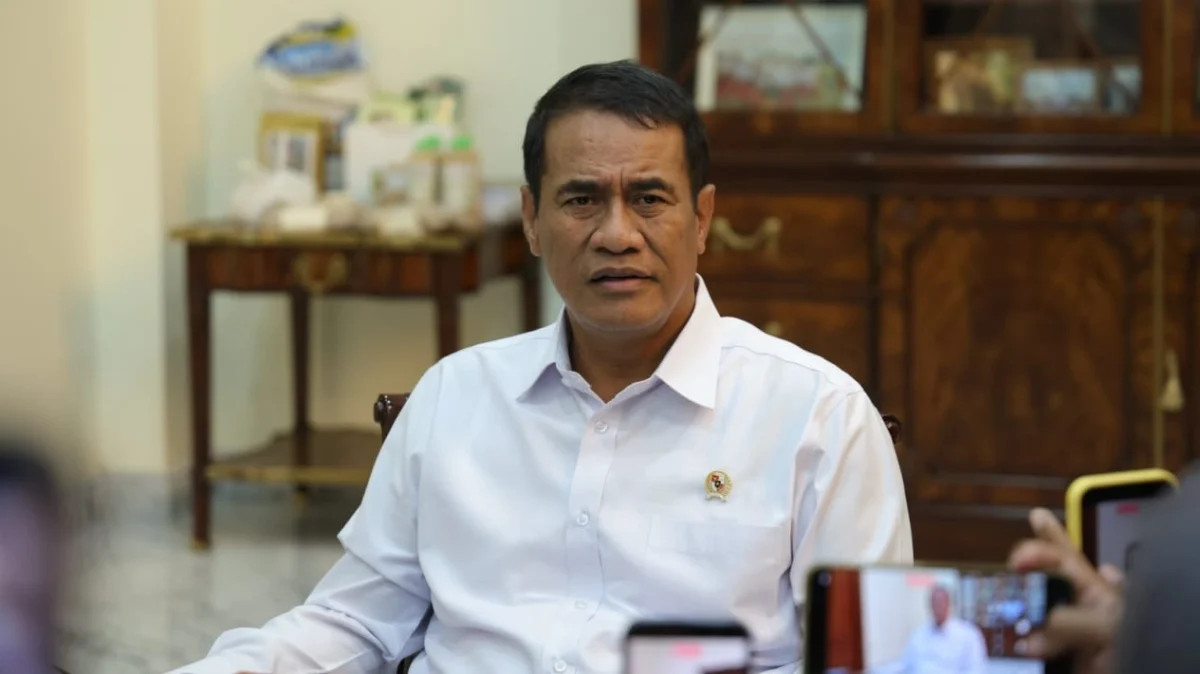
Jakarta — In a strategic push toward absolute national sovereignty over energy, food, and protein, the Indonesian government has unveiled an ambitious roadmap for nationwide bioethanol development. According to Minister of Agriculture Andi Amran Sulaiman, scaling up the domestic production of renewable biofuels could save Indonesia approximately Rp500 trillion in foreign exchange every year. This massive economic value, which historically has leaked overseas through the importation of fossil fuels and foreign-produced energy commodities, is projected to be redirected entirely into the domestic economy, directly empowering local farming communities across the archipelago.
The initiative marks a pivotal milestone in Indonesia’s ongoing structural transition from fossil fuel dependency to green, agriculture-based energy independence. By leveraging the country’s fertile landscapes and robust agricultural yields, the Ministry of Agriculture aims to transform rural economies while simultaneously stabilizing the national trade balance.
Strategic Commodities and Land Allocation
To bring this vision to fruition, the central government has outlined a multi-commodity strategy anchored by three primary agricultural mainstays: sugarcane, cassava, and maize (corn). These crops have been scientifically and economically vetted as the most viable, high-yield feedstocks for large-scale bioethanol refineries.
To support the massive supply chain required for industrial production, the government is preparing an expansive land consolidation initiative. Current planning targets the opening and utilization of 1 million to 2 million hectares of land dedicated exclusively to energy crops. Minister Amran emphasized that the administration will strategically prioritize available, unutilized tracts—including legally released forest areas and marginal lands—ensuring that the expansion of energy crops does not compromise or infringe upon existing national food production zones.
Collaborative Governance and Regional Buy-In
The realization of a multi-trillion-rupiah bioethanol ecosystem requires synchronized cross-sectoral coordination. The Ministry of Agriculture is spearheading a collaborative framework bridging the central government, regional administrations, State-Owned Enterprises (SOEs or BUMN), and the private sector.

The momentum behind this collaborative governance was prominently on display during a high-level early consolidation meeting in Jakarta. Demonstrating strong regional commitment to the national agenda, 44 district heads (bupatis) attended the strategic briefing, immediately pledging their support. These regional leaders have committed to mapping out local potentials, securing suitable land banks, and tailoring regional agricultural outputs to feed the burgeoning bioethanol processing plants.
Incentivizing Private and State Investment
Financing a project of this magnitude demands a robust public-private partnership (PPP) model. The government has structured an attractive investment scheme designed to mitigate financial risks for industrial players while accelerating infrastructural deployment.
Under the proposed financial framework, approximately 30 percent of the total capital expenditure will be funneled through State-Owned Enterprises (BUMN), with the remaining 70 percent driven by private sector investments. Minister Amran expressed strong confidence in the private sector’s eagerness to participate, noting that the government’s proactive approach to securing and clearing land permissions removes the primary bureaucratic bottleneck that typically plagues large industrial investments.
"The private sector will certainly come in droves because the land is prepared directly by the state," Amran stated, highlighting the seamless synergy between state-guaranteed resource access and private capital execution.
Chronology and the Early-Morning Policy Sessions
The acceleration of the bioethanol roadmap has been characterized by an intense, fast-paced administrative rhythm within the Ministry of Agriculture. Demonstrating the administration’s urgency, key policy sessions have frequently commenced at dawn. Notably, a high-profile coordination meeting involving cabinet members—including Minister of State Secretariat (Mensesneg)—convened sharply at 06:00 WIB.
Reflecting on the early hour, the Mensesneg remarked that it was the earliest formal ministerial meeting he had ever attended, underscoring the extraordinary urgency and high priority assigned by the administration to the nation’s energy security agenda. This rigorous schedule reflects a broader operational shift within the Ministry of Agriculture, where dawn briefings have become standard procedure to fast-track strategic national programs.

Completing the Trifecta: Food, Protein, and Energy
Minister Amran framed the bioethanol initiative as the final and most complex pillar in a three-part national sovereignty strategy. According to the Ministry’s overarching developmental timeline, the nation has already achieved substantial milestones in reinforcing food security and domestic protein availability. With those primary foundations firmly secured, the focus has now shifted aggressively toward securing national energy sovereignty through agricultural biotechnology.
"The essence is how we achieve sovereignty in energy, food, and protein. God willing, Indonesia will emerge as a great nation, a superpower in the future. Now, food is finished, protein is already finished. Now, we are chasing ethanol," Amran concluded.
Macroeconomic Implications and Fact-Based Analysis
The macro-level implications of Indonesia’s pivot toward bioethanol extend across multiple economic and environmental dimensions:
- Foreign Exchange Preservation: Indonesia has historically remained a net importer of petroleum products, placing continuous pressure on the rupiah and foreign exchange reserves. Diverting Rp500 trillion annually into the domestic economy creates a powerful multiplier effect, boosting rural purchasing power and driving localized GDP growth.
- Agricultural Sector Transformation: Transitioning from traditional food-only farming to dual-purpose (food and energy) agriculture introduces high-value industrial integration for smallholder farmers cultivating sugarcane, cassava, and corn. Guaranteed industrial off-take agreements are expected to protect farmers from price volatility.
- Environmental and Climate Commitments: Scaling up domestic biofuel production aligns directly with Indonesia’s international commitments to reduce greenhouse gas emissions. By replacing fossil fuel components in transportation fuels with agricultural bioethanol, the country significantly lowers its carbon intensity footprint.
- Regional Economic Equality: Because the bioethanol supply chain is fundamentally rural-based—spanning feedstock cultivation, harvesting, processing, and localized refining—the economic gains will decentralize wealth away from major urban centers toward regional regencies.
As the Ministry of Agriculture, regional governments, BUMNs, and private investors finalize land mapping and capital allocation structures, the national bioethanol roadmap stands as one of Indonesia’s most ambitious industrial and agricultural transformations of the decade. The coming months will test the execution capacity of the multi-stakeholder coalition as physical infrastructure development begins to take shape across the designated million-hectare zones.