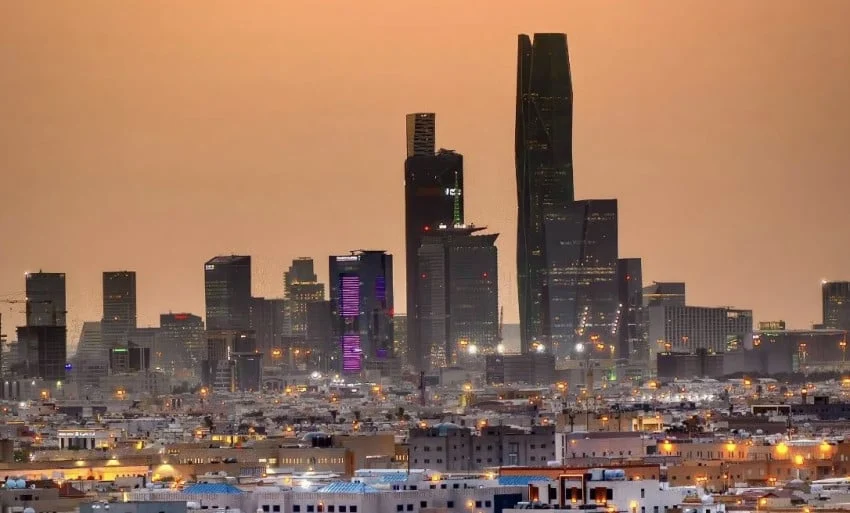
The geopolitical landscape of the Middle East experienced a sharp and alarming escalation as Yemen’s Houthi movement launched a coordinated barrage of ballistic missiles and explosive-laden drones targeting critical infrastructure across the Kingdom of Saudi Arabia. The attacks, which struck several sensitive locations including the heavily defended capital city of Riyadh, represent a significant resurgence of hostilities in a conflict that has plagued the region for over a decade. Eyewitness accounts, official military statements, and local reports confirmed that the assaults caused localized panic, disrupted international aviation, and reignited deep-seated concerns regarding the vulnerability of vital energy and transportation hubs in the Gulf.
According to statements broadcast by the Houthi-run media and confirmed by regional monitors, the weekend offensive was meticulously planned to strike deep within Saudi territory. Plumes of thick, black smoke were seen billowing near the vicinity of the King Khalid International Airport in Riyadh, prompting immediate aviation disruptions. Flights arriving at and departing from the major transportation nexus faced significant delays and, in several instances, outright cancellations as aviation authorities scrambled to secure airspace and safeguard passengers. The strikes extended far beyond the capital, highlighting the growing sophistication and extended range of the munitions utilized by the Yemeni insurgent group.
Chronology of the Escalation
The weekend offensive did not occur in a vacuum; rather, it represents the culmination of weeks of escalating friction that eroded a fragile, UN-brokered truce that had largely held since April 2022. While formal large-scale combat operations had decreased significantly over the preceding two years, underlying political settlements remained elusive.
In the days preceding the latest missile and drone barrage, intelligence and regional defense monitors noted an uptick in skirmishes along the Saudi-Yemeni border, coupled with renewed airstrikes by the Arab coalition operating in Yemen. The Houthis framed their weekend operation as a direct, retaliatory response to what they termed "continued aggression and airstrikes" executed by the Saudi-led coalition against various provinces inside Yemen.
By Saturday morning, air raid sirens wailed across multiple Saudi cities. Houthi military spokesman Yahya Saree appeared on Al-Masirah television to claim full responsibility for the multi-pronged assault. Saree detailed that the operation utilized a combination of ballistic missiles and loitering munitions designed to overwhelm traditional air defense radar and interception batteries. In addition to the capital, the spokesman explicitly highlighted attacks directed at facilities belonging to Saudi Aramco, the world’s largest state-owned oil and hydrocarbon enterprise, located in the Red Sea port city of Yanbu.
Saudi Defensive Measures and Damage Assessment
The Royal Saudi Air Defense Forces swiftly activated their Patriot and advanced anti-missile defense systems to counter the incoming projectile threat. Military officials in Riyadh stated that the majority of the incoming airborne threats were successfully intercepted and neutralized before reaching their intended coordinates. Debris from intercepted missiles and drones, however, fell in unpopulated sectors and near critical infrastructure zones, causing minor property damage and igniting localized fires that emergency civil defense crews swiftly brought under control.
Despite the successful interception rate, the psychological and economic ripples of the attack were immediate. The proximity of explosions to international aviation corridors forced air traffic controllers to reroute numerous commercial flights, underscoring the ongoing hazards posed by asymmetric warfare to global civil aviation. Furthermore, the explicit targeting of Saudi Aramco facilities in Yanbu—a crucial economic artery on the western coast housing refineries, petrochemical plants, and export terminals—sent immediate jitters through international energy markets, though physical damage to oil production capacity was officially reported as minimal or nonexistent.
Historical Background of the Conflict
To fully understand the gravity of the recent Houthi offensive, one must examine the protracted historical trajectory of the Yemeni civil war. The conflict metastasized in late 2014 and early 2015 when the Houthi movement, formally known as Ansar Allah, ousted the internationally recognized government of President Abdrabbuh Mansur Hadi from the capital city of Sanaa. Fearing the establishment of a hostile, Iran-aligned regime directly on its southern border, Saudi Arabia formed a coalition of regional states in March 2015 and launched military intervention under the banner of Operation Decisive Storm.
Over the subsequent decade, the war evolved into a devastating humanitarian and geopolitical crisis. The fighting devastated Yemen’s domestic infrastructure, triggered widespread famine, and displaced millions of civilians. Concurrently, the Houthis expanded their military capabilities, transitioning from a localized guerrilla force into a formidable military organization equipped with advanced unmanned aerial vehicles, cruise missiles, and ballistic systems capable of projecting power hundreds of kilometers beyond their borders into Saudi and Emirati territory.
Geopolitical Implications and Regional Reactions
The latest escalation carries profound implications for regional stability, international trade, and diplomatic peace initiatives. For Riyadh, the attacks underscore the immense difficulty of achieving absolute security in an era of asymmetric warfare, where non-state actors can acquire low-cost, high-impact drone and missile technologies capable of challenging state-of-the-art defense shields.
International reactions were swift and condemning. Western allies, including the United States and European Union member states, reiterated their firm commitment to the security and territorial integrity of Saudi Arabia, condemning the cross-border strikes as reckless violations of international law that threaten civilian lives and jeopardize ongoing diplomatic efforts to forge a permanent political settlement in Yemen.
Concurrently, diplomatic analysts point out that these attacks complicate delicate backchannel negotiations between Riyadh and Sanaa. Saudi Arabia had previously invested heavily in direct talks with Houthi representatives, mediated by the Sultanate of Oman, in a bid to secure a credible exit strategy from the protracted military entanglement in Yemen. The resumption of high-profile missile strikes threatens to derail these diplomatic tracks, potentially plunging the region back into a state of open, unmitigated warfare.
Fact-Based Analysis of Economic and Security Fallout
From an economic perspective, the targeting of Yanbu and other sensitive nodes serves as a strategic lever for the Houthi movement to exert pressure on global powers and regional adversaries. Energy markets remain acutely sensitive to any disruption or perceived threat to Saudi petroleum infrastructure, given the Kingdom’s role as a foundational pillar of global energy security and crude oil supply stability. While the immediate market reaction was muted due to the prompt neutralization of the threats by Saudi air defenses, persistent cross-border volatility introduces a permanent risk premium into international oil pricing.
On the security front, military tacticians emphasize that the ongoing proliferation of cruise missiles and long-range drones necessitates a fundamental evolution in integrated air defense architectures. Traditional missile defense batteries, while highly effective against ballistic trajectories, face complex economic and operational challenges when forced to expend multimillion-dollar interceptors against low-cost, mass-produced aerial drones. This cost-asymmetry remains a central challenge for defense planners across the Gulf Cooperation Council (GCC) region.
As the dust settles from the weekend barrage, the immediate focus remains on maintaining heightened security readiness across Saudi airspace and critical industrial sites. However, long-term stability in the Arabian Peninsula will ultimately depend not merely on military deterrence and successful interceptions, but on the revitalization of comprehensive political negotiations capable of addressing the root causes of the Yemeni conflict and establishing a sustainable framework for regional peace.