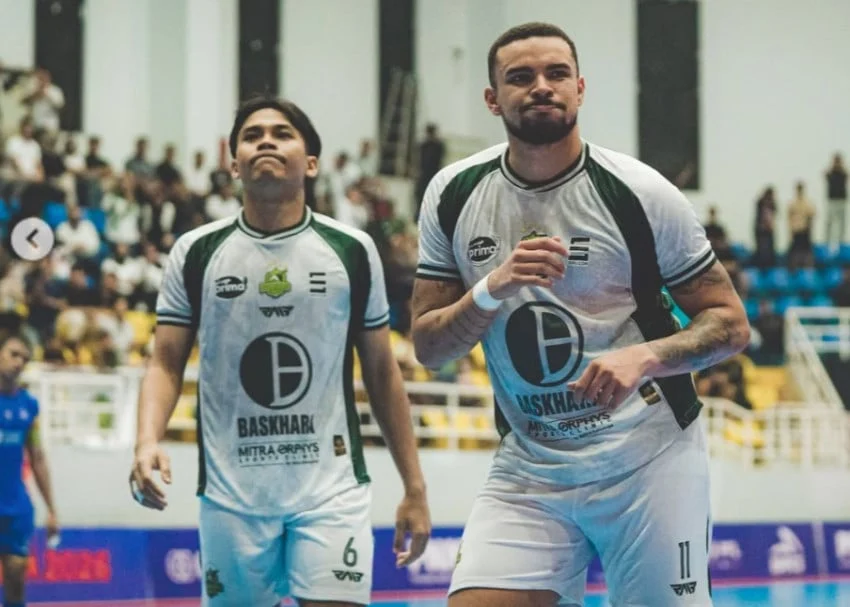
The landscape of Indonesian professional futsal underwent a significant shift this past Sunday, September 20, 2026, as Bintang Timur Surabaya (BTS) secured the prestigious Super Cup 2026 trophy. In a high-stakes encounter held at the GOR POPKI arena in Jakarta, the Surabaya-based powerhouse overcame a resilient Unggul FC Malang side, eventually prevailing in a dramatic penalty shootout that concluded with a 5-4 scoreline following a 3-3 deadlock that persisted through regulation and extra time. This victory marks a pivotal moment in the 2026 futsal calendar, underscoring the tactical evolution and growing competitiveness within the national league structure.
A Tactical Battle of Attrition
The Super Cup, traditionally positioned as the season-opening or mid-season curtain-raiser between the elite finishers of the previous competitive cycle, served as a litmus test for both clubs. From the opening whistle, the match was characterized by a high-pressing defensive philosophy from both sides. Unggul FC Malang, entering the fixture with a reputation for organized, counter-attacking efficiency, sought to disrupt the fluid passing lanes that typically define Bintang Timur Surabaya’s offensive schemes.
The deadlock was broken in the first half when Ardian Kaspari capitalized on a lapse in the Bintang Timur defensive transition. Kaspari’s clinical finish silenced the vocal Surabaya contingent in the stands and forced Bintang Timur to adopt a more aggressive, high-line defensive posture. For the remainder of the first half, Bintang Timur struggled to penetrate the compact defensive block established by Unggul FC, heading into the halftime break trailing 0-1.
The Momentum Shift and Tactical Realignment
The second half began with an immediate surge of intensity. Unggul FC, aiming to double their advantage and effectively kill the match, sustained pressure in the middle third of the court. Their efforts were rewarded when Achmad Vicky intercepted a loose pass and navigated through the defensive line to slot the ball home, extending the lead to 2-0. At this juncture, the statistical probability of a Bintang Timur comeback appeared slim, as Unggul FC’s defensive structure remained largely uncompromised.
However, the nature of top-tier futsal is defined by rapid momentum shifts. Bintang Timur Surabaya’s coaching staff opted for a tactical pivot, introducing a power-play dynamic that stretched the Unggul FC defense. The breakthrough arrived via Allan Guilherme, whose individual brilliance in tight spaces reduced the deficit. Shortly thereafter, the equalizer was secured by Edison Machado, who capitalized on a second-phase set piece to level the score at 2-2.
The ensuing minutes of regulation time saw both teams exchange high-quality chances, but the score remained deadlocked as the match transitioned into extra time. Throughout the additional periods, the physical toll of the encounter became evident, yet both teams maintained their discipline, leading to the decisive penalty shootout.
Chronology of the 2026 Super Cup Final
The timeline of the match illustrates the volatile nature of the contest:
- 0-10 Minute Mark: Initial cagey exchanges; both teams testing defensive reactions.
- 14th Minute: Ardian Kaspari (Unggul FC) scores the opening goal.
- 20th Minute: Halftime; Unggul FC leads 1-0.
- 26th Minute: Achmad Vicky (Unggul FC) extends the lead to 2-0.
- 32nd Minute: Allan Guilherme (Bintang Timur) scores to narrow the margin to 2-1.
- 37th Minute: Edison Machado (Bintang Timur) completes the comeback, leveling the score at 2-2.
- 40th Minute: Regulation ends; match proceeds to extra time.
- Extra Time: Both teams score one goal apiece, ending the period 3-3.
- Penalty Shootout: Bintang Timur Surabaya triumphs 5-4.
Statistical Context and Performance Metrics
The 2026 Super Cup final was not merely a display of individual talent but a reflection of the rigorous training regimes currently employed by Indonesia’s top futsal clubs. Data from the match indicates that Bintang Timur Surabaya held a marginal edge in ball possession, clocking in at 54% compared to Unggul FC’s 46%. However, Unggul FC demonstrated superior efficiency in transition, with a 68% successful passing rate in the final third during the first half.
Bintang Timur’s ability to recover from a two-goal deficit is a testament to their psychological resilience—a metric that has become increasingly important in the modern era of the sport. The inclusion of international-level imports like Allan Guilherme and Edison Machado provided the necessary tactical versatility that allowed Bintang Timur to dismantle the organized low-block defense utilized by Unggul FC.
Perspectives from the Technical Bench
While formal post-match press conferences are still being processed, representatives from both camps emphasized the significance of the event. A spokesperson for Bintang Timur Surabaya noted, "The resilience shown by our players after falling two goals behind proves that our tactical system is built to withstand extreme pressure. Winning the Super Cup is a significant milestone, but it serves as a foundation for our upcoming league campaign."
Conversely, the Unggul FC management praised the grit of their squad, acknowledging that while the result was disappointing, the performance against a top-tier side like Bintang Timur indicates that Unggul FC is firmly established as a championship contender. "We controlled the tempo for large segments of the game," the team’s lead analyst mentioned. "The shootout is always a lottery, but our tactical execution throughout the regulation time was exactly what we had planned."
Broader Implications for Indonesian Futsal
The success of the 2026 Super Cup in Jakarta serves as a barometer for the health of the professional futsal industry in Indonesia. The high attendance at GOR POPKI and the viewership numbers recorded across broadcasting platforms suggest that the sport is experiencing a period of sustained growth.
Professionalization of the League
The intensity of the final suggests that the gap between the top-seeded teams and the rest of the league is narrowing. This parity is crucial for the long-term commercial viability of the Indonesian Futsal League. As clubs invest more in foreign technical expertise and localized scouting, the level of play has reached a standard that is increasingly competitive on the Southeast Asian stage.
Tactical Evolution
The use of the power-play and the focus on specialized set-piece routines during this final mirror global trends in futsal. Coaches in Indonesia are moving away from traditional, rigid formations toward more fluid, position-less systems that prioritize spatial awareness and rapid transition. This shift is expected to benefit the national team, providing a deeper pool of talent accustomed to high-tempo, tactical matches.
Economic and Fan Engagement
The Super Cup acts as a key marketing vehicle for the sport. By hosting high-profile clashes in central hubs like Jakarta, the governing bodies are effectively engaging a broader demographic of fans. The commercial interest from sponsors, who are increasingly viewing futsal as a premium sporting asset, is expected to increase following the visibility of such a high-quality final.
Looking Ahead
For Bintang Timur Surabaya, the Super Cup victory provides an immediate morale boost as they turn their attention to the upcoming national league season. The squad has demonstrated that they can handle the burden of expectation and the challenge of coming from behind in high-pressure situations. For Unggul FC, the result provides a clear set of objectives for improvement, specifically regarding game management and closing out matches when in a commanding lead.
As the 2026 season progresses, the rivalry between these two clubs is expected to define the competitive landscape. With both teams showing advanced tactical literacy and the ability to perform under the lights of GOR POPKI, the trajectory for Indonesian futsal remains firmly upward. The Super Cup 2026 will be remembered not just for the final penalty kick, but as the moment when the strategic ceiling of the local game was demonstrably raised.
As teams return to their respective training bases, the lessons learned in Jakarta—the necessity of tactical flexibility, the importance of physical conditioning, and the mental fortitude required to endure in a stalemate—will undoubtedly shape the preparations for the remainder of the year. The 2026 Super Cup has officially set the standard, and the rest of the league is now tasked with meeting the bar established by Bintang Timur Surabaya.