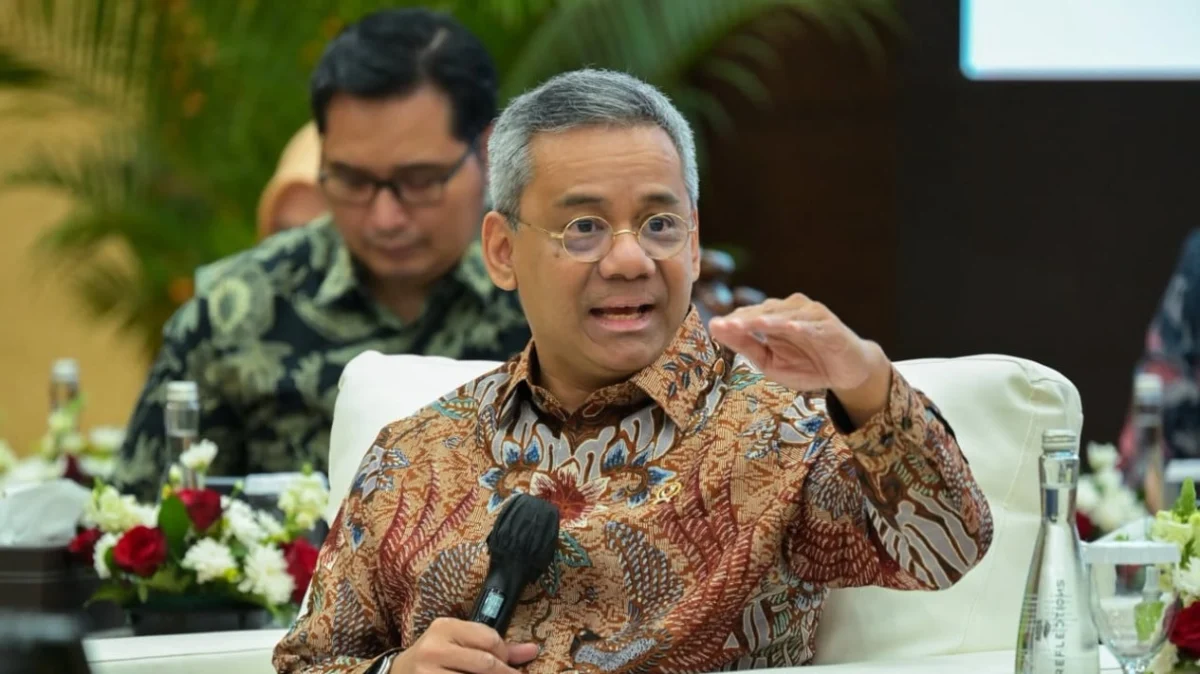
Jakarta, Indonesia — The government of Indonesia has officially announced the complete settlement of sovereign debt instruments issued to handle the massive Bantuan Likuiditas Bank Indonesia (BLBI) or Bank Indonesia Liquidity Assistance crisis stemming from the 1997–1998 Asian Financial Crisis. The announcement was made by Minister of Finance Suahasil Nazara, marking a monumental milestone in the country’s modern fiscal history and debt management strategy.
According to the Ministry of Finance, the remaining obligations linked to the historic financial rescue package were fully paid off in August 2026. The landmark achievement closes a decades-long chapter of structural economic recovery that began during one of the most turbulent periods in the nation’s modern political and economic existence.
The successful liquidation of these legacy sovereign bonds highlights a significant leap in Indonesia’s fiscal independence, prudent macroeconomic management, and long-term structural resilience. By utilizing internal financial mechanisms and capitalizing on central bank performance, the government has permanently detached contemporary state budgets from the lingering burdens of the late-20th-century banking collapse.
Leveraging Bank Indonesia’s Financial Surplus for State Obligations
The final settlement of the BLBI-related debt was executed using financial surplus allocations from Bank Indonesia (BI), the country’s central bank. These funds were officially transferred and deposited into the State Treasury in accordance with prevailing financial regulations and governance frameworks.
Speaking through an official broadcast on the Ministry of Finance’s official YouTube channel, Minister Suahasil Nazara detailed how the mechanism was actualized following comprehensive annual audits. Based on the financial audit of BI’s 2025 books, the central bank recorded a substantial surplus, a portion of which was channeled to the state under the classification of Revenue from State-Owned Property under Separate Management (Kekayaan Negara yang Dipisahkan – KND).
"Now, the government debt instruments issued in the framework of handling the 1997–1998 crisis were successfully completed by us in August. This is also an achievement for us," Suahasil stated in Jakarta.
The Ministry of Finance confirmed that it received a total of Rp58 trillion from the KND allocation. True to its intended designation, these proceeds were immediately deployed to address sovereign debt liabilities, specifically targeting the vintage state securities that originated from the emergency interventions deployed nearly three decades ago.
This latest financial maneuver follows earlier strategic debt retirements. Most notably, the government completed the payment obligations for recapitalization bonds—commonly known as obligasi rekap—back in July 2020.

"There were several types of bonds that we issued at that time during the 1997–1998 crisis. Well, some were paid off in July 2020, and some were paid off last August," Suahasil added, emphasizing the phased yet persistent approach the government has taken to clean up legacy sovereign liabilities.
Historical Context: The Anatomy of the 1997–1998 BLBI Crisis
To fully grasp the magnitude of the August 2026 debt clearance, one must look back at the unprecedented socioeconomic shockwaves that struck Indonesia in 1997 and 1998. The Asian Financial Crisis, which began with the devaluation of the Thai baht, rapidly cascaded across Southeast Asia, hitting Indonesia with devastating severity.
At the time, the Indonesian rupiah experienced a historic freefall against the US dollar, wiping out corporate balance sheets and triggering massive capital flight. Commercial banks across the country faced severe liquidity crunches as panic-stricken depositors rushed to withdraw their funds en masse.
To prevent a total systemic collapse of the national banking sector, Bank Indonesia—acting under government instruction and international financial directives—extended emergency liquidity assistance loans, known widely as BLBI, to dozens of commercial banks experiencing severe capital inadequacy.
When the dust settled, the total cost of the BLBI rescue operations ran into hundreds of trillions of rupiah. Because the central bank could not absorb the massive fiscal deficit on its own without triggering hyperinflation, the central government stepped in. The Ministry of Finance issued massive volumes of sovereign bonds and recapitalization bonds to substitute the liquidity injections and restore the capital adequacy ratios of distressed, merged, or nationalized banks.
These bonds effectively saddled the Indonesian state with a long-term structural debt burden. For nearly thirty years, successive administrations have had to budget interest payments and principal redemptions for these legacy instruments, diverting precious fiscal space away from modern infrastructure development, education, and social welfare programs.
Chronology of Recovery and Asset Recovery Efforts
The path from the initial issuance of BLBI bonds to their total extinguishment in August 2026 has been long, winding, and politically fraught. The resolution process involved multiple fronts, combining fiscal buybacks with aggressive legal and asset-recovery initiatives.
Following the immediate stabilization phase in the early 2000s, the Indonesian government established specialized task forces to hunt down obligors and debtors who had misused the original BLBI funds. Assets ranging from vast tracts of land, commercial buildings, and corporate shares to cash holdings were systematically seized, liquidated, or restructured over the decades to recover state losses.
Simultaneously, the Ministry of Finance engineered a series of liability management strategies. As Indonesia’s macroeconomic indicators improved—characterized by stable GDP growth, controlled inflation, and deepening domestic capital markets—the government began proactively retiring expensive legacy debt.

The milestones in this timeline include:
- 1997–1998: The onset of the Asian Financial Crisis, leading to widespread bank runs and the initiation of BLBI emergency funding.
- Late 1990s to Early 2000s: Issuance of massive recapitalization bonds and sovereign debt instruments to absorb banking sector losses and stabilize the financial architecture.
- July 2020: A major psychological and fiscal milestone in which the government successfully retired a major category of the 1997–1998 recapitalization bonds.
- 2025–2026: Bank Indonesia records a strong financial surplus during the 2025 audited book year, yielding significant dividends to the state budget via KND mechanisms.
- August 2026: The Ministry of Finance officially completes the final payout using the Rp58 trillion KND allocation, extinguishing the last remaining vintage crisis bonds.
Economic Implications and Fiscal Space Expansion
The complete clearance of the 1997–1998 BLBI sovereign debt carries profound structural implications for Indonesia’s macroeconomic outlook and fiscal maneuverability. Financial analysts and economists have widely praised the move as a symbolic and practical turning point.
First, it eliminates historical debt servicing costs. Although a significant portion of the original bonds had already been restructured or retired over the years, the final elimination means that the state budget is entirely free from the compounding interest and principal payments tied to the late-20th-century banking rescue. This frees up hundreds of billions—if not trillions—of rupiah annually that can be redirected toward high-priority national expenditures.
Second, the successful payoff enhances Indonesia’s sovereign credit profile. Rating agencies and international financial institutions closely monitor how developing nations manage their legacy debts. Demonstrating the capacity to systematically absorb and extinguish decades-old crises liabilities reinforces confidence in Indonesia’s fiscal discipline, debt-to-GDP ratio management, and adherence to prudent macroeconomic guardrails (such as the statutory fiscal deficit ceiling of 3% of GDP).
Third, the utilization of BI’s surplus highlights effective institutional coordination between the fiscal authority (Ministry of Finance) and the monetary authority (Bank Indonesia). By channeling central bank profitability into structural debt reduction rather than speculative spending, the state ensures that windfalls from monetary operations translate directly into long-term balance sheet strengthening.
Broader Public and Stakeholder Reactions
The announcement has resonated across various sectors of Indonesian society, drawing positive commentary from economists, industry players, and labor organizations alike. As the country navigates complex global economic headwinds—including fluctuating commodity prices, geopolitical tensions, and tightening global liquidity—having a clean historical balance sheet provides a vital buffer.
Stakeholders across manufacturing, labor federations, and fiscal policy watchdogs have pointed out that a healthier fiscal space allows the government greater flexibility in balancing fiscal consolidation with targeted subsidies, industrial modernization, and worker protection programs. While immediate economic challenges persist, such as maintaining industrial competitiveness and safeguarding employment in labor-intensive sectors, the removal of the BLBI debt overhang removes a major psychological and financial anchor from the national ledger.
As Minister Suahasil Nazara emphasized, closing the book on the 1997–1998 crisis is a testament to national resilience. What began as an existential threat to the nation’s financial sovereignty nearly thirty years ago has now been formally resolved, paving the way for a more agile, confident, and financially independent Indonesia on the global stage.