The search and rescue operation for five journalists and three boat crew members who went missing in the waters of the Sunda Strait experienced a brief logistical pause on Sunday, September 13, 2026. The temporary absence of two key Indonesian Navy (TNI AL) vessels, KRI Leuser and KAL Pohawang, marked the sixth day of an intensive multi-agency search effort following the tragic disappearance of the media crew while covering the volcanic eruption of Mount Anak Krakatau in Pandeglang Regency, Banten.
Despite public concern regarding the temporary disappearance of the naval vessels from the operational grid, military officials quickly clarified that the ships were merely undergoing standard logistical replenishment. Commander of the Banten Naval Base (Danlanal), Lieutenant Colonel (Navy) Wawan Subagyo Mardani, assured the public and the families of the missing individuals that both assets remain fully committed to the mission. The vessels are scheduled to resume their search grids at first light on Monday, September 14, 2026, fully resupplied with fuel and provisions.
The disappearance of the journalists and crew has gripped the nation, casting a harsh spotlight on the inherent dangers faced by frontline media workers covering natural disasters, and prompting a massive, coordinated response from government agencies, military branches, and local administrations.
Chronology of the Sunda Strait Incident
The unfolding crisis began during a period of heightened volcanic activity at Mount Anak Krakatau, one of Indonesia’s most volatile and closely monitored geological formations. Situated in the Sunda Strait between the islands of Java and Sumatra, the volcano has been prone to sudden eruptions, generating localized ash columns, pyroclastic flows, and potential maritime hazards including submarine landslides and tsunamis.
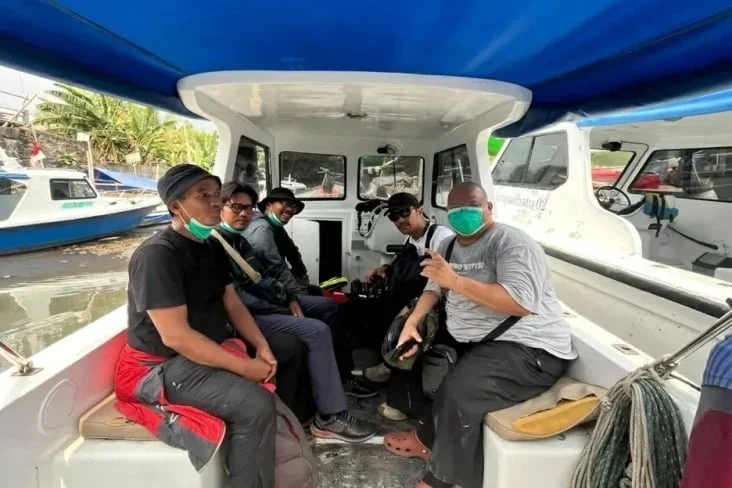
On the fateful day of the incident, a chartered vessel carrying a team of five journalists and three dedicated boat crew members ventured into the perilous waters surrounding the active crater. Their mission was to capture real-time coverage of the eruption, documenting the geological phenomenon for the public. However, as weather conditions deteriorated and volcanic activity intensified, communication with the vessel was abruptly lost.
As hours turned into days without contact, emergency protocols were activated. The initial hours focused on establishing last-known coordinates, tracking radar signatures, and deploying local search and rescue (SAR) teams. By the second day, the operation had scaled significantly into a joint task force involving the National Search and Rescue Agency (Basarnas), the Indonesian Navy, the Water Police (Polairud), local fishermen, and volunteer organizations.
Day Six Operational Status: Logistics Over Withdrawal
Addressing members of the press at the Carita SAR Post on Sunday, September 13, 2026, Lieutenant Colonel Wawan Subagyo Mardani provided a detailed breakdown of the day’s maritime deployment, directly addressing the absence of KRI Leuser and KAL Pohawang from the active search zones.
"Sama seperti dengan dua aset dari TNI Angkatan Laut, yakni KRI Leuser dengan KAL Pohawang. Pada hari ini mereka sedang melaksanakan refuel dan pengisian untuk bekal bahan makanan," Wawan stated during the briefing, explaining that the high-tempo operations over the preceding five days had depleted the fuel reserves and provisions of the naval ships.

The Danlanal Banten emphasized that maritime search operations of this scale demand meticulous logistical planning. Naval vessels operating continuously in choppy, unpredictable waters require regular maintenance cycles, refueling, and resupply to maintain maximum operational effectiveness. Rather than scaling down the mission, the tactical pause was designed to ensure that the vessels could operate at peak efficiency once returning to the high-risk search sector.
"Jadi mereka masih refuel dan besok pagi mereka akan bergabung kembali ke lokasi pencarian," Wawan added, confirming that the ships would rejoin the fleet on Monday morning.
Multi-Agency Coordination and Psychological Support
While naval assets underwent replenishment, other components of the joint SAR team continued scanning designated sectors of the Sunda Strait, utilizing sonar technology, aerial surveillance drones, and surface vessels to comb through debris fields and coastal regions. The search area has been partitioned into specific quadrants based on ocean current models, wind patterns, and the estimated drift trajectory from the last-known position near Mount Anak Krakatau.
Recognizing the immense emotional toll the prolonged search is taking on the families of the missing journalists and crew members, local and provincial governments have stepped up to provide comprehensive support systems. The Provincial Government of Banten (Pemprov Banten) has mobilized specialized teams consisting of medical professionals, trauma counselors, and clinical psychologists.
These specialists have been stationed near the family coordination centers, providing psychological first aid and emotional support to relatives waiting anxiously for news. The unpredictable nature of maritime searches, combined with the inherent dangers of the Sunda Strait—known for its strong undercurrents, deep trenches, and unpredictable weather—has made the waiting period exceptionally grueling for the affected families.
Broader Implications and Safety Protocols for Disaster Reporting
The tragic incident in the Sunda Strait has triggered a profound national conversation regarding the safety protocols, risk assessments, and ethical responsibilities surrounding disaster journalism. Media organizations, press freedom advocates, and government regulators are re-evaluating the guidelines that govern how reporters approach active natural disasters.
Covering geological hazards such as Mount Anak Krakatau inherently exposes personnel to compound risks. Unlike urban reporting or political beats, environmental journalism in active volcanic zones requires specialized survival training, maritime safety gear, real-time meteorological monitoring, and strict coordination with disaster mitigation agencies such as the Center for Volcanology and Geological Hazard Mitigation (PVMBG).
Experts have pointed out that the Sunda Strait holds historical trauma for Indonesia, most notably the devastating December 2018 flank collapse and subsequent tsunami triggered by Mount Anak Krakatau, which claimed hundreds of lives. The dynamic bathymetry and rapid weather shifts in the strait mean that maritime navigation can become treacherous within minutes, leaving little margin for error for small vessels carrying media crews.
As the search enters its second week with the recommitment of KRI Leuser and KAL Pohawang, the collective hope of the nation rests on the tireless efforts of the search and rescue teams. Beyond the immediate rescue mission, the legacy of this event will likely redefine how Indonesian media outlets approach safety compliance, ensuring that reporters documenting the raw power of nature are equipped with the highest standards of protection and institutional oversight.