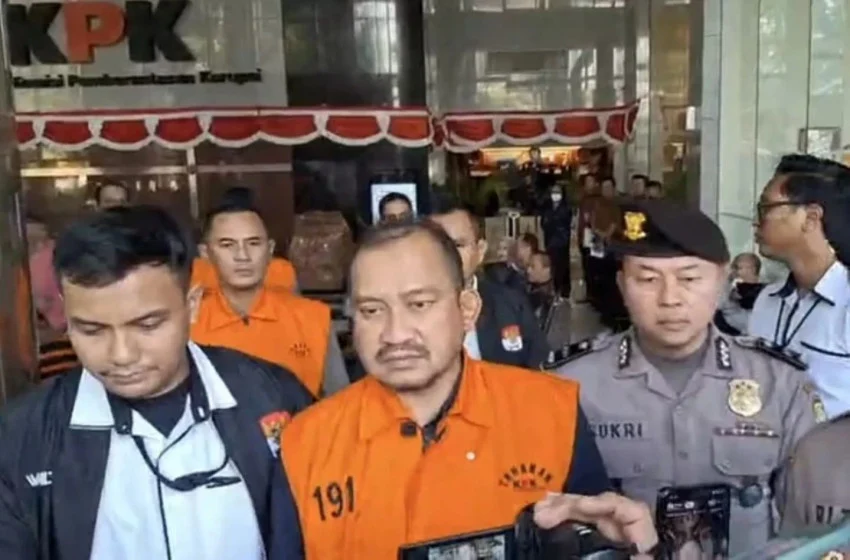
The Corruption Eradication Commission (KPK) concluded its interrogation of Noor Faizah Maenofie, the wife of the non-active Pemalang Regent Anom Widiyantoro, on Wednesday, September 9, 2026. The examination, which lasted several hours at the KPK’s Red and White House in Jakarta, serves as a pivotal step in the ongoing investigation into a sprawling corruption case involving bribery, extortion, and the illicit management of government positions within the Pemalang Regency administration. Investigators are seeking to determine the extent of her involvement and her potential knowledge regarding the systemic exploitation of civil service appointments that allegedly characterized her husband’s tenure.
The Scope of the Investigation
The KPK’s interest in Noor Faizah Maenofie stems from evidence suggesting that the systemic corruption within the Pemalang Regency government reached deep into the Regent’s immediate circle. KPK spokesperson Budi Prasetyo confirmed that the investigative team specifically grilled the witness on the mechanisms governing the rotation, mutation, and promotion of civil servants within the Pemalang Regency administration.
According to investigators, these administrative processes were allegedly weaponized to extract funds from civil servants who sought career advancement or retention in key positions. The practice, often referred to as "jual beli jabatan" or the buying and selling of offices, has become a recurring theme in local government corruption cases in Indonesia. However, the case against Anom Widiyantoro is noted for its scale and the alleged involvement of both private sector actors and internal government officials.
Budi Prasetyo emphasized that the investigation is not limited to simple extortion. "The evidence we have gathered suggests that the activities were not confined to Article 12e of the Corruption Eradication Law regarding extortion. We are looking at a broader spectrum of illicit receipts," Budi explained. The commission is working to map out how the funds were collected, distributed, and eventually laundered, with the wife’s testimony serving as a critical piece of the puzzle to verify financial trails.
Chronology of the Pemalang Corruption Scandal
The legal troubles for the Pemalang administration began following a series of high-profile sting operations conducted by the KPK. The timeline of the case has revealed a deeply entrenched culture of rent-seeking that preceded the official arrests.
- Initial Discovery (Mid-2022): The KPK began receiving credible reports from whistleblowers regarding the standardization of "tariffs" for specific positions within the Pemalang Regional Secretariat.
- The Sting Operation (July 2022): The KPK conducted a series of hand-catch operations (OTT) in Jakarta and Pemalang, leading to the arrest of Anom Widiyantoro and several key department heads.
- The Indictment Phase (2023-2024): Formal charges were filed, detailing that the Regent had established a fixed price list for various bureaucratic positions, ranging from low-level administrative roles to high-ranking structural positions.
- Broadening the Investigation (2025): As the case moved through the court system, new evidence emerged linking the financial gains from these activities to the personal assets of the Regent’s inner circle, including family members.
- Examination of Noor Faizah Maenofie (September 2026): The KPK summoned the spouse of the former regent to clarify the origin of assets that appeared to be disproportionate to the legitimate income of a civil servant.
Understanding the "Tariff" System in Regional Governance
The allegations against the Pemalang Regency administration are illustrative of a broader challenge facing Indonesia’s decentralization model. In many regions, the transition to direct regional elections has increased the financial burden on candidates, leading some to recoup their campaign costs through the illicit sale of government positions once they are in power.
In the case of Pemalang, the "tariff" system was allegedly rigid. Data from the KPK investigations suggest that positions were categorized by their potential for future rent-seeking—essentially, the more "lucrative" the department, the higher the bribe required to secure the promotion. By controlling these rotations, the Regent could ensure that only loyalists, or those who had paid their dues, occupied sensitive procurement and budget-management roles. This created a cycle of corruption where the cost of the bribe was eventually passed on to the public through inflated public project costs or substandard service delivery.
Official Responses and Legal Implications
The legal team representing Anom Widiyantoro has consistently maintained that the Regent was unaware of the "transactional" nature of these appointments, often framing them as routine administrative decisions based on merit and performance. However, the KPK’s focus on the Regent’s family indicates that the commission has moved beyond the "willful ignorance" defense.
Legal experts observing the case suggest that if the KPK can prove that the proceeds of these extortion efforts were channeled into family-owned enterprises or personal assets held in the spouse’s name, the charges could be upgraded to include money laundering. This would significantly increase the potential sentencing for the former regent and could lead to the confiscation of significant family assets under the state’s recovery of losses.
"The examination of a family member is usually a sign that the investigators have exhausted their leads on the civil service side and are now moving to the financial layer," says Dr. Aris Wahyudi, a policy analyst focusing on local governance. "If the testimony of Noor Faizah Maenofie contradicts the financial data held by the KPK, it could lead to further charges of obstruction of justice or perjury, which complicates the defense strategy significantly."
The Broader Impact on Pemalang’s Governance
The implications of this case extend far beyond the legal proceedings in Jakarta. The scandal has left the Pemalang government in a state of administrative paralysis. With numerous senior officials caught in the same web of corruption, the continuity of public service delivery has been severely hampered. Residents of Pemalang have expressed widespread frustration, noting that infrastructure projects have stalled and bureaucratic services have become sluggish as the remaining staff fear being associated with the previous administration’s malfeasance.
The Ministry of Home Affairs has had to intervene, appointing temporary administrators to stabilize the region. However, restoring public trust in local institutions is expected to take years. The case serves as a stark reminder of the corrosive nature of position-peddling, which not only undermines the integrity of the civil service but also prevents the recruitment of qualified, honest professionals who refuse to participate in pay-to-play schemes.
Future Outlook and Next Steps
As the investigation into the Anom Widiyantoro case continues, the KPK has indicated that more witnesses may be called, including private sector vendors who were allegedly coerced into paying bribes to maintain their status as government contractors. The commission is also collaborating with the Financial Transaction Reports and Analysis Center (PPATK) to conduct a deep audit of the suspect’s financial history.
For the citizens of Pemalang, the ongoing legal drama serves as a litmus test for the effectiveness of the KPK in the current political climate. There is a strong public expectation that the investigation will not only punish the primary actors but also recover the stolen state funds to be reallocated for regional development.
In the coming weeks, the KPK is expected to synthesize the testimony from the recent round of interviews into an updated case file. Whether this leads to additional suspects being named remains to be seen, but the intensity of the current probe suggests that the commission is committed to dismantling the entire structure of the alleged syndicate. The case of Anom Widiyantoro will likely serve as a definitive case study in future anti-corruption training, highlighting the complexities of unraveling a multi-layered, systemic conspiracy that operated under the guise of legitimate administrative governance.