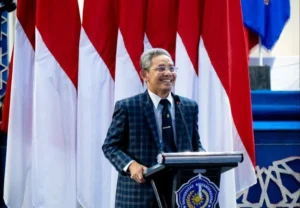
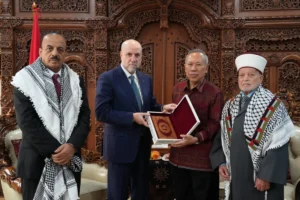
The intellectual legacy of Nurcholish Madjid, affectionately known as Cak Nur, transcends the mere ritual of annual commemorations. Twenty-one years after his passing, his discourse on the synthesis of Islam, Indonesian nationalism, democracy, and humanitarianism remains a critical compass for a nation grappling with shifting political landscapes, legal crises, and the erosion of democratic ethics. The recent 21st Haul (commemoration) of Cak Nur served as a platform for Prof. Mahfud MD to articulate the "Tri Seloka" framework—a triad of ethical principles designed to harmonize the religious commitments of Indonesian Muslims with their civic duties as citizens. This framework is not merely an academic exercise; it is an urgent call to re-evaluate the intersection of power, integrity, and social justice in the modern Indonesian state.
The Evolution of the Tri Seloka Framework
The Tri Seloka, as presented during the commemoration, serves as a bridge between theological imperatives and the pragmatic realities of a diverse, post-colonial nation. The core of this philosophy is grounded in three pillars: Ummatan Wahidah (the concept of a unified humanity), Kalimatun Sawa’ (finding common ground), and Al-Hanifiyah as-Samhah (the inclination toward inclusive, tolerant faith).
Historically, the challenge for Indonesian Muslims has been to move beyond the binary of viewing Islam and Indonesia as competing identities. By examining the historical precedents of India and Pakistan, where religious and ethnic identities were leveraged to bifurcate the state, the founding fathers of Indonesia consciously opted for a "middle path." They established the Republic as a mitsaqan ghalidza—a solemn and binding covenant. In Islamic jurisprudence, this aligns with the sanctity of contracts, where honoring one’s pledge to the state is not only a patriotic act but a religious obligation.
Chronology and Context of the Commemoration
The 21st Haul of Cak Nur held in late 2026 comes at a time of significant domestic concern regarding institutional integrity. The event featured a cultural oration that synthesized decades of Nurcholish Madjid’s writings. Since his passing in 2005, his ideas have been referenced by successive generations of scholars, activists, and policymakers to address the recurring friction between conservative religious dogma and constitutional democracy.
The timeline of his influence spans from the early 1970s, when his controversial yet visionary "Islam, Yes; Partai Islam, No" slogan challenged the political monopoly of religious parties, to the post-Reformasi era where his ideas provided the intellectual scaffolding for civil society movements. Today, the conversation has shifted toward the sustainability of these ideals in the face of what observers call "democratic backsliding" and the commodification of politics.

Data-Driven Analysis of the Political Landscape
Recent surveys by various Indonesian research institutes indicate a growing disillusionment among the youth toward formal political processes. The prevalence of "transactional politics"—a phenomenon where electoral success is dictated by capital accumulation rather than policy vision—has sparked widespread concern. Data regarding the high cost of regional and national elections in Indonesia suggests that political candidates are increasingly reliant on private funding, which inherently creates a debt of influence.
When political power is viewed as a commodity rather than an amanah (trust), the ethical vacuum is filled by special interest groups. This structural corruption undermines the state’s capacity to deliver public services. The analysis presented at the Haul suggests that the "price" of political entry has reached levels that exclude ethical, grassroots candidates, effectively creating a barrier to the democratic ideal of equitable representation.
Reinterpreting Maqashid al-Syariah in Governance
The discourse at the event emphasized that the legitimacy of an Islamic government or a government led by Muslims should not be measured by the proliferation of religious symbols, but by its adherence to Maqashid al-Syariah (the ultimate goals of Islamic law). These include the protection of faith, life, intellect, lineage, and property.
When applied to modern governance, these principles function as a metric for performance:
- Protection of Life (Hifz al-Nafs): The state’s duty to ensure the security and physical well-being of all citizens.
- Protection of Property (Hifz al-Mal): The prevention of corruption and the fair distribution of wealth.
- Protection of Intellect (Hifz al-Aql): Promoting a free, critical, and educational public sphere.
This perspective shifts the focus from "identity politics" to "policy performance." If a policy does not enhance the welfare of the marginalized or uphold the rule of law, it fails the criteria of Maqashid al-Syariah, regardless of the rhetoric used to justify it.
The Role of the ‘Muazin’ in Contemporary Society
A poignant metaphor introduced during the event was the role of the "Muazin"—the one who calls the faithful to prayer. In a sociopolitical context, this serves as an imperative for the intelligentsia and civil society to act as the conscience of the nation. Being a "Muazin" in the 21st century means having the courage to speak truth to power.

This is not a call to exclusionary militancy, but a call to restore the sanctity of the public space. When laws are manipulated to favor the elite, or when the judiciary is compromised by patronage, the "Muazin" acts as the moral alarm. This role requires detachment from partisan bias and a commitment to the common good (maslahah al-ammah).
Implications for Future Leadership
The implications of Cak Nur’s thought for future Indonesian leadership are profound. As the nation prepares for future electoral cycles, the focus must shift toward vetting candidates based on their moral resilience against the "transactional" pressures of political funding. The "isi tas" (the contents of the bag/money politics) culture must be replaced by a rigorous evaluation of a candidate’s commitment to institutional independence.
The orations at the 21st Haul made it clear that the danger of corruption lies not just in the perpetrator, but in the environment that allows it to thrive. When a leader treats their position as a personal asset, they breach the amanah that binds the nation together. Therefore, voters have a religious and civic duty to prioritize integrity over patronage.
Conclusion: A Legacy in Action
The enduring relevance of Nurcholish Madjid lies in his ability to deconstruct complex theological issues into actionable ethics for a diverse society. He provided a roadmap for how a nation can be deeply religious while remaining pluralistic and democratic. His rejection of the "us versus them" mentality is arguably more necessary today than it was during his lifetime.
To "care for Indonesia as an amanah" is to recognize that the state is a fragile, ongoing project. It is not an inheritance to be enjoyed, but a responsibility to be managed for future generations. As the nation moves forward, the "Tri Seloka" serves as a reminder that the true test of a believer in the public sphere is not the volume of their religious profession, but the quality of their justice, the depth of their empathy, and the unwavering nature of their commitment to the common good. The legacy of Cak Nur is thus not contained in books or archived lectures; it lives on in every individual who chooses to prioritize the integrity of the nation over the comforts of power.