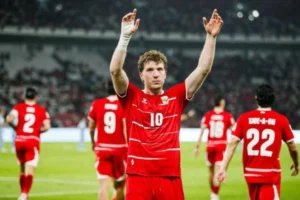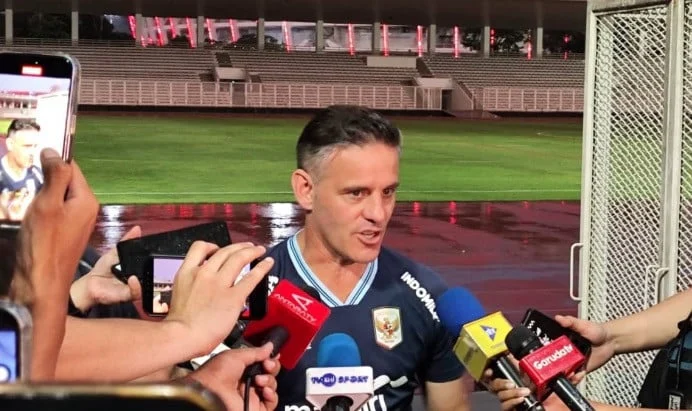
The Indonesian national football team, under the guidance of head coach John Herdman, is meticulously preparing for the upcoming 2026 ASEAN Hyundai Cup, commonly known as the AFF Championship. Herdman has expressed optimism regarding the team’s progress during their intensive training camp, indicating a positive trajectory as they aim to field a formidable squad for the prestigious regional tournament. The current training camp is a crucial phase in Herdman’s strategy to identify and refine the best possible roster from a pool of 50 invited players, with the ultimate goal of achieving success in Southeast Asia’s premier football competition.
Strategic Training Camps Pave the Way for AFF Championship Aspirations
The Indonesian national team’s journey towards the 2026 AFF Championship is marked by a strategically planned two-phase training camp. The initial phase, spanning from July 5th to July 11th, 2026, served as an initial assessment and integration period for the invited players. This was followed by a second, more intensive phase, scheduled from July 16th to July 25th, 2026. During these concentrated periods, Head Coach John Herdman is undertaking a comprehensive evaluation process. The objective is to meticulously assess the skills, fitness levels, tactical understanding, and overall compatibility of each player within the squad. This rigorous selection process is designed to identify the core group of approximately 23 players who will represent the Garuda squad at the AFF Championship.
Herdman, a respected figure in international football known for his successful tenures with the Canadian women’s and men’s national teams, has acknowledged the significant strides the team has made. "The team’s development is improving day by day; we are continuously evolving, showing positive progress," Herdman was quoted as saying, according to a report on the official Bali United website on Saturday, July 18th, 2026. While Herdman opted not to disclose the exact number of players who have been released from the camp thus far, his statement underscores a palpable sense of optimism within the coaching staff regarding the emerging talent and the team’s collective growth. This ongoing evaluation is not merely about selecting individuals but about forging a cohesive unit capable of competing at the highest level within the ASEAN region.
The AFF Championship: A Historical Perspective and Indonesia’s Ambitions
The ASEAN Hyundai Cup, established in 1996, has become a significant benchmark for national teams in Southeast Asia. The tournament, held biennially, showcases the growing footballing prowess of nations within the region. For Indonesia, the AFF Championship holds particular importance, representing a prime opportunity to assert regional dominance and capture a coveted title that has eluded them thus far. The Garuda squad has reached the final on multiple occasions – in 2000, 2002, 2004, 2010, and 2016 – but has yet to secure the championship trophy. This history fuels a deep-seated desire for success and places considerable expectation on the current generation of players and the coaching staff.
John Herdman’s appointment as the head coach of the Indonesian national team in early 2024 marked a new chapter for Indonesian football, signaling a clear intent to elevate the team’s performance on the international stage. His experience in transforming national teams and his reputation for implementing modern, dynamic playing styles are seen as key assets in Indonesia’s pursuit of their maiden AFF Championship title. The current training camp is a direct manifestation of this strategic vision, allowing Herdman ample time to instill his philosophy and build a team that can execute his tactical plans effectively.
Data-Driven Selection and Tactical Development
The selection process, involving 50 players, is a testament to the depth of talent available in Indonesian football. This broad initial pool allows Herdman and his technical staff to observe a wide range of players from various domestic leagues and even those playing abroad. The comprehensive evaluation extends beyond mere technical ability. Key performance indicators (KPIs) likely being monitored include:
- Physical Conditioning: Stamina, speed, agility, and injury resilience are paramount for a demanding tournament schedule.
- Tactical Acumen: Understanding of formations, positional play, defensive organization, and attacking transitions.
- Technical Proficiency: Ball control, passing accuracy, dribbling ability, shooting effectiveness, and defensive tackling.
- Mental Fortitude: Composure under pressure, leadership qualities, adaptability, and team spirit.
- Versatility: The ability of players to perform effectively in multiple positions, offering tactical flexibility.
The two-phase training camp structure allows for progressive refinement. The initial phase would likely focus on fitness assessments and basic tactical introductions, while the second phase intensifies the focus on match simulation, set-piece practice, and fine-tuning specific game plans. This structured approach ensures that players are not only physically prepared but also mentally aligned with the team’s objectives and playing style.
Expert Analysis and Inferred Reactions
Football analysts in Indonesia have largely welcomed Herdman’s proactive approach. The extended training camp, coupled with a broad initial player selection, is viewed as a positive indicator of the Football Association of Indonesia’s (PSSI) commitment to long-term development. "This comprehensive approach is exactly what Indonesian football needs," commented a prominent sports journalist on a national television broadcast. "It allows the coach to truly understand the full spectrum of talent and build a team based on merit and suitability for his system, rather than relying on preconceived notions."
While official statements from individual players are typically managed through the PSSI, the positive sentiment expressed by Herdman is likely to resonate with the invited athletes. The opportunity to train under a coach of Herdman’s caliber, with a clear pathway to representing their nation in a major tournament, serves as a significant motivator. Players understand that this is a chance to impress and secure their place in history. The competitive environment within the camp is expected to foster individual improvement and collective synergy.
Broader Impact and Implications for Indonesian Football
The success of the Indonesian national team at the AFF Championship has far-reaching implications for the sport within the country. A strong performance can:
- Inspire a New Generation: A championship win would undoubtedly galvanize young footballers, encouraging more participation and dedication to the sport.
- Boost Domestic League Interest: Increased national team success often translates to greater interest in the Indonesian Liga 1, attracting more fans and potentially sponsors.
- Enhance International Standing: A triumphant campaign would elevate Indonesia’s profile in Asian football, potentially leading to more favorable rankings and opportunities in future continental competitions.
- Foster National Pride: Football is a unifying force in Indonesia, and a victory at the AFF Championship would be a significant source of national pride and celebration.
John Herdman’s tenure is seen as a critical juncture for Indonesian football. His ability to mold this talented group of players into a cohesive and successful unit at the AFF Championship will be a defining moment. The meticulous planning, the data-driven selection process, and the positive feedback from the training camp all point towards a determined effort to break the AFF Championship jinx and bring the coveted trophy home. The coming weeks will be crucial as Herdman finalizes his squad, and the footballing nation watches with bated breath, hopeful that this preparation will culminate in a historic achievement. The ongoing progress, as highlighted by Herdman, suggests that the Garuda are indeed soaring in the right direction.