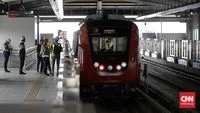
The transportation landscape of Indonesia’s capital underwent a significant milestone as Jakarta Governor Pramono Anung officially announced the immediate operation of all Transjakarta bus rapid transit stops directly integrated with the newly inaugurated LRT Jakarta network. Speaking on Wednesday, September 16, the governor emphasized that the synchronized rollout includes critical transit points, most notably the high-volume Manggarai Station, ensuring that commuters can seamlessly transition between systems within hours of the official inauguration of the Kelapa Gading to Manggarai LRT corridor.
The synchronization of these transit networks marks a crucial step in Jakarta’s ongoing commitment to modernizing urban mobility, reducing traffic congestion, and encouraging a shift from private vehicles to public mass transit. While the newly launched LRT Jakarta line implements a heavily subsidized promotional fare of just eight rupiah for the first eight days of service, the city’s backbone bus rapid transit system, Transjakarta, maintains its standard operational pricing structure. Consequently, passengers transferring from the LRT to Transjakarta will continue to pay the regular fare of 3,500 rupiah per trip, maintaining cost predictability for daily commuters navigating the metropolitan area.
Chronology and Launch Timeline
The inauguration of the Kelapa Gading-Manggarai LRT route represents the culmination of years of infrastructural planning and civil engineering efforts aimed at bridging Jakarta’s northern and southern economic corridors. Planning for the extension began under previous urban development frameworks, prioritizing high-density residential and commercial zones. Construction phases faced standard urban logistics challenges, including land acquisition and coordination with existing railway infrastructure, but accelerated significantly over the past twenty-four months.
On the morning of September 16, provincial leadership gathered in South Jakarta to formally inaugurate the line. Immediately following the ribbon-cutting ceremony, Governor Pramono Anung instructed transit operators to initiate full passenger services at all connecting Transjakarta shelters. According to official directives, these stations began welcoming commuters within one to two hours of the ceremony, minimizing downtime and instantly validating the multi-modal integration strategy.
Meanwhile, secondary integration phases remain on an aggressive timeline. While bus connections are instantaneous, physical and digital infrastructural linkages between the LRT platform and the heavy-rail commuter line at Manggarai Station are currently undergoing final aesthetic and structural adjustments.
Infrastructure Integration at Manggarai Station
Manggarai Station stands as the crown jewel of Jakarta’s multi-modal transportation network, functioning as a massive interchange hub designed to process hundreds of thousands of passengers daily. The convergence point unifies three distinct public transportation pillars: the Light Rail Transit (LRT), the KRL Commuterline, and the Transjakarta bus system.
Despite the operational readiness of the Transjakarta integration, the physical pedestrian skybridges and ticketing corridors connecting the LRT concourse directly to the KRL platforms are still undergoing finishing touches. Iwan Takwin, the President Director of PT Jakarta Propertindo (Jakpro)—the municipal developer overseeing the project—provided clarification regarding the ongoing construction works.
According to Takwin, engineering teams are working around the clock to finalize the architectural connective tissue that will allow passengers to move effortlessly across all three systems without exiting the secure paid zones.
"The physical and systemic connections are currently being finalized," Takwin stated. "Our objective is to establish a comprehensive multi-modal nexus where the LRT, KRL, and Transjakarta function as a singular, cohesive ecosystem. We are targeting the full completion and public opening of these connecting pathways by the end of this month."
Economic Implications and Fare Structures
The simultaneous operation of the connected Transjakarta shelters alongside the promotional rollout of the LRT introduces a compelling economic dynamic for daily commuters. For an initial period of eight days, the exceptionally low promotional fare of eight rupiah for the LRT is designed to incentivize trial ridership, allowing residents to familiarize themselves with the new stations, ticketing gates, and train schedules without financial hesitation.
Transportation economists and urban planners view this temporary pricing strategy as an effective psychological and economic catalyst. By lowering the barrier to entry, the Jakarta Provincial Government anticipates a surge in ridership data, which will subsequently inform capacity planning and scheduling adjustments. Once the promotional window closes, the LRT will transition to its standard, distance-based or flat-rate structural pricing, aligning with regional transportation subsidies managed by the Jakarta Transportation Agency (Dishub).
Conversely, Transjakarta fares remain anchored at the statutory 3,500 rupiah rate. This price point has historically proven sustainable within the city’s public transport subsidy framework, known as Public Service Obligation (PSO) funds allocated within the Jakarta Regional Budget (APBD). The stability of the Transjakarta fare ensures that lower- and middle-income families who rely on buses for the first-and-last-mile connectivity are insulated from fare volatility during major transit expansions.
Broader Impact on Urban Mobility and Traffic Congestion
Jakarta has perennially ranked among the most congested metropolitan areas globally, suffering from severe economic losses associated with lost productivity and heightened vehicular emissions. The strategic expansion of the LRT network—coupled with the aggressive integration of Transjakarta and KRL services—forms the bedrock of the city’s long-term spatial and environmental master plan.
The inclusion of Manggarai Station as a super-hub is expected to dramatically alter commuter flow patterns. Previously, commuters traveling from East or North Jakarta toward the central business districts faced circuitous routes or heavy reliance on road-based transport for specific legs of their journey. The new Kelapa Gading-Manggarai line slashes transit times considerably, bypassing major road bottlenecks along arterial thoroughfares.
Furthermore, environmental analysts project a measurable reduction in particulate matter and carbon dioxide emissions as thousands of daily motorists gradually abandon private automobiles and motorcycles in favor of the integrated rail-and-bus network. The success of this transition, however, hinges on the reliability of the last-mile connectivity provided by Transjakarta feeder routes and the seamless operation of pedestrian transfer facilities.
Stakeholder Reactions and Future Outlook
Public reception to the immediate opening of the connecting Transjakarta shelters has been largely positive. Commuters interviewed at South Jakarta transit points expressed optimism regarding the speed at which municipal authorities operationalized the bus stops following the gubernatorial inauguration. The elimination of administrative or operational lag between the train’s arrival and the bus shelter’s activation demonstrates a high degree of inter-agency coordination between Jakpro, Transjakarta management, and the provincial government.
As PT Jakpro enters the final weeks of September to complete the KRL-LRT pedestrian integration at Manggarai, attention is already shifting toward subsequent phases of the capital’s master transit blueprint. Urban development authorities are currently evaluating feasibility studies for further extensions northward toward coastal zones and westward into neighboring satellite cities, striving to realize a truly borderless, unified Jabodetabek (Jakarta, Bogor, Depok, Tangerang, Bekasi) transit grid.
For the immediate future, city officials are urging the public to utilize the promotional window to explore the new transit corridors while exercising patience as final construction touches at Manggarai Station reach completion. With robust multi-modal integration now taking tangible shape, Jakarta steps closer to establishing a world-class public transportation framework capable of supporting its burgeoning population and sustainable urban future.