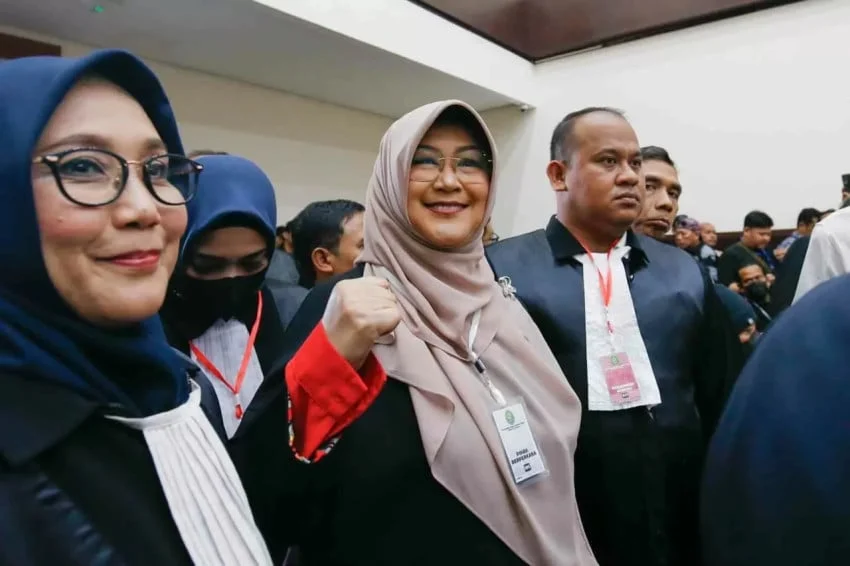
The legal proceedings surrounding Tifauzia Tyassuma, widely known as Dokter Tifa, reached a pivotal stage this Thursday, September 17, 2026, as the East Jakarta District Court convened to hear the defendant’s formal objection, or "eksepsi," against the charges brought forth by the public prosecutor. This development marks the latest chapter in a protracted legal battle concerning allegations of defamation and the spread of misinformation regarding the academic credentials of Indonesia’s seventh president, Joko Widodo. According to the court’s Case Tracking Information System (SIPP), the hearing commenced at 09:00 WIB in the Main Courtroom, signaling a critical phase where the defense aims to challenge the legal basis and procedural validity of the prosecutor’s indictment.
The Genesis of the Legal Controversy
The case against Dokter Tifa is rooted in a series of public statements and digital content disseminated via social media platforms starting in late 2022. Tifa, a public figure who frequently comments on national political and social issues, repeatedly questioned the authenticity of the university diploma held by Joko Widodo. These allegations, which surfaced during a period of intense political discourse in Indonesia, gained traction on various digital platforms, leading to public debate and, eventually, formal complaints from parties asserting that the claims constituted defamation and the spread of prohibited electronic information.
The prosecution’s case rests on the argument that Tifa’s assertions were not mere expressions of opinion protected by free speech, but rather deliberate attempts to undermine the reputation of a public official through the dissemination of unverified and potentially harmful information. Throughout the investigative phase, the authorities examined multiple digital footprints, including social media posts, videos, and articles authored by the defendant. The indictment underscores the legal repercussions of using digital platforms to circulate claims that authorities deem to be defamatory and damaging to the integrity of public institutions.
Chronology of the Judicial Process
The legal trajectory of this case has been marked by several key milestones:
- Late 2022: Initial allegations regarding President Jokowi’s educational background began circulating on social media, with Tifauzia Tyassuma identified as a primary contributor to the narrative.
- Early 2023: Legal experts and government representatives issued clarifications, including statements from the University of Gadjah Mada (UGM) confirming the legitimacy of the president’s degree.
- 2024–2025: Law enforcement agencies initiated a formal investigation following public reports regarding potential violations of the Electronic Information and Transactions (ITE) Law and the Criminal Code.
- August 27, 2026: The Public Prosecutor formally read the indictment at the East Jakarta District Court, outlining the primary and subsidiary charges.
- September 17, 2026: The court session for the defendant’s eksepsi, where the defense team presented arguments to challenge the indictment’s framing and the legal justification for the charges.
Analysis of the Charges and Legal Framework
The charges brought against Dokter Tifa are significant, particularly given their reliance on the updated provisions of the Indonesian Criminal Code (KUHP). In the primary indictment, the prosecutor cited Article 434, paragraph (1), in conjunction with Article 441, paragraph (1) of Law Number 1 of 2023 regarding the Criminal Code. The subsidiary indictment relies on Article 433, paragraph (1), also in conjunction with Article 441, paragraph (1).
These articles specifically address the dissemination of information that causes public unrest, defamation, and the creation of false narratives that undermine the credibility of state officials. The shift toward using the new KUHP framework reflects a broader regulatory trend in Indonesia, where legislative bodies have sought to modernize the legal system to better address crimes committed in the digital age. For legal observers, this case serves as a litmus test for how the judiciary will balance the right to freedom of speech against the responsibilities of digital content creators and the protection of individuals from reputational harm.
Supporting Data and Institutional Verification
The core of the dispute—the authenticity of President Jokowi’s diploma—has been addressed on multiple occasions by the relevant educational institutions. In 2022, officials from the University of Gadjah Mada issued a definitive statement asserting that the president graduated from the Faculty of Forestry in 1985. This verification included the presentation of official records, which the university stated were archived and accessible for verification purposes.
Despite these institutional assurances, the narrative persisted in certain online spheres, fueled by selective interpretation of public records and the amplification of skepticism by influential figures. The judiciary is now tasked with determining whether the continued dissemination of these claims, even after official verification was provided, constitutes a criminal act of defamation. The prosecution argues that the defendant’s persistence in the face of contradictory evidence suggests a malicious intent to damage the president’s reputation, rather than a genuine pursuit of academic or public interest.
Responses from Related Parties and Legal Experts
While the defendant has maintained her stance throughout the proceedings, expressing a belief in the necessity of her inquiry, legal scholars offer a more nuanced perspective. Many analysts emphasize the importance of distinguishing between legitimate political criticism and the spread of verifiable falsehoods.
"The court’s decision in this case will have a long-lasting impact on how digital dissent is handled in Indonesia," noted a legal analyst who has been monitoring the case. "The challenge lies in ensuring that the law is not used to silence healthy debate, while simultaneously ensuring that the digital space is not used as a tool for targeted defamation that can destabilize public confidence in state institutions."
Defense attorneys for Dokter Tifa have argued that the indictment is flawed, claiming that the charges are overly broad and infringe upon the defendant’s right to critique public figures. They maintain that the statements made were intended to prompt institutional accountability rather than to defame an individual. The eksepsi hearing serves as the first formal opportunity for the defense to dismantle the prosecution’s narrative and argue for a dismissal of the case based on procedural or substantive deficiencies.
Broader Implications for Indonesian Law and Media
The outcome of the trial against Dokter Tifa holds significant implications for the future of digital discourse in Indonesia. As the country continues to navigate the challenges of a highly active and often polarized social media landscape, the judiciary’s interpretation of defamation laws in the context of the new KUHP will set a critical precedent.
Furthermore, the case highlights the growing intersection between traditional legal institutions and digital media influence. As influencers and public commentators command larger audiences, their legal responsibilities regarding the veracity of their content are coming under closer scrutiny. The court’s proceedings are not only determining the fate of the defendant but are also defining the boundaries of responsible speech in an era where digital content has the potential to reach millions in a matter of seconds.
As the court processes the eksepsi, the public and legal community remain attentive. The trial is expected to continue for several months, with additional witnesses and experts likely to be called to provide testimony on the technical and legal aspects of the alleged crimes. Regardless of the final verdict, the case has already solidified its place as a landmark legal challenge, reflecting the ongoing struggle to harmonize democratic expression with the rule of law in a rapidly evolving digital society. The East Jakarta District Court is expected to deliberate on the defense’s objection in the coming week, which will determine whether the trial will proceed to the evidentiary phase or if the charges will require significant amendments. For now, the legal proceedings remain focused on the procedural integrity of the case, ensuring that the judicial process adheres strictly to the mandates of the Indonesian legal system.