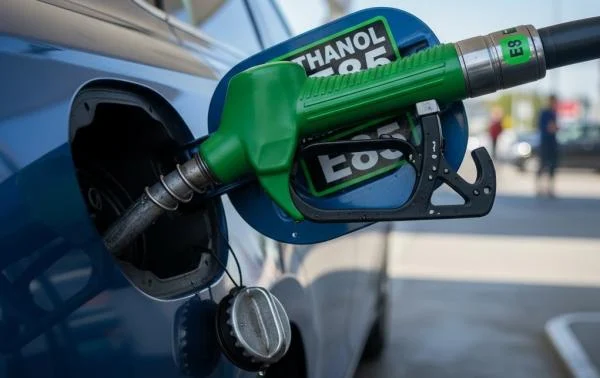
The Indonesian government, under the leadership of the Ministry of Energy and Mineral Resources (ESDM), has officially initiated a comprehensive roadmap for the development and implementation of E50 fuel, a gasoline blend containing 50 percent ethanol. This strategic policy shift, announced by Minister of Energy and Mineral Resources Bahlil Lahadalia, is designed to fortify the nation’s energy independence amidst increasing volatility in the global geopolitical landscape. By pivoting toward bio-based fuel alternatives, Indonesia aims to reduce its reliance on imported petroleum products, stabilize its trade balance, and stimulate domestic agricultural productivity through the utilization of commodities such as sugarcane, cassava, and maize.
Strategic Context and Geopolitical Drivers
The global energy market has faced significant instability in recent years due to conflicts in key oil-producing regions, supply chain disruptions, and the fluctuating price of crude oil. For an emerging economy like Indonesia, which has historically relied on fossil fuel imports to meet its domestic demand, these global shocks represent a significant risk to macroeconomic stability.
Minister Bahlil Lahadalia emphasized the urgency of this transition during the 81st Anniversary of Mining and Energy in Jakarta on September 21, 2026. He stated that in an era of global uncertainty, the nation cannot continue to depend on external supply chains for its primary energy needs. The move toward E50 represents a paradigm shift from a consumer-based energy model to a producer-based model, leveraging Indonesia’s vast agricultural potential to fuel its transportation sector.
The transition to E50 is not merely an energy policy; it is a holistic strategy that integrates agricultural development, industrialization, and environmental sustainability. By utilizing biomass feedstock, Indonesia intends to create a closed-loop economy where the fuel consumed by vehicles is generated by the nation’s own farmers and processed by domestic refineries.
The Technical Roadmap for E50 Integration
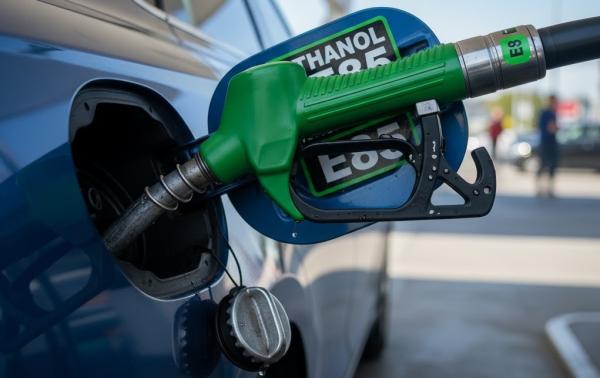
The roadmap for E50 deployment is expected to be executed in phases, transitioning from current lower-level blends to a 50 percent mixture. Currently, many countries utilize E5 or E10 (five to ten percent ethanol blends). Moving to E50 requires significant upgrades in engine technology, fuel distribution infrastructure, and the mass scaling of ethanol production facilities.
The government has earmarked approximately 2 million hectares of land for the cultivation of ethanol-producing crops. This massive land allocation is designed to ensure a consistent supply chain for bio-ethanol refineries. Key commodities identified for this purpose include:
- Sugarcane: Known for its high fermentable sugar content, it remains the primary choice for ethanol production globally.
- Cassava: Indonesia’s significant production capacity of cassava provides a robust secondary source, particularly in regions where soil conditions are less ideal for sugarcane.
- Maize: Advances in starch-to-ethanol processing make corn a viable feedstock, adding value to the domestic corn industry.
The technical challenge lies in the logistics of blending and distribution. Petroleum companies, such as the state-owned Pertamina, will likely need to retool fuel terminals to accommodate the specific chemical requirements of high-percentage ethanol blends, which are more hygroscopic and require specialized storage to prevent degradation.
Socio-Economic Implications: The Promise of Job Creation
Beyond energy security, the E50 initiative is projected to serve as a catalyst for massive job creation in rural areas. According to recent assessments by the Ministry of Agriculture, the large-scale industrialization of the ethanol sector has the potential to generate up to 8 million permanent jobs. These roles range from farm-level production and harvesting to industrial processing, logistics, and distribution.
The shift is expected to revitalize the rural economy. Regions that were previously dependent on traditional farming methods may see increased investment as they become critical nodes in the national energy supply chain. By decentralizing the energy industry, the government aims to reduce poverty rates and increase the income of smallholder farmers who will be the primary suppliers of the raw materials.

Economic Analysis and Market Impact
Economists have noted that the adoption of E50 could significantly reduce Indonesia’s foreign exchange expenditure. In 2025 and early 2026, the national fuel import bill remained a significant burden on the state budget. By replacing a substantial portion of gasoline imports with domestically produced ethanol, the government can redirect capital toward infrastructure development and other social programs.
However, analysts also caution that the success of the E50 program hinges on price parity. If the cost of producing bio-ethanol exceeds the cost of imported gasoline, the government may need to implement subsidy mechanisms or tax incentives to ensure market uptake. Furthermore, maintaining the food-versus-fuel balance is critical. Policymakers must ensure that the diversion of agricultural land to fuel production does not adversely affect food security or cause a spike in the prices of staple goods.
Chronology of Policy Development
- Early 2026: The government identifies energy security as a top priority for the mid-term economic agenda, following a spike in global crude oil prices.
- Mid-2026: Feasibility studies for high-blend ethanol are fast-tracked by the Ministry of ESDM and the Ministry of Agriculture.
- September 2026: Minister Bahlil Lahadalia announces the official roadmap for E50, emphasizing the integration of 2 million hectares of land for feedstock production.
- Late 2026 and Beyond: Projected timeline for the development of pilot refineries and the initial rollout of infrastructure to support E20, serving as a stepping stone to E50.
Official Responses and Stakeholder Reactions
The proposal has been met with broad support from agricultural associations, who view the initiative as a long-term investment in the nation’s rural development. Industry leaders in the energy sector have expressed readiness to adapt, provided there is a clear regulatory framework and fiscal support from the government.
"This is an ambitious goal, but one that is necessary for our long-term sovereignty," remarked a spokesperson for a leading energy policy think-tank. "The challenge will not be the technology—which is well-understood—but the scale of the agricultural transformation required to feed the refineries."
Environmental groups have also noted that E50, being a biofuel, offers a lower carbon footprint compared to pure fossil fuels, aligning with Indonesia’s commitments to international climate agreements. However, they emphasize the importance of sustainable land-use practices to ensure that the expansion of feedstock crops does not lead to deforestation.

Future Outlook and Challenges
The road to E50 is not without hurdles. The government must navigate the complexities of land rights, the modernization of farming technologies to increase yield per hectare, and the integration of the automotive industry, as vehicle engines must be compatible with high-ethanol fuels to ensure safety and efficiency.
The Ministry of ESDM has indicated that it will work closely with the automotive industry to ensure that upcoming vehicle models are "flex-fuel" compatible or specifically designed to handle E50. This alignment between the energy sector and the manufacturing sector will be the final piece of the puzzle to ensure a seamless transition for the public.
As the roadmap progresses, the government is expected to issue further regulations governing the pricing, blending standards, and distribution quotas for bio-ethanol. By 2030, the success of this program will likely be measured not just by the amount of ethanol produced, but by the tangible reduction in the national dependence on foreign energy markets and the measurable increase in the prosperity of Indonesia’s farming communities.
In conclusion, the shift toward E50 represents a bold, transformative vision for Indonesia. By harnessing the power of its agricultural sector to fuel its industrial future, the nation is positioning itself to become more resilient, self-sufficient, and economically robust. The success of this transition will serve as a template for other developing nations seeking to decouple their growth from the volatility of global fossil fuel markets.