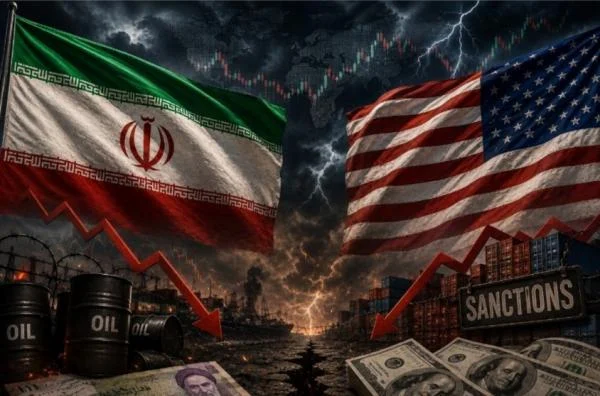
Tensions in the Middle East have reached a critical inflection point following an urgent declaration from the Khatam Al Anbiya Central Headquarters in Tehran. The Iranian military establishment announced it has obtained credible intelligence suggesting that the United States is finalizing plans for a new wave of military strikes against the Islamic Republic. This development signals a potential escalation in a long-standing geopolitical standoff, with Tehran explicitly warning both Washington and its regional allies that any further aggression will be met with decisive and potentially devastating counter-measures.
According to the official statement released via the Islamic Republic News Agency (IRIB), Iranian intelligence assets have tracked high-level clandestine meetings held in European territories, where U.S. officials allegedly coordinated with regional partners to facilitate renewed hostilities. The statement referred to the United States as the primary aggressor, accusing it of attempting to galvanize a coalition to undermine Iranian sovereignty.
A Heightened State of Alert
The Iranian military’s posture has shifted from defensive monitoring to active preparation for a direct confrontation. The Khatam Al Anbiya headquarters, responsible for coordinating Iran’s air defense networks and strategic military operations, has made it clear that the nature of any forthcoming response will be fundamentally different from previous skirmishes.
"Based on the intelligence gathered, the criminal United States has decided to resume its hostile actions against Iran, bolstered by the complicity of certain regional states," the military statement asserted. "We are fully prepared to neutralize these threats and impose a heavy cost on the perpetrators."
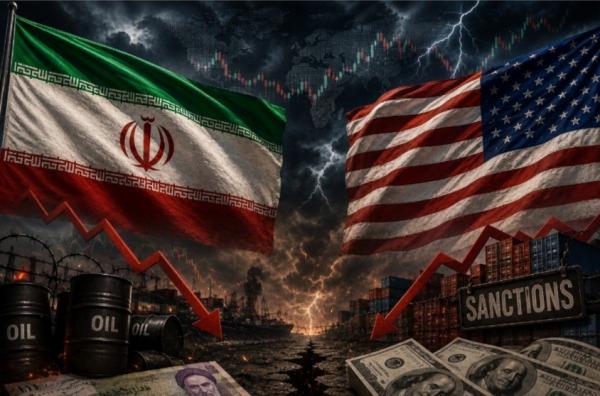
Military analysts note that this rhetoric marks a departure from the "strategic patience" often invoked by Tehran in the past. By publicly identifying that intelligence was sourced from international meetings, Iran is signaling a level of operational transparency intended to deter the U.S. from proceeding with the alleged strike plans.
Chronology of Escalating Hostilities
The current tension is not an isolated event but rather the culmination of a deteriorating security environment in the region over the past several months. The timeline of the current cycle of violence suggests a rapid degradation of the status quo:
- Early 2026: Diplomatic channels between Tehran and Washington, facilitated by neutral third-party nations, began to stall as nuclear negotiations reached a stalemate.
- August 2026: Increased naval maneuvers in the Persian Gulf led to several "near-miss" incidents between U.S. assets and Iranian maritime forces.
- September 2026: A major escalation occurred when Iranian precision-strike capabilities reportedly caused extensive damage to a U.S. forward operating base, resulting in the reported loss or incapacitation of nearly 60 military aircraft. Estimates of the financial impact of this incident have exceeded $3.7 billion (approximately Rp58 trillion), marking one of the most significant losses of U.S. military hardware in the region in recent history.
- Mid-September 2026: Reports surfaced regarding U.S. strikes hitting civilian infrastructure, including schools in Iran. The United Nations expressed alarm over these reports, with international observers demanding an investigation into the proportionality of the military response.
- Late September 2026: The current state of heightened readiness, following the Khatam Al Anbiya intelligence report.
The Regional Dilemma: A Warning to Allies
Perhaps the most significant aspect of the latest Iranian warning is the explicit threat directed at neighboring countries that host U.S. military installations. For decades, the presence of U.S. bases in the Persian Gulf—including in nations such as Qatar, Bahrain, Kuwait, and the United Arab Emirates—has served as a deterrent against Iranian expansionism. However, Tehran is now signaling that these bases will no longer be considered "neutral" in the event of a conflict.
"We issue a stern warning to those states in the region that continue to pursue a dual-policy approach," the statement continued. "By providing the U.S. with access to their airspace or logistical support, these nations effectively become accomplices to the ‘Great Satan’s’ aggression. They will be held accountable for the consequences of their choices."
This diplomatic pressure is designed to create a wedge between the U.S. and its regional partners. If regional governments fear that hosting U.S. troops will result in direct Iranian missile strikes against their own infrastructure, they may be less inclined to cooperate with Washington’s operational plans.

Fact-Based Analysis of Strategic Implications
The potential for a wider conflict poses significant risks to global stability. The Middle East remains a vital artery for the global energy market, and any major military engagement in the Strait of Hormuz—through which approximately 20% of the world’s petroleum consumption passes—could trigger a global economic crisis.
Military experts point out several key factors that complicate the current landscape:
- Asymmetric Capabilities: Iran has invested heavily in "swarming" drone technology and long-range ballistic missile systems. Unlike conventional air forces that rely on large, vulnerable runways, Iran’s mobile missile launchers are difficult to track and destroy, ensuring a high probability of a "second-strike" capability even after an initial U.S. offensive.
- The "Proxy" Factor: Iran maintains an extensive network of aligned militias throughout the Levant and the Arabian Peninsula. A direct U.S. strike on Iranian soil could trigger a multi-front conflict, where these groups simultaneously target U.S. interests in Iraq, Syria, and Yemen, effectively overstretching U.S. defensive capabilities.
- Diplomatic Isolation: The U.S. is currently navigating a complex international environment. While the Biden administration or relevant U.S. leadership seeks to maintain a coalition against Iranian influence, the international community—including members of the UN Security Council—has voiced concern over the humanitarian costs of recent strikes, specifically regarding the damage to educational institutions.
Official Responses and International Reaction
As of the time of reporting, the U.S. Department of Defense has not issued a detailed rebuttal to the specific claims regarding the "European meetings," adhering to a policy of not commenting on classified intelligence matters. However, Pentagon spokespersons have repeatedly stated that the United States reserves the right to defend its personnel and interests globally.
International diplomatic observers are urging restraint. The United Nations has called for an immediate de-escalation, warning that the "tit-for-tat" nature of the recent attacks is pushing the region toward a point of no return. European powers, particularly those involved in the original nuclear framework, are reportedly engaged in frantic behind-the-scenes diplomacy to prevent an all-out war.
Future Outlook
The coming weeks will be a test of endurance and deterrence. If the United States proceeds with the strikes alleged by the Iranian military, the region could see the most significant military confrontation since the 2003 Iraq War. Conversely, if the intelligence report acts as a successful deterrent, it may force a temporary return to diplomatic signaling.
For now, the message from Tehran is clear: the era of surgical strikes being absorbed without a severe, asymmetric, and regional response has ended. The Iranian military is no longer merely reacting; it is proactively framing the narrative that any future U.S. aggression will be treated as an act of war not just against Iran, but against the security of the entire region.
As the international community watches, the world awaits further developments. Whether this latest warning leads to a cooling of tensions or serves as the precursor to a much larger conflagration remains to be seen. The volatility of the current situation is underscored by the high stakes involved: regional stability, global energy prices, and the lives of thousands of military personnel stationed across the Middle East.