Jakarta — In a decisive move to fortify Indonesia’s food security and reduce heavy reliance on foreign agricultural imports, the Indonesian government has officially thrown its full weight behind a strategic partnership aimed at revolutionizing domestic soybean production. Hashim S. Djojohadikusumo, the Special Presidential Envoy for Climate and Energy, has expressed profound support for the newly minted synergy between Holding Perkebunan Nusantara PTPN III (Persero)—Indonesia’s premier state-owned plantation holding company—and PT Karya Unggulan Anak Bangsa (KUAB). This collaboration is envisioned as the foundational bedrock for an ambitious nationwide push toward soybean self-sufficiency, a vital component of the broader national economic resilience agenda spearheaded by the administration.
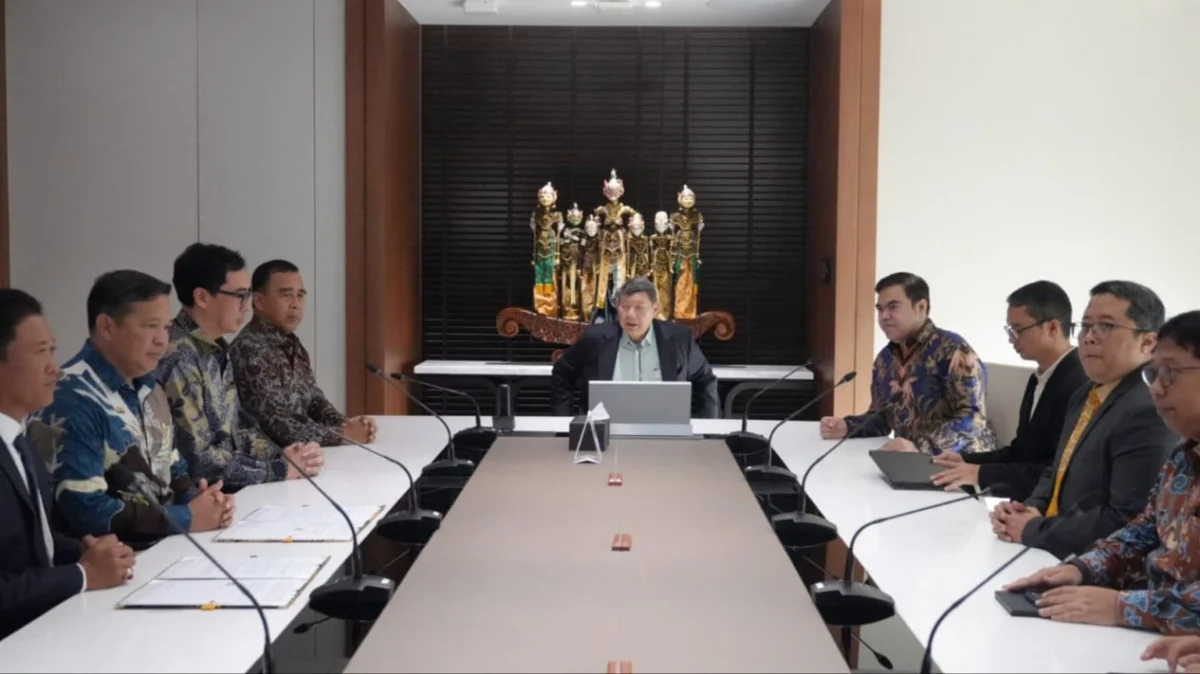
The formalization of this alliance was marked by the signing of a comprehensive Memorandum of Understanding (MoU) focusing on the optimal utilization of agricultural land and the end-to-end development of soybean cultivation, stretching seamlessly from upstream seed production to downstream distribution. At the heart of this initiative lies a flagship pilot project: the establishment of an advanced Soybean Seed Development Center across a dedicated 1,000-hectare plot. This center is designed to serve as the nucleus for generating, certifying, and distributing superior, high-yield soybean seeds tailored to Indonesia’s diverse agro-climatic conditions, thereby addressing one of the most persistent bottlenecks in local farming.
Speaking on the strategic implications of the partnership, Special Presidential Envoy Hashim S. Djojohadikusumo emphasized that the collaborative framework represents a monumental milestone for the country’s agricultural sector. "This is a deeply strategic cooperation for the Indonesian nation," Hashim stated in an official release on Saturday, September 12, 2026. He underscored that the overarching objective of the program is not merely to cultivate crops on isolated plots, but to build a robust, self-sustaining national ecosystem for soybean seeds. This ecosystem is specifically structured to empower agricultural cooperatives and smallholder farmers spread across the archipelago.
According to Hashim, the government is harboring realistic yet aggressive timelines, targeting the complete realization of national soybean self-sufficiency within a three-to-four-year window. "We intend to achieve soybean self-sufficiency within approximately three to four years. And I believe our primary purpose is to supply seeds to cooperatives and to numerous farmers all across Indonesia, because vast tracts of land in Indonesia are exceptionally well-suited for soybean cultivation," he elaborated.
The Genesis of the National Soybean Drive
The partnership between PTPN III and PT Karya Unggulan Anak Bangsa does not exist in a vacuum; rather, it is a critical operational component of a broader, systemic revitalization of Indonesia’s food crops sector. For decades, Indonesia has grappled with a chronic deficit in domestic soybean production, forcing the country to rely heavily on international markets—predominantly the United States, Brazil, and Argentina—to meet the soaring demands of local tofu and tempeh producers, as well as the broader food processing industry.
The historical over-reliance on imported soybeans has exposed domestic micro, small, and medium enterprises (MSMEs) to extreme global price volatility, supply chain disruptions, and currency fluctuations. Recognizing these structural vulnerabilities, the Ministry of Agriculture, under the leadership of Minister Andi Amran Sulaiman, has placed agricultural independence at the very apex of the national development agenda. The current administration’s food sovereignty framework seeks to systematically dismantle systemic impediments by shifting focus toward import substitution, revitalizing idle state and private plantation lands, and injecting modern agricultural technology into traditional farming communities.
The collaboration with PTPN III aligns perfectly with this mandate. By leveraging the vast land assets and extensive logistical networks of the state-owned plantation giant, the government aims to bypass the fragmentation that has historically plagued food crop production in Indonesia. While PTPN has traditionally concentrated on perennial cash crops such as palm oil, rubber, sugarcane, and tea, the strategic redirection toward strategic food commodities like soybeans signifies a paradigm shift in how state assets are utilized to serve the public interest and safeguard national security.
Operational Blueprint and the 1,000-Hectare Pilot Project
The operational execution of the partnership is structured around rigorous phasing, ensuring that commercial viability, environmental sustainability, and technological adaptability are thoroughly tested before any large-scale expansion takes place. The initial phase centers on the 1,000-hectare pilot project, which will function as an experimental and testing ground for modern agronomic practices, mechanized harvesting, and advanced pest management tailored specifically to tropical soybean farming.
Denaldy Mulino Mauna, President Director of PTPN III (Persero), elaborated on the corporation’s pivotal role in the initiative. As a state-owned enterprise entrusted with maximizing the productivity of national plantation assets, PTPN Group is fully mobilized to backstop the government’s food security programs.
"PTPN Group is fully prepared to take an active role in supporting the development of national soybean cultivation through measurable collaborations based on strict feasibility assessments," Denaldy stated. He emphasized that the program will be implemented in a phased and methodical manner. This incremental approach is designed to allow agricultural experts, economists, and corporate planners to evaluate the business model, measure productivity outputs, assess soil and climate readiness, and ensure long-term environmental sustainability with absolute objectivity.
Within this collaborative architecture, Holding Perkebunan Nusantara will act primarily as the central coordinator and facilitator. This role involves synchronizing the various operational units within the PTPN Group to ensure that land allocation, resource mobilization, and infrastructural support are executed with high precision and in strict adherence to Good Corporate Governance (GCG) principles. By maintaining tight oversight, PTPN III aims to eliminate inefficiencies, prevent misallocation of resources, and establish a repeatable, scalable model that can be replicated across other regions of the country.
Upstream-Downstream Integration and the Seed Ecosystem
A primary reason for the historical stagnation of soybean farming in Indonesia has been the lack of access to superior, certified seeds. Many smallholder farmers have historically relied on grain saved from previous harvests, which typically exhibits declining germination rates, low disease resistance, and poor yield potential. Without a reliable, continuous supply of high-grade foundation and certified seeds, efforts to scale up production are bound to underperform regardless of the amount of land cultivated.
To solve this structural flaw, the partnership between PTPN III and PT Karya Unggulan Anak Bangsa places paramount emphasis on the establishment of the dedicated Soybean Seed Development Center. This facility will employ biotechnology, rigorous seed selection protocols, and climate-resilient breeding techniques to produce seeds capable of thriving in diverse Indonesian soil types—ranging from the drylands of eastern Indonesia to the mineral soils of Sumatra and Kalimantan.
Furthermore, the integration model connects the upstream seed production directly with downstream distribution networks. By channeling certified seeds through agricultural cooperatives and local farming syndicates, the initiative ensures that individual farmers receive not just the biological inputs required for high yields, but also comprehensive technical assistance, modern fertilizers, and guaranteed off-take agreements. These off-take mechanisms are crucial for mitigating market risk, guaranteeing that farmers can sell their harvested crops at fair, predictable prices, thereby breaking the cycle of debt and poverty that has traditionally afflicted smallholders.
Implications for the National Economy and Food Security
The implications of achieving self-sufficiency in soybean production extend far beyond agricultural statistics; they touch upon macroeconomic stability, social welfare, and industrial resilience. Tofu and tempeh are absolute staples of the Indonesian diet, serving as the most accessible and affordable sources of plant-based protein for millions of citizens across all socioeconomic strata. When global soybean prices spike—as witnessed during various geopolitical crises and supply chain crunches over the past decade—local tofu and tempeh producers face severe margin compression, frequently resulting in strikes, skyrocketing consumer prices, or nutritional deficits among vulnerable populations.
By successfully bringing domestic production online within the projected three-to-four-year timeframe, Indonesia can insulate its domestic food processing industry from external shocks. A stable, domestically sourced supply chain will stabilize input costs for thousands of small-scale food artisans, protecting jobs and maintaining food affordability nationwide.
Moreover, the initiative holds profound environmental and land-use implications. By optimizing underutilized plantation lands and integrating food crops into existing agricultural frameworks, the country can maximize economic output per hectare without resorting to environmentally destructive deforestation. Intercropping models, rotational farming, and the utilization of marginal lands for legume cultivation can also contribute positively to soil health, as soybeans possess natural nitrogen-fixing properties that rejuvenate exhausted topsoils.
Socio-Economic Empowerment of Smallholder Farmers
Another critical dimension of the PTPN-KUAB partnership is its potential for rural revitalization. For decades, rural agrarian communities have experienced demographic shifts as younger generations migrate to urban centers in search of more reliable, non-agricultural employment. Farming in Indonesia has frequently been associated with low economic returns, high physical labor, and vulnerability to unpredictable weather patterns driven by climate change.
By introducing modern agricultural technologies, mechanization, and guaranteed market channels through cooperative networks, the soybean self-sufficiency program aims to transform farming into a commercially attractive and modern profession. When farmers are equipped with high-yielding certified seeds, professional agronomic support, and secure off-take agreements, the risk profile of agricultural entrepreneurship drops significantly.
In addition, empowering local agricultural cooperatives creates decentralized hubs of economic activity. These cooperatives will not only act as distribution channels for seeds and fertilizers, but will also function as aggregation points for crop collection, quality control, and localized financial services. This community-centric approach ensures that the wealth generated by the soybean renaissance remains rooted in rural areas, directly stimulating local economies, creating high-value rural jobs, and narrowing the economic disparity between urban centers and agricultural peripheries.
Challenges and Strategic Outlook
While the vision articulated by Special Presidential Envoy Hashim S. Djojohadikusumo and executed by PTPN III and PT Karya Unggulan Anak Bangsa is comprehensive and timely, agricultural analysts and industry observers point out that the path to self-sufficiency will not be devoid of hurdles. Transforming agricultural sectors requires sustained political will, consistent budgetary allocation, and rigorous monitoring across multiple administrative transitions.
Key challenges include managing localized pest pressures, improving post-harvest infrastructure such as drying and storage facilities to minimize grain spoilage during the rainy season, and ensuring that pricing mechanisms remain competitive against heavily subsidized agricultural imports from international competitors. Furthermore, scaling up from a 1,000-hectare pilot project to hundreds of thousands of productive hectares nationwide will require seamless inter-agency coordination between the Ministry of Agriculture, regional local governments, state-owned banking institutions providing agricultural credit, and private sector innovators.
Nevertheless, the robust institutional backing from the highest levels of government, combined with the operational capacity of state-owned enterprises like PTPN Group, provides a solid foundation for optimism. By grounding the initiative in scientific methodology, phased execution, and inclusive cooperative models, Indonesia is demonstrating a serious, pragmatic commitment to breaking its historical dependency on foreign food supplies.
As the pilot project commences field operations and the Soybean Seed Development Center scales up its production capacity over the coming months, all eyes will be on the ground execution. If successful, this strategic blueprint could well serve as a replicable template for achieving self-sufficiency across other vital agricultural commodities, permanently altering the landscape of Indonesia’s food sovereignty and securing a stable, prosperous future for the nation’s millions of farmers.