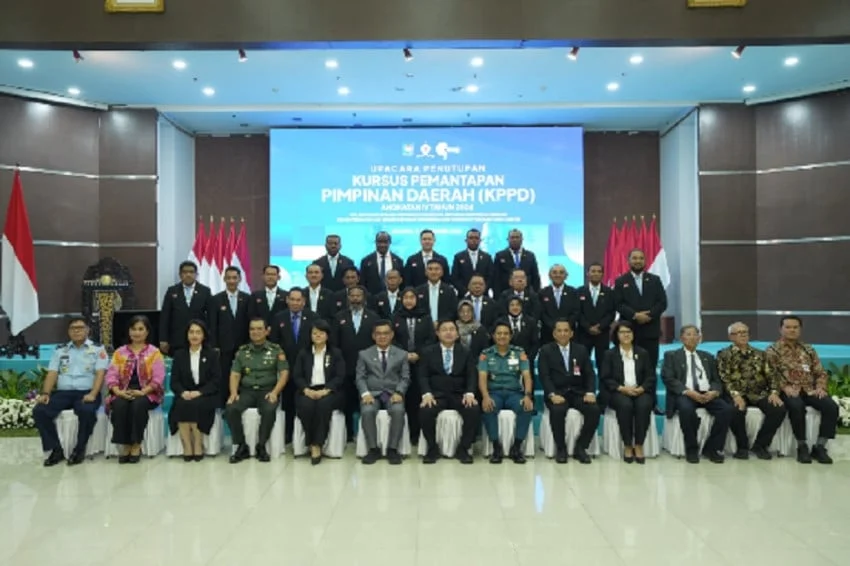
JAKARTA — The Human Resources Development Agency (BPSDM) of the Ministry of Home Affairs (Kemendagri) has reaffirmed its strategic commitment to enhancing the leadership competencies of regional heads across Indonesia. This commitment is being materialized through the execution of the Regional Head Leadership Program (Program Kepemimpinan Kepala Daerah – KPPD) Angkatan IV Year 2026.
The intensive training initiative, which runs from September 2 to September 12, 2026, is structured to go beyond conventional administrative training. It is specifically designed to broaden the strategic vision of participating regional leaders while simultaneously cultivating practical, actionable plans that can be directly implemented within their respective local governments to accelerate regional development and public service delivery.
The implementation of KPPD Angkatan IV 2026 marks a crucial milestone in ongoing bureaucratic reforms and capacity-building efforts targeting local governance. By addressing modern administrative challenges, the program seeks to transform regional leaders into adaptive, visionary figures capable of navigating complex economic, social, and geopolitical landscapes at the grassroots level.
Collaborative Framework and Multi-Sectoral Synergy
The execution of the KPPD Angkatan IV 2026 underscores a collaborative approach to governance. The BPSDM Kemendagri is not acting in isolation; rather, the program is conducted in strategic synergy with the National Resilience Institute (Lemhannas) and the Purnomo Yusgiantoro Center (PYC).
This multi-institutional partnership brings together academic rigor, state defense perspectives, and independent research insights into energy and public policy. Lemhannas contributes its expertise in national strategy, state ideology, and geopolitical awareness, ensuring that regional leaders view local challenges through a comprehensive national lens. Meanwhile, the Purnomo Yusgiantoro Center brings valuable analytical depth regarding sustainable development, environmental management, and economic policy.
Uniquely, the program’s participant structure is tailored to foster institutional alignment from the ground up. The training engages not only governors, regents, and mayors but also the heads of the Regional Development Planning Agencies (Bappeda). By bringing together top executive leaders and chief planners, the program ensures that strategic leadership visions are directly translated into technical, implementable policy frameworks within local development agendas.
Chronology and Program Structure
The 10-day intensive program, spanning the early days of September 2026, follows a rigorous curriculum aimed at balancing theoretical knowledge with pragmatic execution.
Phase 1: Conceptual Alignment and Strategic Insight (September 2–5, 2026)
The opening days of the program focus on national strategic policies, macro-economic conditions, and the alignment of regional development plans with the central government’s long-term vision. Lectures and panel discussions led by senior officials from Kemendagri, Lemhannas, and policy experts establish a baseline understanding of contemporary governance challenges, ranging from fiscal decentralization to digital transformation in public services.
Phase 2: Crisis Management and Geopolitical Awareness (September 6–9, 2026)
The middle phase transitions into specialized modules concerning state resilience, energy security, and regional risk mitigation. Given Indonesia’s vulnerability to natural disasters and global economic fluctuations, participants are trained in crisis leadership and resource optimization. Case studies provided by the Purnomo Yusgiantoro Center help leaders evaluate sustainable energy transitions and natural resource governance at the regional level.
Phase 3: Action Plan Formulation and Policy Synchronization (September 10–12, 2026)
The final segment of the program shifts toward practical application. Participants, working alongside their respective Bappeda heads, are required to formulate concrete action plans (rencana aksi). These frameworks address specific development bottlenecks in their regions—such as infrastructure deficits, bureaucratic inefficiencies, or targeted poverty alleviation. The program concludes with the presentation and defense of these action plans before a panel of evaluators.

Contextual Background of Regional Leadership Challenges
The launch of the KPPD Angkatan IV 2026 comes at a critical juncture for Indonesian decentralization. Since the implementation of regional autonomy in the early 2000s, local governments have held significant authority over local public services, budget allocations, and economic development. However, decentralization has also exposed disparities in administrative capacity across the archipelago.
While some regions have successfully leveraged autonomy to spur innovation and economic growth, others continue to struggle with bureaucratic stagnation, low realization of capital expenditure, and suboptimal public service delivery. Furthermore, regional heads face mounting pressures to achieve national targets related to structural economic transformation, poverty reduction, digital governance, and the transition toward green energy.
In this context, the BPSDM Kemendagri identifies leadership capacity as the primary catalyst for administrative success. Without visionary and competent regional leadership, financial transfers from the central government often fail to generate maximum public utility. The KPPD initiative directly addresses this gap by institutionalizing leadership training that prepares officials to manage complex socio-political dynamics while maintaining transparency and accountability.
Official Responses and Institutional Perspectives
While specific quotes from individual officials during the ongoing sessions highlight the gravity of the training, representatives from the organizing bodies have consistently emphasized the long-term utility of the program.
According to observers within the governance sector, the integration of Bappeda heads into the leadership training paradigm is a long-overdue necessity. Historically, leadership seminars often targeted regional heads exclusively, sometimes creating a disconnect between the political vision of the mayor or regent and the technical execution capacity of the planning agency. By requiring joint participation, the BPSDM Kemendagri ensures institutional cohesion and minimizes policy friction at the regional level.
Furthermore, academic experts have noted that the involvement of Lemhannas elevates the discourse from mere administrative management to statecraft. Regional heads are reminded that local governance is an integral component of national resilience. Decisions made at the district or provincial level—ranging from land-use planning to food security initiatives—directly impact the aggregate stability and prosperity of the Republic of Indonesia.
Broader Implications and Anticipated Impact
The implications of the KPPD Angkatan IV 2026 extend far beyond the immediate conclusion of the program on September 12. The primary metric of success for this initiative will not be the completion certificates issued, but rather the tangible implementation of the formulated action plans within the participants’ respective jurisdictions.
By empowering regional leaders to design evidence-based, sustainable, and adaptive policies, the program aims to achieve several key outcomes:
- Acceleration of Regional Development: Synchronized planning between regional heads and Bappeda chiefs is expected to reduce bureaucratic red tape, leading to higher efficiency in budget absorption and infrastructure project execution.
- Enhanced Crisis Preparedness: Equipped with strategic insights from Lemhannas, regional governments are expected to demonstrate greater resilience in handling localized economic shocks, social tensions, and environmental disasters.
- Promotion of Sustainable Practices: Through inputs from research entities like the Purnomo Yusgiantoro Center, regional policies are anticipated to increasingly incorporate environmental considerations, particularly regarding energy transition and sustainable natural resource management.
- Strengthening Good Governance: The emphasis on strategic planning reinforces principles of transparency, public accountability, and data-driven decision-making in local bureaucracies.
As the program progresses toward its culmination, the Ministry of Home Affairs, through BPSDM, remains committed to monitoring the post-training performance of the participating regions. Periodic evaluations will be conducted to assess how effectively the action plans developed during the KPPD Angkatan IV 2026 are integrated into the Regional Medium-Term Development Plans (RPJMD) and Annual Work Plans (RKPD).
Through continuous capacity-building initiatives such as the KPPD, the Indonesian government aims to build a robust foundation of regional leadership capable of steering the nation toward sustainable prosperity, administrative excellence, and resilient national development in the years to come.