
The mid-semester assessment, or Penilaian Tengah Semester (PTS), represents a critical milestone in the academic calendar for Grade 12 students in the Social Sciences (IPS) stream. As students navigate the final year of their secondary education, the mid-semester evaluations serve as a diagnostic tool, measuring the mastery of key concepts in Mathematics, Economics, Geography, History, and Sociology. With the 2026 academic cycle currently in progress, educators and curriculum developers emphasize that these assessments are not merely examinations but essential benchmarks for university readiness and long-term academic success.
The significance of the 2026 mid-semester assessment lies in its alignment with contemporary educational standards, which prioritize critical thinking and the application of theoretical knowledge to real-world scenarios. By reviewing foundational topics—ranging from spatial dimensions in geometry to fiscal accounting systems and geopolitical interactions—students can identify knowledge gaps before the final examination period.
Mathematics: Mastering Spatial Geometry and Projections
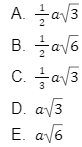
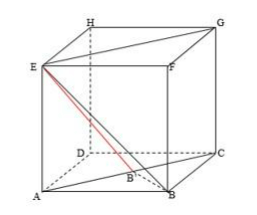
In the realm of mathematics, the curriculum for Grade 12 IPS focuses heavily on three-dimensional geometry, specifically the study of spatial structures. A core component of this topic involves the projection of lines and points onto specific planes within a cube or other geometric solids.

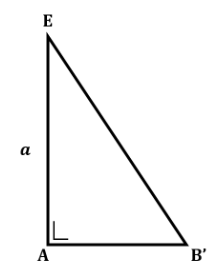
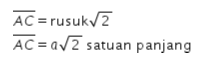
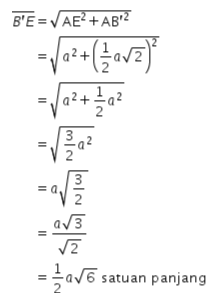
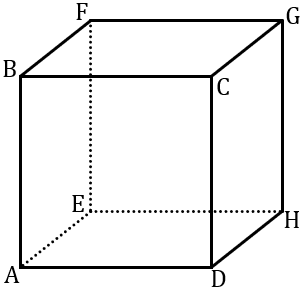
For instance, understanding the projection of line BE onto the plane ACGE in a cube requires a firm grasp of the Pythagorean theorem and the properties of perpendicular lines. By analyzing these spatial relationships, students sharpen their ability to visualize abstract geometric figures. Beyond theoretical calculations, these skills provide the basis for architectural understanding and spatial reasoning—competencies that are increasingly relevant in fields like urban planning, graphic design, and advanced data visualization.

Economics: The Foundation of Financial Literacy and International Trade
Economics in the Grade 12 curriculum serves as an introduction to the professional accounting environment and the complexities of international trade. The syllabus emphasizes the fundamental accounting equation: Assets = Liabilities + Equity. Understanding this equation is paramount for students, as it underpins every transaction recorded in a business, from initial capital injection to operational expenses.
Furthermore, the curriculum delves into the differences between the Continental and Anglo-Saxon accounting systems. While the Continental system often relies on a more rigid, code-based structure, the Anglo-Saxon model is characterized by flexibility and a focus on market value. Additionally, the study of international trade theories—such as the theory of absolute advantage—allows students to analyze why nations engage in global commerce to maximize efficiency. When Indonesia and Malaysia, for example, exchange goods based on production cost efficiencies, they optimize their respective economic outputs. This macro-level analysis is essential for understanding global supply chains and the economic interdependencies that define the 21st-century marketplace.

Geography: Territorial Planning and Regional Development
Geography for the senior year shifts toward the application of spatial planning and urban development. Students are tasked with interpreting maps, understanding the growth of urban centers, and analyzing the interaction between rural hinterlands and urban cores.

One of the most vital concepts in this segment is the "Break-Point Theory," which helps determine the ideal location for public services, such as hospitals or schools, between two cities of varying populations. By utilizing mathematical models to calculate these points, students gain insight into effective resource allocation. Moreover, the study of regional development—specifically the identification of growth centers and the implementation of spatial planning (RTRW)—is crucial for addressing issues like traffic congestion and uneven development. In the context of 2026, where rapid urbanization continues to challenge city administrations, these geographical insights are indispensable for sustainable city planning.
History: Consolidating National Identity and Sovereignty
The history curriculum focuses on the post-independence era, covering the turbulent period of national consolidation and the defense of sovereignty. Students examine the myriad of internal challenges the young republic faced, including the Republik Maluku Selatan (RMS) uprising and the regional rebellions that tested the unity of the nation.

A central theme is the diplomatic effort to secure international recognition. Figures such as L.N. Palar played an instrumental role in bringing Indonesia’s cause to the United Nations, effectively positioning the country on the global stage. Understanding the timeline of the Round Table Conference (KMB) and the subsequent transition from the Republic of the United States of Indonesia (RIS) back to the Unitary State of the Republic of Indonesia (NKRI) is essential for grasping the structural evolution of the Indonesian government. These historical lessons foster a deeper appreciation for the political stability that current generations enjoy.

Sociology: Navigating Social Change and Globalization
Sociology in Grade 12 addresses the mechanisms of social change, the impact of globalization, and the challenges of technological integration. As society undergoes rapid transformations—often driven by digital innovation—the curriculum forces students to evaluate the dual nature of these shifts.
For example, the emergence of ride-hailing applications has created new employment opportunities and modernized payment systems, yet it has also disrupted traditional transportation sectors, creating friction between legacy operators and modern platforms. Students are encouraged to analyze these changes through the lens of social equilibrium. Whether it is the adoption of modern machinery in agriculture or the influence of global pop culture on local communities, sociology provides the analytical tools to understand how societies adapt to external pressures while attempting to preserve local identity.

Strategic Preparation for the Midterm Assessment
To achieve success in the upcoming midterm assessments, educators suggest a structured approach to study. Rather than rote memorization, students should focus on conceptual understanding.

- Diagnostic Review: Utilize the results of previous practice tests to identify specific topics that require additional attention.
- Collaborative Learning: Engaging in group discussions can clarify complex economic formulas or historical timelines that might be difficult to grasp in isolation.
- Application of Theory: For geography and mathematics, apply theoretical concepts to local examples. Observe the urban layout of your own city or use the accounting equation to balance a hypothetical household budget.
- Time Management: Given the breadth of the IPS curriculum, students should allocate study hours based on the complexity of the subject matter, ensuring that practice questions are a core component of their daily routine.
The Broader Implications of the 2026 Academic Cycle
The 2026 Grade 12 assessments occur during a time of significant technological advancement. The integration of digital platforms into the learning process—ranging from online drill simulations to interactive educational portals—has fundamentally changed how students prepare for exams. Access to vast databases of historical records, real-time economic data, and sophisticated mapping tools allows for a more immersive learning experience.
However, this accessibility also places a greater responsibility on the student to discern credible information from misinformation. In the social sciences, the ability to synthesize data from diverse sources is just as important as the mastery of the curriculum itself. As students move toward the final half of the semester, they are not only preparing for a grade but are also refining the cognitive skills necessary for higher education and future professional endeavors.

Ultimately, the mid-semester assessment is a bridge. It connects the foundational learning of the previous years with the specialized, critical-thinking requirements of university-level social sciences. By treating these exams as an opportunity for personal growth rather than a mere administrative hurdle, Grade 12 students can maximize their potential and enter the next phase of their academic journey with confidence and clarity. Whether it is through mastering the intricacies of spatial geometry or understanding the complex dynamics of international relations, the preparation undertaken during this period will serve as a bedrock for future success.