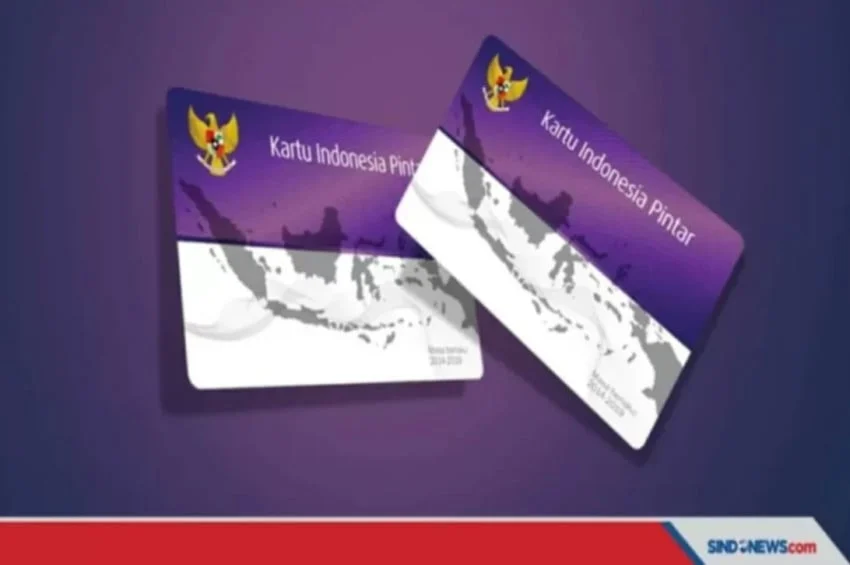
The Ministry of Education, Culture, Research, and Technology (Kemendikbudristek) has streamlined the verification process for the Program Indonesia Pintar (PIP) to ensure that educational assistance reaches the most vulnerable students across the nation through a digital portal accessible via National Population Identification Numbers (NIK) and National Student Identification Numbers (NISN). As a cornerstone of the Indonesian government’s social safety net, the PIP serves as a critical financial bridge for students from impoverished or vulnerable backgrounds, aiming to eliminate economic barriers to education. By utilizing a centralized online system, the government intends to enhance transparency, minimize administrative bottlenecks, and provide parents and students with real-time updates regarding their eligibility and fund disbursement status.
The Operational Mechanism of Online Status Verification
The digitalization of the PIP recipient check is part of a broader initiative to integrate educational data with the National Population Registry. To check the status of the aid, recipients or their guardians must navigate to the official PIP portal managed by the Center for Education Financing Service (Puslapdik). The process requires two primary pieces of identification: the NIK, which identifies the student as a citizen within the Ministry of Home Affairs’ database, and the NISN, a unique code assigned to every student registered in the National Education Data Base (Dapodik).
Once on the portal, users enter these identification numbers along with a security captcha. The system then generates a status report indicating whether the student is listed in the "SK Nominasi" (Nomination Decree) or the "SK Pemberian" (Award Decree). The "SK Nominasi" indicates that a student is a candidate for the aid but must first activate a simple student savings account (SimPel) at a designated bank. The "SK Pemberian" signifies that the funds have been processed and are ready for withdrawal or have already been credited to the student’s account. This distinction is vital for parents to understand, as the transition from nomination to award requires active participation from the school and the family.
Understanding the Program Indonesia Pintar (PIP) Framework
The Program Indonesia Pintar is not merely a cash transfer program; it is a strategic intervention designed to support the "Wajib Belajar" (Compulsory Education) mandate. Historically, Indonesia enforced a nine-year compulsory education cycle, covering elementary and junior high school. However, under current administrative goals, this has been expanded to a 12-year cycle, and more recently, the government has begun laying the groundwork for a 13-year compulsory education roadmap.
The primary targets for PIP are students aged 6 to 21 who come from families holding the Prosperous Family Card (KKS), participants in the Program Keluarga Harapan (PKH), orphans, students affected by natural disasters, or those from families facing sudden economic shocks. By providing direct financial assistance, the government seeks to cover personal education costs that are not covered by the School Operational Assistance (BOS) funds, such as uniforms, stationery, transportation, and extracurricular fees.
Strategic Expansion: Inclusion of Kindergarten (TK) in 2026
A significant shift in the trajectory of PIP is the planned expansion to the early childhood education level. Starting in 2026, the government aims to include Taman Kanak-Kanak (TK) or Kindergarten students within the PIP framework. This policy recognizes that the foundations of educational success are laid long before a child enters primary school. Research into human capital development suggests that early childhood interventions provide the highest return on investment in terms of long-term cognitive and social outcomes.
The expansion to the TK level is intrinsically linked to the government’s 13-year compulsory education initiative, which includes one year of pre-school. By subsidizing early education, the Ministry hopes to increase enrollment rates in formal pre-school settings among the poor, ensuring that children from low-income families enter first grade with the same readiness as their more affluent peers. This move is expected to require a substantial increase in the national education budget and a reconfiguration of the Dapodik system to accurately capture the data of younger learners.
Comprehensive Coverage: Formal and Non-Formal Education
The PIP is designed to be inclusive, acknowledging that the path to graduation is not uniform for all citizens. Consequently, the program covers both formal and non-formal education sectors. In the formal sector, the aid is distributed to students in:
- SD/SDLB (Elementary School/Special Elementary School)
- SMP/SMPLB (Junior High School/Special Junior High School)
- SMA/SMALB (Senior High School/Special Senior High School)
- SMK (Vocational High School)
In the non-formal sector, the program supports students enrolled in "Pendidikan Kesetaraan" (Equivalency Education), specifically:
- Paket A (Equivalent to Elementary)
- Paket B (Equivalent to Junior High)
- Paket C (Equivalent to Senior High)
This inclusion is vital for "drop-out" recovery, allowing individuals who left the formal system due to economic hardship to return to their studies and gain the certifications necessary for the modern workforce. For vocational students (SMK), the PIP often carries additional weight, as it helps offset the higher costs associated with practical training, tools, and industry certifications.
Financial Allocations and Disbursement Cycles
The amount of assistance provided by PIP varies by educational level, reflecting the increasing costs associated with higher grades. In recent years, the government has adjusted these figures to keep pace with inflation and the rising cost of living. For instance, as of the 2024 academic year, the nominal values are generally structured as follows:
- SD/SDLB/Paket A: IDR 450,000 per year.
- SMP/SMPLB/Paket B: IDR 750,000 per year.
- SMA/SMK/Paket C: Increased to IDR 1,800,000 per year (up from the previous IDR 1,000,000) to better support the transition to higher education or the workforce.
Disbursement usually occurs in three stages or cycles throughout the year. The first stage often focuses on students who were already recipients in the previous year, while the subsequent stages incorporate new recipients and those who recently updated their data. The funds are disbursed through state-owned banks (Himbara), including BRI for elementary and junior high students, and BNI for senior high and vocational students. In the Aceh province, disbursements are handled by Bank Syariah Indonesia (BSI) in accordance with local Sharia regulations.
Accountability and the "Jaga Indonesia Pintar" Initiative
As with any large-scale social assistance program, the PIP faces challenges related to data accuracy and potential misappropriation. To combat these issues, the government has introduced the "Jaga Indonesia Pintar" platform. This initiative, often supported by the Corruption Eradication Commission (KPK) and the Ministry’s Inspectorate General, provides a dedicated channel for the public to report irregularities.
Common issues addressed by these reporting mechanisms include unauthorized deductions by school officials, delays in fund distribution by banks, or the inclusion of students who do not meet the poverty criteria. By empowering parents to act as whistleblowers, the government aims to create a culture of transparency. Officials from Puslapdik have repeatedly emphasized that the PIP funds must reach the students in full, without any "administrative fees" or "voluntary contributions" taken by third parties.
Socio-Economic Impact and Implications
The implications of the PIP extend far beyond the immediate relief of educational expenses. From a macroeconomic perspective, the program is a vital tool for breaking the cycle of intergenerational poverty. By ensuring that children from the bottom 40% of the economic pyramid can complete at least 12 years of education, the government is increasing the overall quality of the national labor force.
Data from the Central Bureau of Statistics (BPS) and various educational think tanks suggest that the PIP has contributed to a steady decline in the national dropout rate. However, analysts point out that while the program excels at keeping children in school, the next challenge lies in ensuring the quality of education received. The "merdeka belajar" (freedom to learn) curriculum reforms are intended to work in tandem with PIP; while PIP provides the access, the curriculum reforms provide the quality.
Furthermore, the integration of PIP with the Integrated Social Welfare Data (DTKS) managed by the Ministry of Social Affairs ensures that aid is holistic. A student receiving PIP is often part of a household receiving food subsidies and healthcare assistance, creating a multi-layered support system intended to lift the entire family unit out of poverty.
Conclusion and Future Outlook
As Indonesia moves toward its "Golden Indonesia 2045" vision, the Program Indonesia Pintar remains a foundational element of its social policy. The upcoming expansion into Kindergarten in 2026 and the continued increase in financial nominals for high school students signal a government that is committed to long-term human capital investment.
For the success of the program to continue, the synergy between the Ministry of Education, local governments, schools, and banking partners must be strengthened. The digital check-up system using NIK and NISN is more than just a convenience; it is a symbol of a modernizing bureaucracy that prioritizes the rights of its youngest citizens. Parents are encouraged to remain proactive in monitoring their children’s status and ensuring that their data in the Dapodik system remains current, as this data remains the "single source of truth" for the distribution of national educational aid. Through continued transparency and strategic expansion, the PIP is poised to remain Indonesia’s most effective tool in ensuring that no child is left behind due to the circumstances of their birth.