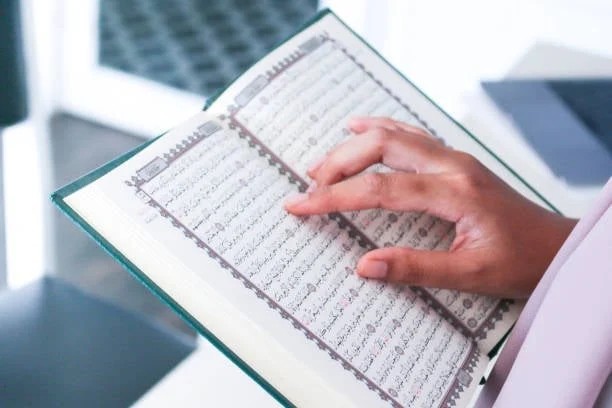
The Chairman of the Central Board of Muhammadiyah, Kiai Saad Ibrahim, has called upon the global Muslim community to actively maintain, evaluate, and elevate their spiritual faith through structured personal efforts and intellectual contemplation. Speaking during a specialized broadcast on TVMu, Kiai Saad emphasized that faith—or iman—is not a static attribute inherent to human existence, but rather a dynamic spiritual state that requires deliberate cultivation, continuous nourishment, and protection from moral degradation.
The discourse, broadcasted on Friday, September 19, addressed the complex theological nuances surrounding the fluctuations of faith. By merging classical Islamic jurisprudence with modern cosmological sciences, the senior Islamic scholar provided a comprehensive framework for believers seeking to deepen their religious consciousness in an increasingly secularized and technologically advanced era.
Theological Foundations and the Dynamic Nature of Faith
Opening his address, Kiai Saad turned to the foundational principles of Ilm al-Kalam (Islamic scholastic theology) to examine how faith behaves within the human heart. He noted that classical theological scholars have long debated the stability of a believer’s spiritual conviction. While some historical doctrines suggest that faith remains fixed once established or can be entirely lost under specific conditions, the prevailing Sunni consensus—and the perspective emphasized by Kiai Saad—asserts that faith is inherently fluctuating. It follows the principle of yazidu wa yanqushu, meaning it perpetually increases through righteous actions and diminishes through spiritual neglect or transgression.
"Therefore, managing faith is a critical component of daily religious life," Kiai Saad stated during the program. "At the very least, our goal is to maintain its stability, but if we can systematically increase it, that outcome is exponentially better."
This perspective positions faith not merely as a passive theological declaration, but as an active, living commitment that responds directly to an individual’s intellectual engagement, moral choices, and relationship with the Creator. To achieve this growth, the Muhammadiyah leader outlined a dual-path methodology: the deep observation of the physical universe, known as ayat kauniah, coupled with the study of the divine textual revelations found within the Holy Quran, known as ayat qauliah.
Bridging Modern Astrophysics and Divine Creation
A central pillar of Kiai Saad’s discourse involved bridging the gap between empirical science and spiritual enlightenment. He directed believers to Surah Fussilat, Verse 53, which promises that God will continuously show humanity His signs in the horizons—the furthest expanses of the universe—and within their own souls, until it becomes undeniably clear that the Quran is the absolute truth.
Rather than viewing science and religion as conflicting domains, the Muhammadiyah scholar argued that modern scientific discoveries serve as powerful catalysts for faith. He highlighted contemporary astrophysics, specifically referencing the Big Bang theory, which posits that the universe originated approximately 13.8 billion years ago from an extremely dense and hot singularity before expanding to form the vast array of galaxies, stars, and planetary systems known today.
Within this cosmological framework, Planet Earth occupies a minute, seemingly negligible fraction of space. Yet, the extreme precision, mathematical predictability, and structural order governing this immense expanse demonstrate a profound, deliberate design.
"Observe and scrutinize the signs of Allah—both those spread across the breadth of the universe and those embedded within our own bodies and physical forms," Kiai Saad urged viewers. He underscored that astrophysical research consistently reveals a cosmos operating under rigorous, measurable physical laws. "This means nothing was created haphazardly; everything is meticulously calculated and measured."
However, Kiai Saad issued an important philosophical caution: humans must not allow themselves to terminate their intellectual journey at the physical phenomenon itself. Science explains how the universe operates, but the ultimate spiritual objective is to recognize Who stands behind those mechanisms.
To illustrate this boundary between empirical observation and metaphysical realization, Kiai Saad invoked the legacy of the late British theoretical physicist Stephen Hawking (1942–2018). While acknowledging Hawking’s monumental contributions to the understanding of black holes, cosmology, and quantum gravity, the scholar pointed out that the brilliant scientist’s exhaustive exploration of the cosmos did not ultimately lead him to a theistic conclusion regarding the existence of God. This divergence, Kiai Saad explained, occurs when scientific inquiry detaches itself from divine revelation, leaving the observer stranded in mere mechanics without grasping the transcendent Architect.
The Interplay of Revelation, Supplication, and Moral Integrity
To prevent intellectual analysis from falling short of true spiritual realization, Kiai Saad stressed that the study of the cosmos must always be paired with the direct study of the Quran. The convergence of universal observation (ayat kauniah) and scriptural text (ayat qauliah) provides a holistic framework that anchors the human intellect and fortifies the heart against existential doubt.
Beyond intellectual contemplation, the Muhammadiyah leader emphasized that faith is actively sustained through practical, daily habits of reliance upon the Divine. He referenced a well-known prophetic tradition: "If you ask, ask of Allah, and if you seek help, seek help from Allah" (idzā sa’alta fas’alillāha wa idzā ista’anta fasta’in billāh).
Kiai Saad noted that modern believers often compartmentalize their prayers, reserving formal supplication exclusively for monumental life crises or existential struggles. He argued against this tendency, encouraging Muslims to cultivate a persistent, intimate relationship with God by seeking His assistance even in the smallest, most routine aspects of daily life. Whether dealing with minor professional hurdles, personal inconveniences, or trivial daily decisions, maintaining an ongoing dialogue with the Creator reinforces a constant consciousness of divine presence.
Furthermore, the discourse addressed the delicate balance between human frailty, moral accountability, and spiritual rehabilitation. Kiai Saad reminded the audience that faith is maintained through righteous deeds performed purely for the sake of Allah, while intentional acts of disobedience act as spiritual erosion, gradually wearing down the believer’s inner resolve.
Recognizing that human beings are inherently imperfect and prone to moral failure, the scholar highlighted the theological necessity of continuous repentance (istighfar). He cited a sacred narration (Hadith Qudsi) transmitted by Imam Muslim, which notes that humanity commits errors by night and day, while God continually offers forgiveness to those who seek it.
"May istighfar become an active, daily component of our lives," Kiai Saad concluded, modeling the simple yet transformative practice of repetitive invocation: Astaghfirullah, astaghfirullah, astaghfirullah (I seek forgiveness from Allah).
Broader Implications for Contemporary Muslim Communities
The televised address by the Muhammadiyah leader arrives at a time when religious organizations globally are grappling with the challenges of secularization, scientific materialism, and the psychological pressures of modern life. By framing cosmological science not as a threat to religious dogma, but as a vital instrument for spiritual renewal, Muhammadiyah continues to champion a progressive, intellectually engaged brand of Islam.
Analysts of religious trends in Southeast Asia note that such discourses play a crucial role in preventing polarization between modern education and traditional religious observance. By encouraging young Muslims to study subjects like astrophysics, biology, and environmental science through a spiritual lens, leaders like Kiai Saad foster an intellectual environment where faith is resilient against skepticism.
The emphasis on daily gratitude, humble supplication, and routine introspection also offers a practical psychological buffer. In an era marked by rising rates of anxiety and existential isolation, the integration of mindfulness through remembrance of God (dhikr) and routine repentance provides a framework for emotional and spiritual stabilization.
Ultimately, Kiai Saad’s message serves as a comprehensive reminder for the contemporary believer: that maintaining faith requires a synchronized effort of the mind, which reads the signs of the cosmos and scripture, and the heart, which humbles itself through constant prayer and repentance before the Divine.