The legal proceedings surrounding the authenticity of the educational credentials belonging to Indonesia’s seventh president, Joko Widodo, reached another critical juncture at the East Jakarta District Court. The high-profile trial, which centers on allegations of document forgery and the dissemination of unverified claims regarding the former head of state’s university degree, featured testimony from two key witnesses presented by the Public Prosecutor’s Office. Among the defendants involved in the ongoing litigation is prominent public figure and digital forensic expert Roy Suryo, who openly criticized the demeanor and credibility of one of the prosecution’s witnesses following the adjournment of the session.
The courtroom session, presided over by a panel of judges, focused heavily on cross-examining the statements provided by Lechumanan and Maret Samuel Sueken. While the testimony of Lechumanan was met with a degree of professional acknowledgment from the defense, the statements delivered by Maret Samuel Sueken sparked immediate controversy and drew sharp rebukes from Roy Suryo. The unfolding legal drama highlights the deep polarization and intense public scrutiny surrounding the ongoing litigation, which has captivated the Indonesian political landscape for several years.
Background Context of the Jokowi Diploma Controversy
The controversy concerning the authenticity of Joko Widodo’s university diploma has persisted long after his tenure as the Governor of Jakarta and his two terms as the President of the Republic of Indonesia. The allegations first emerged publicly through various social media platforms and independent commentators who questioned whether the diploma issued by Universitas Gadjah Mada’s Faculty of Forestry—where Jokowi graduated in 1985—was authentic or fabricated.
Despite multiple clarifications, official statements, and legal confirmations from Universitas Gadjah Mada (UGM) itself—reaffirming that Joko Widodo is a genuine alumnus who completed his undergraduate studies in forestry—the issue has repeatedly resurfaced. Various activist groups and critics have pushed the narrative through digital channels, leading to a series of defamation and information law investigations. The judicial process currently underway at the East Jakarta District Court represents a significant escalation, transforming online allegations into formal criminal charges against individuals accused of spreading unverified or defamatory claims regarding the former president’s educational history.
Chronology of the Recent Court Proceedings
The court session held on Wednesday, October 28, 2026, at the East Jakarta District Court was structured to evaluate evidence and hear testimonies from witnesses presented by the Public Prosecutor’s Office (JPU). The prosecution called two witnesses to the stand: Lechumanan and Maret Samuel Sueken.
During the hearing, both witnesses were questioned regarding their knowledge of the contested documents and the origin of the allegations. While the session proceeded according to standard judicial protocols, the behavior and statements of the witnesses quickly became a focal point of post-trial commentary. As the court recessed, defendants and legal observers offered contrasting evaluations of the testimonies delivered during the day’s proceedings.
Defense Reactions and Criticism of Witness Demeanor
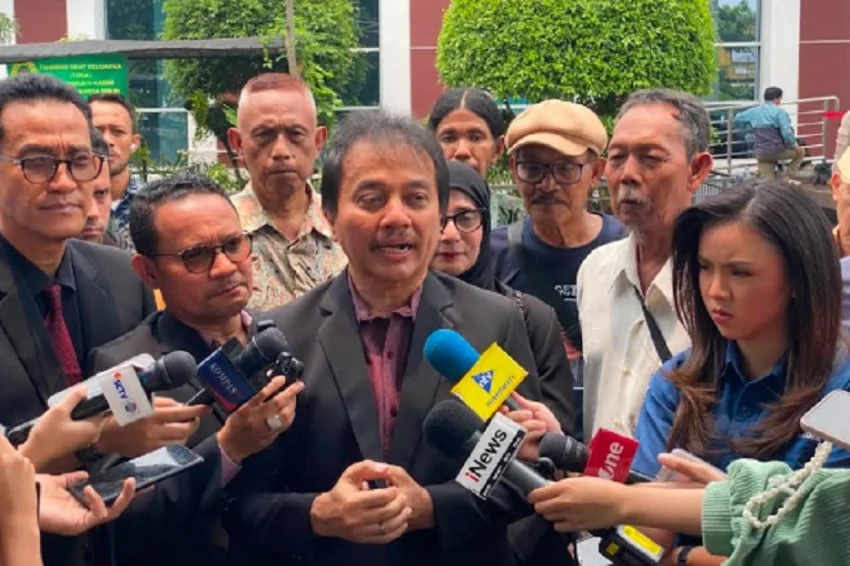
Speaking to members of the media immediately following the conclusion of the trial, Roy Suryo did not hold back his critique of the two witnesses presented by the state. He drew a sharp contrast between the conduct of Lechumanan and that of Maret Samuel Sueken, explicitly favoring the former while condemning the latter’s courtroom behavior.

"Lechumanan is far more polite, far more courteous, and far more honest compared to Maret Samuel Sueken, whose behavior everyone here witnessed today—pointing fingers at people and everything else," Roy Suryo stated outside the courtroom.
The defense’s critique underscores the psychological and tactical dimensions often present in high-stakes political trials, where the perceived credibility, tone, and emotional composure of witnesses can significantly influence public perception and media narratives. While formal judicial weight rests strictly on verifiable facts and legal statutes, the demeanor of witnesses under cross-examination frequently becomes a central talking point for defendants seeking to undermine the opposing side’s credibility.
Upcoming Testimonies and Anticipated Appearances
The legal battle is far from over, with several crucial sessions scheduled for the coming weeks. Anticipation has grown significantly following indications that key figures, including former President Joko Widodo himself, could potentially be called or summoned by the Public Prosecutor’s Office to provide testimony in the ongoing case.
In relation to these developments, representatives and aides close to the former president have previously signaled readiness to cooperate with judicial authorities. When earlier questioned regarding a potential prosecutorial summons for the former head of state, a presidential aide responded with optimism, stating, "God willing, he will come." This potential appearance is expected to draw unprecedented media attention, potentially serving as a definitive moment in the prolonged legal and public debate over the authenticity of his credentials.
Broader Legal Implications and Information Integrity in Indonesia
The trial of Roy Suryo and other defendants in connection with the presidential diploma controversy carries profound implications for freedom of speech, information integrity, and the enforcement of Indonesia’s Electronic Information and Transactions (UU ITE) law. In an era dominated by digital media, social networks, and rapid information dissemination, the legal system increasingly finds itself tasked with arbitrating the boundary between legitimate public inquiry and the illegal propagation of defamatory disinformation.
Legal analysts point out that cases involving prominent national figures often transcend standard criminal adjudication, transforming into testing grounds for institutional trust. The reliance of the prosecution on documentary evidence from academic institutions, combined with digital forensic analyses frequently cited by defense experts like Roy Suryo, underscores the complexity of modern evidentiary standards in Indonesia.
Furthermore, the public nature of these trials ensures that every statement made inside and outside the courtroom is closely monitored by millions of citizens. As the judiciary moves closer to rendering a verdict in the months ahead, the outcome of this case is expected to establish a vital legal precedent regarding accountability for unverified online claims directed at high-ranking state officials, past and present.
Conclusion and Next Steps in the East Jakarta District Court
As the East Jakarta District Court prepares for subsequent hearings, the defense teams and the Public Prosecutor’s Office will continue to dissect the testimonies provided by Lechumanan and Maret Samuel Sueken. The starkly contrasting evaluations offered by defendants like Roy Suryo highlight the contentious nature of the proceedings, ensuring that media interest will remain high as the trial progresses toward its eventual conclusion. The court is expected to announce the schedule for the next session, where additional evidence will be reviewed and potential high-profile witnesses may take the stand.