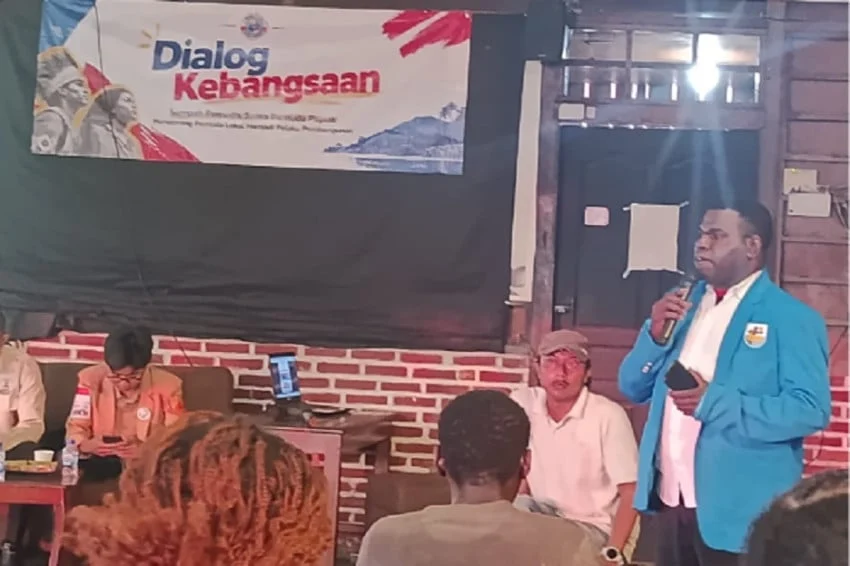
The commemoration of the 98th Youth Pledge Day in Merauke, South Papua, served as a powerful platform for youth mobilization, with local leaders calling on the younger generation to transform historical unity into tangible regional development. David B Kainakaimu, Chairman of the National Committee of Indonesian Youth (KNPI) for Merauke Regency, delivered an impassioned address urging the youth of South Papua to embrace their roles as proactive catalysts for social and economic progress. Speaking at a dedicated national dialogue event, Kainakaimu emphasized that the ideals forged during the historic 1928 Youth Pledge must evolve from symbolic remembrance into actionable contributions that directly benefit local communities.
The event, which brought together prominent youth figures, community leaders, and local academics, highlighted the strategic importance of empowering indigenous and local populations to take the helm in regional governance, economic enterprise, and infrastructural advancement. As South Papua continues to develop as one of Indonesia’s newer autonomous provinces, the integration of capable, visionary young leaders is viewed by regional stakeholders as an absolute necessity for sustainable growth.
Background Context of the 98th Youth Pledge Anniversary and South Papua Autonomous Region
To fully understand the weight of the gathering in Merauke, one must examine the broader socio-political landscape of contemporary Papua. South Papua officially gained status as a distinct province following the enactment of the new autonomous region laws in 2022, alongside Central Papua and Mountainous Papua. This administrative restructuring was designed to accelerate public service delivery, improve infrastructure, and empower local populations through decentralized governance. However, these new provinces also face unique developmental challenges, ranging from human resource capacity gaps to geographical isolation and economic disparities.
Against this backdrop, the 98th anniversary of the Youth Pledge (Sumpah Pemuda)—which commemorates the historic oath taken by young nationalists on October 28, 1928, pledging one motherland, one nation, and one language—holds profound resonance. For the youth of South Papua, the historical framework of unity in diversity serves as a vital blueprint for overcoming regional hurdles. Rather than viewing the anniversary as a mere historical milestone, regional youth organizations like the KNPI are increasingly positioning it as a call to economic and intellectual arms.
Chronology of the National Dialogue Event in Merauke
The commemoration in Merauke followed a structured program designed to foster critical thinking and collaborative problem-solving among the younger demographic. The sequence of events unfolded as follows:
Morning Session: The official proceedings commenced with a plenary gathering at RKD Coffee in Merauke, orchestrated by the Merah Pusaka Stratejik Indonesia (MPSI) organization. The venue transformed into a hub of intellectual exchange, hosting university students, young entrepreneurs, community activists, and local officials.
Thematic Framing: The event operated under the overarching theme, "Sumpah Pemuda, Suara Pemuda Papua: Mendorong Pemuda Lokal Menjadi Pelaku Pembangunan" (Youth Pledge, The Voice of Papuan Youth: Encouraging Local Youth to Become Actors in Development). This theme was deliberately chosen to steer discussions away from passive participation and toward leadership roles in the region’s burgeoning economic sectors.
The Pledge Recitation: A central emotional and symbolic high point of the day occurred when KNPI Merauke Chairman David B Kainakaimu stepped forward to lead the assembly in reciting the historic Youth Pledge. The synchronized recitation by scores of attendees underscored a collective commitment to national unity coupled with regional dedication.
Panel Discussions and Interactive Dialogues: Following the formal address, participants engaged in a series of focus groups and panel discussions. Topics ranged from agricultural innovation in Merauke’s food estate initiatives to digital literacy and digital entrepreneurship among remote indigenous populations.
Closing Commitments: The dialogue concluded with the formulation of a joint youth resolution, outlining actionable steps for local organizations to collaborate with the South Papua provincial government in grassroots development projects.
Key Statements and Perspectives from Youth Leaders
The discourse during the Merauke dialogue underscored a growing consensus that the traditional paradigm of youth involvement—often limited to ceremonial participation—must be replaced by substantive contributions to policy-making and economic production.

In his address, David B Kainakaimu stressed that the contemporary challenges faced by South Papua require a localized, resilient approach. "The youth of Papua Selatan cannot merely be spectators in the grand narrative of our region’s development," Kainakaimu stated to the assembled participants. "The spirit of 1928 taught us that unity is our greatest weapon against adversity. Today, that unity must manifest in our willingness to roll up our sleeves, innovate in our respective fields, and build a prosperous society that leaves no one behind."
Kainakaimu further elaborated on the necessity of self-evaluation among the younger demographic. He noted that the anniversary provides an opportune moment for individuals to assess how their daily endeavors, whether in education, commerce, or civil society, contribute to the broader welfare of the South Papua community.
Echoing these sentiments, representatives from Merah Pusaka Stratejik Indonesia (MPSI) emphasized that local youth possess untapped potential that can significantly accelerate the province’s transition toward self-sufficiency. Organizers pointed out that Merauke, historically recognized as a strategic agricultural hub and a vital frontier region, requires energetic minds to modernize farming techniques, expand market access for local commodities, and preserve cultural heritage amidst rapid modernization.
Socio-Economic Implications for South Papua
The push to position youth as primary actors in development carries profound implications for the socio-economic trajectory of South Papua. As a newly established province, South Papua is currently laying the foundational blocks of its institutional and economic architecture. The success of this developmental phase depends heavily on human capital readiness.
-
Bridging the Capacity Gap: By encouraging young people to take active roles in local industries, educational initiatives, and public administration, the region can systematically address existing skill shortages. Programs focused on vocational training, agricultural technology, and small-to-medium enterprise (SME) management are crucial components of this transition.
-
Fostering Economic Independence: Merauke holds significant strategic value as part of national food security programs, notably due to its expansive agricultural potential. Engaging young entrepreneurs in agribusiness can transform traditional farming practices into modern, tech-driven commercial ventures, thereby reducing reliance on external supply chains and boosting local household incomes.
-
Strengthening Social Cohesion: In a region characterized by rich cultural diversity, maintaining social harmony is paramount. The foundational principles of the Youth Pledge serve as a unifying thread, bridging potential divides between indigenous communities and migrant populations. When youth collaborate on regional development projects, they reinforce a shared identity rooted in mutual respect and collective progress.
Broader National Context: Youth Engagement Across Indonesia
The events in Merauke resonated with similar national dialogues taking place across the Indonesian archipelago on the 98th Youth Pledge anniversary. Across various provinces, prominent figures and youth advocates emphasized the evolving role of the younger generation in the digital age. Discussions in major urban centers frequently intersected with themes of national integration, anti-corruption, and digital innovation.
However, observers note that the challenges confronting youth in frontier regions like South Papua are distinct from those in metropolitan centers. While urban youth grapple with issues related to the digital economy and global competitiveness, Papuan youth often navigate the delicate balance between preserving ancestral traditions and adapting to accelerated regional development and modernization. Events like the Merauke National Dialogue demonstrate a localized determination to address these specific frontier challenges through proactive self-reliance and community-led initiatives.
Looking Forward: Actionable Pathways for South Papua Youth
As the 98th Youth Pledge commemorations conclude, the immediate test lies in the execution of the resolutions drafted during the Merauke dialogue. Local youth organizations, under the guidance of leaders like David B Kainakaimu, face the task of translating rhetorical commitments into sustainable programs.
Key areas identified for immediate action include:
- Establishing mentorship networks connecting experienced professionals with young aspiring entrepreneurs in Merauke.
- Collaborating with local educational institutions to align curricula with the practical needs of South Papua’s growing economy.
- Utilizing digital platforms to advocate for community welfare and enhance transparency in local development initiatives.
Ultimately, the message resonating from Merauke is clear: the legacy of the 1928 pioneers lives on not merely in the recitation of historical vows, but in the daily, dedicated labor of a new generation committed to shaping a prosperous, self-reliant future for South Papua.