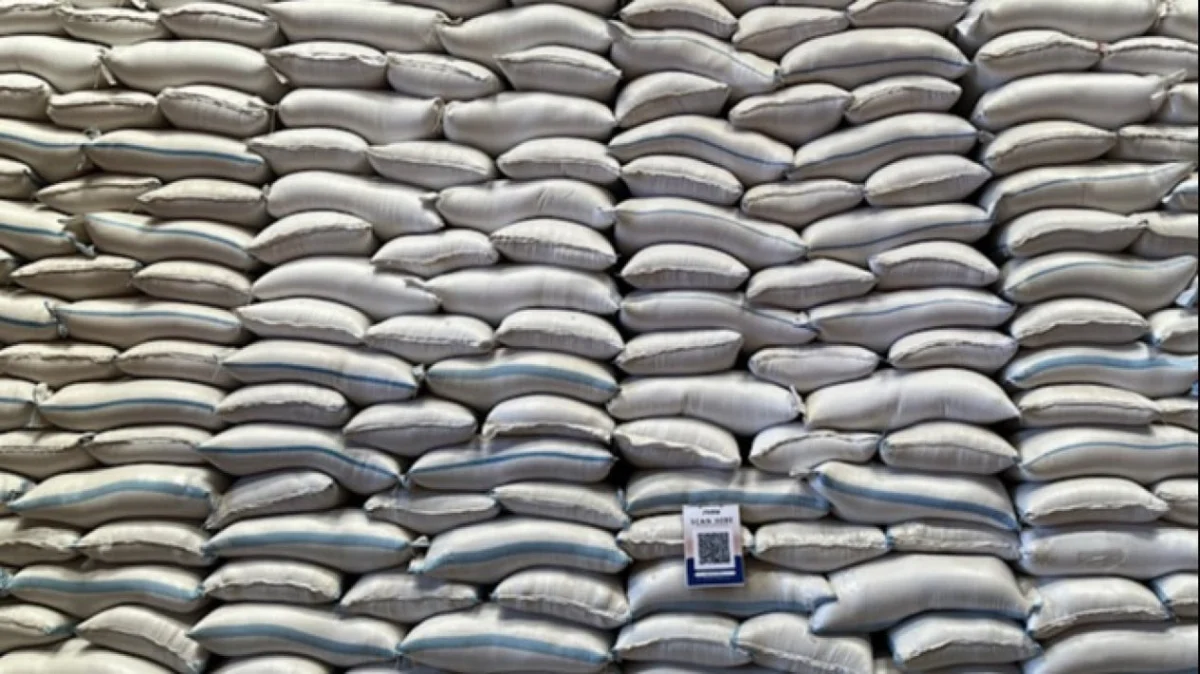
Jakarta — In a significant development for national food security, state logistics agency Perum Bulog has announced that its national rice reserves have reached an impressive 4.8 million tons. This substantial volume guarantees the availability of staple food supplies across Indonesia through the end of the year. The announcement was made by Perum Bulog President Director Ahmad Rizal Ramdhani during a working visit to Cilacap, Central Java.
The accumulation of this massive volume, however, has presented a unique logistical challenge for the state-owned enterprise. The sheer volume of incoming grain has exceeded the storage capacity of Bulog’s internal warehouse network, forcing the agency to rent external facilities from the private sector to safeguard the national harvest. Despite these storage constraints, leadership remains confident that the robust supply will successfully stabilize domestic markets and power upcoming government welfare initiatives.
Logistical Overload: The Need for Private Warehouses
The 4.8 million ton milestone represents one of the highest inventory levels secured by Perum Bulog in recent years. While a massive food reserve is universally viewed as a positive buffer against global supply chain disruptions, climate anomalies, and domestic inflation, it has created immediate infrastructure bottlenecks.
According to Ahmad Rizal, Bulog’s proprietary warehouses across the archipelago have reached maximum capacity. To prevent spoilage and ensure proper handling of the grain, the agency has initiated widespread lease agreements with private warehouse operators.
"Alhamdulillah, our national rice stock today remains very abundant, standing at approximately 4.8 million tons," Ahmad Rizal stated in Cilacap. "Our own Bulog warehouses can no longer accommodate this volume. Consequently, we have had to rent private warehouses to store these government reserves securely."
This reliance on private sector infrastructure highlights the dynamic nature of government procurement during peak harvest seasons. Logistics experts note that while leasing third-party facilities incurs additional operational costs, it is a necessary short-term measure to protect public assets and maintain grain quality until distribution takes place.

Strategic Allocation: Social Assistance and SPHP Programs
The formidable inventory is not merely sitting idle; it serves as the backbone for several major state-driven market interventions scheduled for the final quarter of the year. Perum Bulog has outlined a clear distribution roadmap to channel these reserves directly to communities in need and to curb speculative price hikes in traditional markets.
Beginning in October and running through December, the government will roll out an additional wave of food assistance targeting approximately 33.2 million beneficiary families nationwide. This social safety net program is designed to cushion lower-income households against inflationary pressures and ensure nutritional access during the transitional weather months.
In tandem with the direct family assistance, Bulog is accelerating its market stabilization efforts. The agency plans to inject an additional 1 million tons of rice through the Food Supply and Price Stabilization (SPHP) program. By flooding the market with affordable, government-backed grain, Bulog aims to suppress speculative pricing by middle-men and retail traders.
Despite these large-scale distributions, executive projections indicate that the reserves will remain comfortably high. Bulog estimates that even after fulfilling the 33.2 million family assistance program and releasing the 1 million tons of SPHP rice, the national stockpile at the close of December will hover safely around 3.2 million tons. This year-end target provides a resilient cushion moving into the subsequent planting season of the following year.
Regional Preparedness: The Banyumas Branch Perspective
At the regional level, local logistics hubs are actively managing substantial inventories to support the national framework. Speaking on the operational realities in Central Java, Prawoko Setyo Aji, head of the Perum Bulog Banyumas Branch Office, detailed the local inventory status.
The Banyumas branch oversees operations across several key agricultural regions, including Cilacap, Banyumas, Purbalingga, and Banjarnegara. According to Prawoko, the combined storage facilities under his jurisdiction currently hold 54,686.374 tons of rice.
"The resilience of our rice stock in Banyumas currently stands at 54,686.374 tons, and we fully expect this volume to comfortably cover local consumption needs through the end of the year," Prawoko affirmed.

This regional preparedness mirrors the broader national trend, where bumper crops and proactive government procurement have successfully insulated regional markets from localized shortages. Local distribution channels are already coordinating with municipal governments to ensure that SPHP supplies reach neighborhood markets and affordable housing distribution points seamlessly.
Broader Economic Implications and Food Security Analysis
The maintenance of a 4.8 million ton rice reserve carries profound macroeconomic implications for Indonesia. Rice is the most politically and economically sensitive commodity in the country, directly influencing the Consumer Price Index (CPI) and general public sentiment.
In recent months, broader agricultural markets have experienced volatility driven by shifting weather patterns, rising input costs for farmers, and global geopolitical tensions affecting fertilizer supply chains. Data from the National Strategic Food Price Information Center (PIHPS) frequently highlights price fluctuations in secondary commodities—such as red chili peppers, which recently tested high market thresholds near Rp89,500 per kilogram, and chicken eggs hovering around Rp30,200 per kilogram. Against this backdrop of broader food inflation, stability in the rice sector acts as a crucial anchor for household budgets.
By securing an adequate supply of rice, the government mitigates the risk of panics buying and retail price exploitation. Economists note that Bulog’s aggressive procurement strategy during harvest seasons protects domestic farmers from predatory farm-gate pricing while simultaneously building a fiscal fortress against future import dependencies.
Furthermore, the transparent management of these reserves reinforces investor and public confidence in state administrative capabilities. As Indonesia navigates complex global economic headwinds, the ability to independently feed millions of vulnerable citizens through targeted interventions underscores the efficacy of modern national logistics planning.
With warehouses fully maximized, private facilities successfully integrated, and a clear distribution schedule mapped out for the fourth quarter, Perum Bulog remains well-positioned to maintain food price stability, protect purchasing power, and fulfill its mandate as the guardian of Indonesia’s food sovereignty.