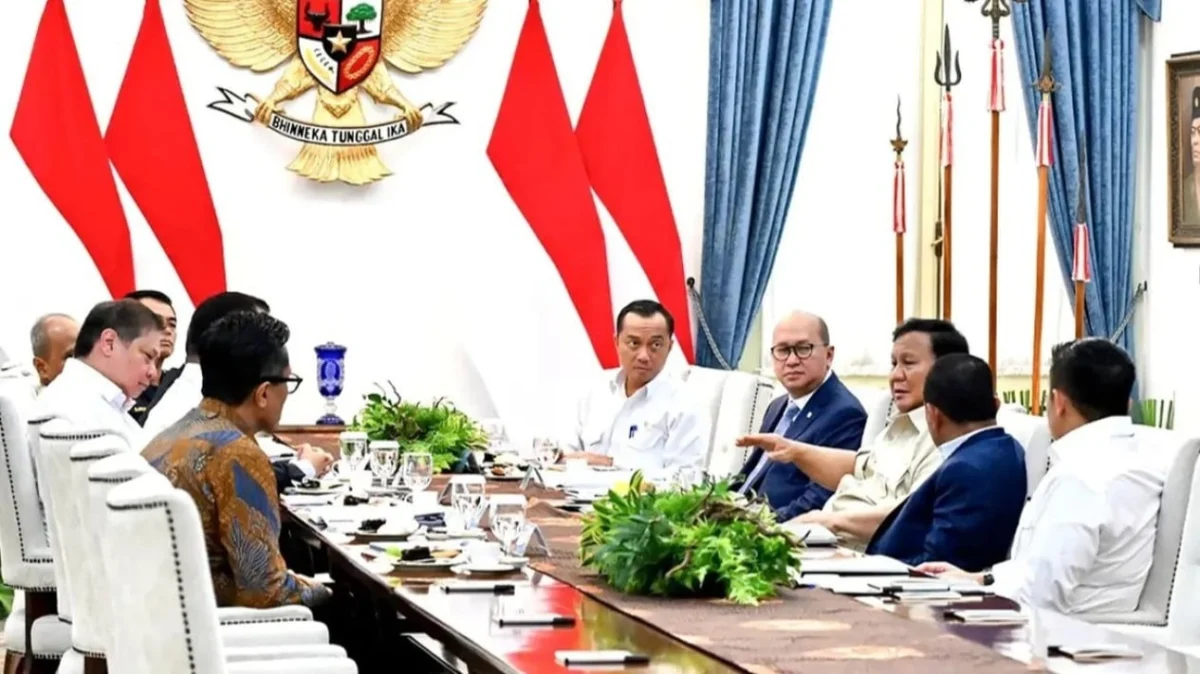
The Indonesian government under the leadership of President Prabowo Subianto has embarked on an ambitious and comprehensive mission to revitalize the nation’s textile and garment manufacturing sector. This strategic push is designed not merely to rescue a legacy industry from structural decline, but to fundamentally reshape Indonesia’s broader manufacturing landscape, enhance global competitiveness, expand large-scale employment opportunities, and fortify national production capacities. The initiative unfolds against a complex backdrop of mounting global trade pressures, shifting international supply chains, volatile production costs, and changing consumer demands, all of which have converged to necessitate urgent technological modernization across the domestic industrial ecosystem.
The Historical Significance and Current Vulnerabilities of the Textile Sector
For decades, the textile and apparel sector has served as a cornerstone of Indonesia’s industrialization strategy. As one of the country’s earliest manufacturing segments to scale, it historically provided a vital pathway for integrating millions of workers—predominantly women—into the formal economy, moving them away from agrarian livelihoods and into urban manufacturing centers. Furthermore, the sector has traditionally been a significant net exporter, generating vital foreign exchange and fostering a complex web of supporting domestic industries, ranging from logistics and packaging to chemical processing and cotton farming.
However, in recent years, the sector has encountered severe structural headwinds. The rapid digitalization of global retail, coupled with intense price competition from overseas manufacturers operating with heavily subsidized energy and advanced automated infrastructure, has squeezed profit margins for Indonesian producers. Domestically, aging machinery—some of it dating back several decades—has constrained operational efficiency and limited the ability of local factories to meet stringent international quality and sustainability standards. Moreover, fluctuations in raw material prices, rising domestic minimum wages, and stringent regulatory frameworks have placed immense cost pressures on factory operators, leading in some instances to facility closures, capacity downsizing, and workforce layoffs.
Recognizing these vulnerabilities, the administration of President Prabowo has identified the textile industry as a critical testing ground for supply chain resilience. The overarching goal is to transition the sector away from low-cost, high-volume contract manufacturing toward higher-value-added segments, sustainable production practices, and advanced technical textiles. Achieving this transition requires coordinated policy interventions, targeted financial injections, and institutional alignment across multiple branches of government.
The Strategic Intervention of BPI Danantara
At the heart of the government’s financial mobilization strategy for the industrial sector is the newly established Badan Pengelola Investasi Daya Anagata Nusantara (BPI Danantara). Conceived as Indonesia’s sovereign super-holding investment agency, Danantara is designed to consolidate state-owned enterprise assets and direct strategic capital toward high-impact national development projects. In the context of the textile industry revitalization, Danantara’s involvement marks a departure from traditional, short-term bureaucratic subsidies toward long-term, value-driven equity investments.
Economic analysts and industry observers have closely scrutinized the mandate of Danantara under the leadership of CEO Rosan Roeslani. The agency’s strategic focus is expected to go beyond simply injecting emergency liquidity into struggling factories. Instead, Danantara’s deployment of capital is intended to catalyze structural reforms within targeted manufacturing operations, ensuring that state-backed investments yield measurable improvements in productivity, energy efficiency, and technological readiness.
Dr. Sarlina Sari, an academic and researcher from the Faculty of Economics and Business at Universitas Bina Sarana Informatika (UBSI), emphasizes that government intervention in the textile sector must be viewed through a macro-economic lens. According to Dr. Sarlina, a doctoral graduate from the prestigious Faculty of Economics and Business at Universitas Indonesia (FEB UI), the textile industry’s health is deeply intertwined with regional economic stability and domestic consumption patterns.
"Industri tekstil memiliki posisi penting dalam perjalanan industrialisasi Indonesia," Dr. Sarlina noted in a recent policy analysis statement. "Selain berkontribusi terhadap kegiatan produksi dan ekspor, sektor ini memiliki keterkaitan dengan penyerapan tenaga kerja, industri pendukung, serta aktivitas ekonomi di berbagai daerah." Translated to the broader economic context, the sector’s multiplier effect extends far beyond the factory floor, supporting small- and medium-sized enterprises (SMEs) that supply buttons, threads, dyes, and transport services.
Financial Mechanics and Investment Priorities
For BPI Danantara and its institutional partners, the primary challenge lies in structuring investments that generate sustainable returns while addressing the systemic deficits of the textile ecosystem. Financial experts point out that capital allocation must be strictly disciplined and performance-based.
According to Dr. Sarlina, investment in the textile industry should not be measured merely by the volume of capital disbursed, but by the tangible transformations it produces. "Investasi terhadap industri tekstil tidak cukup hanya diarahkan untuk meningkatkan kapasitas produksi," she stated. "Dukungan terhadap industri tekstil akan semakin berarti apabila diarahkan pada modernisasi teknologi, penguatan rantai pasok, peningkatan kualitas sumber daya manusia, dan pengembangan pasar ekspor."
This multi-pronged investment framework prioritizes several key areas:
- Technological Modernization and Digitalization: A significant portion of the capital must be earmarked for replacing outdated analog looms and sewing machines with computer-controlled, automated machinery. Industry 4.0 applications—such as Internet of Things (IoT) sensors for predictive maintenance, automated cutting systems, and digital inventory management—are essential for reducing waste, optimizing energy consumption, and lowering per-unit production costs.
- Supply Chain Integration: To reduce dependence on imported synthetic fibers and raw cotton, investments are needed to strengthen domestic upstream and midstream capabilities. Developing integrated textile parks that house spinning, weaving, dyeing, and garment-making facilities in close geographic proximity can drastically reduce logistics costs and lead times.
- Human Capital Development: Advanced machinery requires a skilled workforce. Investment programs must incorporate comprehensive vocational training initiatives in collaboration with educational institutions and industry associations. Workers must be trained in machine operation, quality control, apparel design software, and sustainable manufacturing protocols.
- Export Market Diversification and Value Addition: While traditional markets in North America and Western Europe remain crucial, Indonesian exporters must adapt to tightening environmental regulations, such as the European Union’s Corporate Sustainability Due Diligence Directive and circular economy mandates. Investments should support the adoption of eco-friendly dyes, organic cotton processing, and certified sustainable production lines that appeal to conscious global consumers.
Broader Implications for Indonesia’s Manufacturing Sector
The revitalization of the textile industry under President Prabowo’s administration holds broader implications for Indonesia’s ambition to escape the middle-income trap and achieve advanced economy status by 2045. As global supply chains undergo continuous reconfiguration—driven by geopolitical tensions, trade diversification strategies, and the "China plus one" sourcing model—Indonesia possesses a unique window of opportunity to capture displaced manufacturing orders.
However, capturing this market share requires resolving long-standing structural bottlenecks that have historically plagued Indonesia’s ease of doing business rankings. High logistics costs, complex labor regulations, fragmented energy infrastructure, and non-tariff trade barriers have often deterred foreign direct investment (FDI) in labor-intensive manufacturing compared to regional neighbors like Vietnam and Bangladesh.
By deploying BPI Danantara as a strategic catalyst, the government aims to de-risk investments in the manufacturing sector, signalling to international institutional investors and private equity funds that Indonesia is serious about industrial upgrading. Furthermore, a successful turnaround in the textile sector could serve as a replicable blueprint for other labor-intensive manufacturing industries, such as footwear, furniture, and electronics assembly.
Looking Ahead: Implementation and Accountability
As the revitalization program transitions from policy formulation to ground-level implementation, monitoring and accountability mechanisms will be paramount. Industry stakeholders, labor unions, and economic analysts will be watching closely to ensure that state-backed funds achieve their intended targets without creating market distortions or moral hazards for inefficient corporate operators.
The alignment between the executive branch’s policy directives, Danantara’s investment execution capabilities, and the academic insights provided by institutions like UBSI and FEB UI underscores a collaborative approach to national economic planning. If executed with strategic precision, the modernization of Indonesia’s textile industry could secure millions of formal jobs, revitalize regional economies, and re-establish the nation as a formidable powerhouse in global textile and apparel manufacturing.