The Indonesian Ulema Council (MUI), through its Head of Fatwa, Asrorun Niam Sholeh, has officially expressed its strong commendation for the decisive diplomatic action taken by the Indonesian delegation during the recent United Nations General Assembly. The Indonesian representatives, alongside dozens of other international delegations, staged a coordinated walkout from the General Assembly Hall in New York City as Israeli Prime Minister Benjamin Netanyahu approached the podium to deliver his address. This high-profile diplomatic snub has triggered widespread international discourse regarding the ongoing humanitarian crisis in Gaza, the efficacy of international bodies in enforcing peace, and the evolving geopolitical alignments concerning the Israeli-Palestinian conflict.
According to official statements released by the council, the bold move by the Indonesian delegation serves as an undeniable testament to the nation’s enduring constitutional mandate to oppose colonialism and actively support the realization of Palestinian independence. Speaking in Jakarta, Niam emphasized that such symbolic diplomatic gestures are crucial, yet they must also catalyze subsequent, more robust political and economic actions on the global stage, including the continuation and intensification of targeted boycotts against entities supporting the Israeli military campaign.
The Diplomatic Boycott: A Chronology of the Mass Walkout
The dramatic events unfolded at the United Nations Headquarters in New York during the high-level general debate of the UN General Assembly. As Prime Minister Benjamin Netanyahu was announced to take the floor, a palpable tension filled the assembly hall. Before the Israeli leader could begin his scheduled address, diplomats from a vast coalition of nations stood up in unison and walked out of the chamber, leaving vast sections of the auditorium visibly vacant.
Records from the floor indicate that a staggering 77 countries participated in this coordinated mass walkout. The demonstration was unprecedented in its scale for a speech by a sitting head of government at the United Nations, reflecting a profound level of international isolation regarding Israel’s military policies and its ongoing occupation of Palestinian territories. The Indonesian delegation was an integral part of this collective action, signaling Jakarta’s unwavering stance on the global diplomatic platform.
International observers noted that the walkout caused a noticeable disruption to the proceedings, forcing the Israeli premier to deliver his remarks to a heavily depleted assembly consisting largely of supportive allies and empty seats. This visual spectacle was rapidly broadcast across global media networks, transforming the physical departure of the diplomats into a powerful symbol of global defiance against impunity in international law.
MUI Endorsement and Calls for Expanded Economic Sanctions
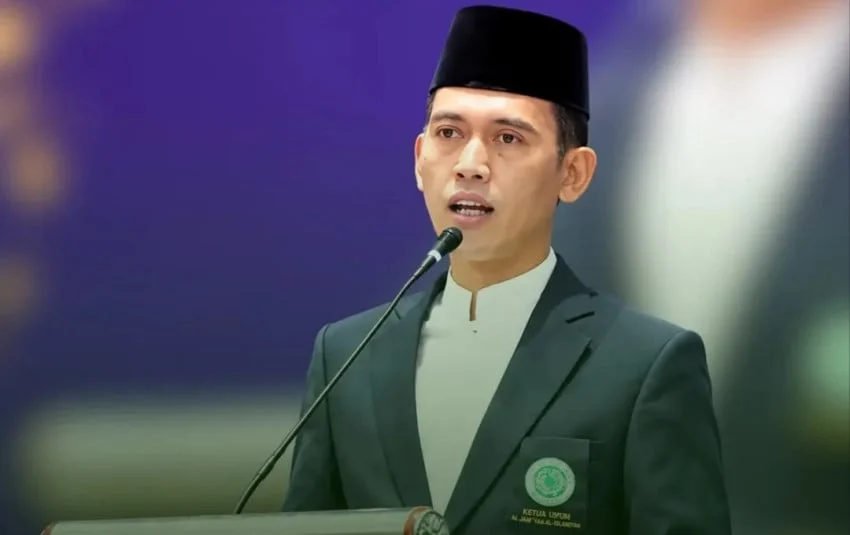
In the wake of the UN General Assembly session, the Indonesian Ulema Council stepped forward to champion the actions of the state delegation. Asrorun Niam Sholeh, speaking on behalf of the MUI’s Fatwa division, underscored that the decision to walk out aligns seamlessly with the moral and religious obligations of the Indonesian populace, who have consistently stood in solidarity with the people of Palestine.
"I give my highest appreciation to the firm stance taken by Indonesia in executing a walkout during the Israeli Prime Minister’s speech at the UN session," Niam stated. He further elaborated that this diplomatic posture is a direct manifestation of Indonesia’s foundational commitment to the preamble of its 1945 Constitution, which explicitly dictates that independence is the absolute right of all nations and that colonialism must be eradicated from the face of the earth.
However, the MUI did not limit its praise to mere diplomatic symbolism. Niam asserted that symbolic gestures within international forums must serve as stepping stones toward more tangible and impactful measures. He explicitly called for the Indonesian government and civil society to reinforce their positions through sustained political maneuvers and economic pressures, prominently reiterating the necessity of consumer and corporate boycotts.
"This needs to be followed up with further political steps, including boycotts," Niam emphasized, reflecting a broader domestic sentiment within the world’s most populous Muslim-majority nation. Over the past year, grassroots movements in Indonesia have actively promoted the boycott of multinational corporations and commercial brands identified as having financial ties to or operations within Israel, viewing economic pressure as a vital tool to protest the humanitarian toll in Gaza.
Broader Geopolitical Implications and Global Reactions
The mass walkout involving 77 nations highlights a deepening fracture within the multilateral international order. For decades, traditional diplomatic norms dictated that member states of the United Nations extend basic parliamentary courtesy by remaining in the hall during addresses by recognized heads of government, regardless of bilateral political disputes. The decision of nearly two-fifths of the UN member states to breach this protocol underscores a severe erosion of diplomatic patience concerning the Gaza conflict and the broader Israeli-Palestinian deadlock.
Political analysts suggest that the coordinated protest at the United Nations reflects the growing influence of the Global South in international diplomacy. Nations from Asia, Africa, Latin America, and parts of the Middle East have grown increasingly vocal in their criticism of what they perceive as double standards in the enforcement of international humanitarian law. By joining forces to empty the assembly hall, these 77 nations effectively weaponized quorum and presence, turning physical absence into a deafening political statement.
In contrast, Western allies of Israel defended the right of the Israeli premier to address the global body, maintaining that the United Nations must remain a forum for open, albeit contentious, dialogue. Proponents of this view argue that diplomatic isolation risks further entrenching geopolitical polarization and reducing the viability of multilateral channels for conflict resolution.
The Domestic Landscape in Indonesia
In Indonesia, the government under the leadership of the executive branch has consistently maintained a pro-Palestinian foreign policy framework. Unlike several Southeast Asian neighbors, Jakarta does not maintain formal diplomatic relations with Israel and has repeatedly utilized international platforms such as the International Court of Justice (ICJ), the Organization of Islamic Cooperation (OIC), and the United Nations to advocate for Palestinian statehood and accountability for military actions in the region.
The endorsement from the Indonesian Ulema Council bridges the gap between official state diplomacy and the religious sentiments of the broader public. The MUI holds significant moral authority among millions of Indonesian Muslims, and its active promotion of both state-level diplomatic resistance and economic boycotts serves to align civil society with official foreign policy objectives. This synergy ensures robust domestic backing for government actions on the international stage, minimizing political friction regarding foreign affairs.
Future Outlook for Multilateral Diplomacy
As the dust settles from the tumultuous UN General Assembly session, policymakers and international law experts are left to evaluate the long-term ramifications of such high-level diplomatic protests. While walkouts do not carry binding legal consequences, they carry immense psychological and reputational weight. They signal to the international community that business-as-usual approaches to protracted conflicts are no longer acceptable to a substantial segment of the global community.
For Indonesia, the event reaffirms its active non-aligned posture, demonstrating that the nation is willing to take calculated diplomatic risks to uphold its moral and constitutional principles. Whether these actions will precipitate broader structural reforms within the United Nations system—such as debates over veto powers and the enforcement of UN resolutions—remains to be seen. However, the collective action in New York has undeniably redrawn the boundaries of acceptable diplomatic protest, ensuring that the voices of nations advocating for Palestinian rights continue to resonate loudly within the halls of global governance.