The political landscape of East Java is beginning to exhibit early signs of realignment as analysts and political observers turn their gaze toward the 2029 gubernatorial election. While the formal electoral cycle remains years away and the political constellation in Indonesia’s second-most populous province remains fluid, a shift in voter preference toward performance-based leadership is becoming increasingly apparent. Among the figures beginning to capture the attention of regional observers is the Regent of Situbondo, Yusuf Rio Wahyu Prayogo, popularly known as Mas Rio. His emergence into the broader provincial discourse underscores a growing trend where local leaders who demonstrate tangible policy impacts are being repositioned as viable contenders for higher executive office.
The Shift Toward Technocratic and Performance-Based Leadership
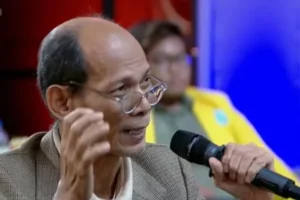
The current political atmosphere in East Java suggests that the electorate is moving away from purely personality-driven politics toward a model defined by empirical results. According to Tripitono Adi Prabowo, an academic at the University of Trunojoyo Madura (UTM), the modern East Javanese voter has become significantly more discerning.
"The public is increasingly mature and intelligent in selecting regional leaders," Tripitono noted. "There is a palpable fatigue among the electorate regarding leaders who rely solely on rhetoric without delivering concrete actions that improve the quality of life for the populace."
This shift in sentiment poses a challenge to traditional political machines that rely on name recognition or dynastic lineage. Instead, the focus has shifted toward indicators such as poverty reduction rates, infrastructure development, and the successful navigation of regional economic challenges. For a figure like Mas Rio, the challenge lies in scaling his municipal-level successes to the provincial stage, which requires addressing the diverse socioeconomic disparities inherent in East Java—ranging from the industrial hubs of the Surabaya metropolitan area to the agricultural and maritime sectors of the Mataraman and Tapal Kuda regions.
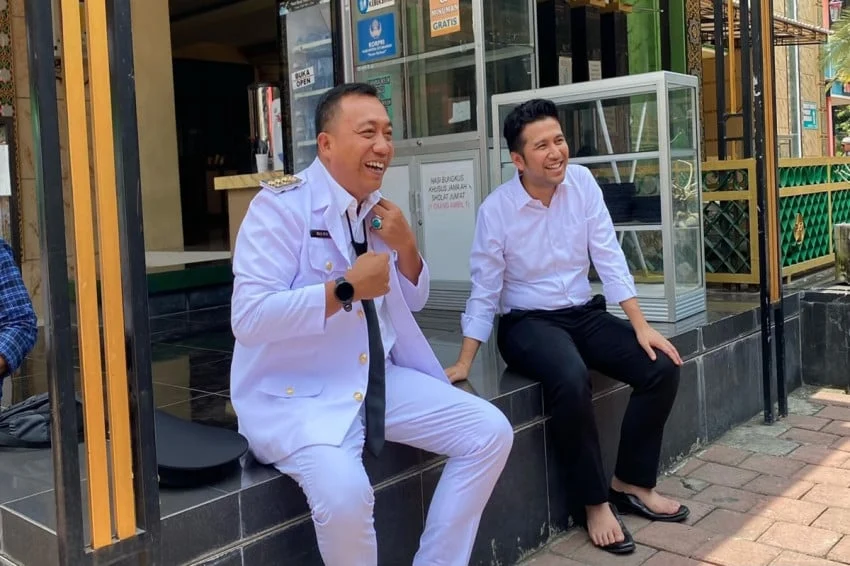
Yusuf Rio Wahyu Prayogo: A Profile of Local Governance
Yusuf Rio Wahyu Prayogo’s tenure as Regent of Situbondo has been characterized by an emphasis on fiscal efficiency and industrial engagement. His administration has notably prioritized the development of local industries, particularly the tobacco sector, which remains a cornerstone of the regional economy in East Java.
In past collaborations with provincial authorities, such as the Vice Governor’s office, Mas Rio has demonstrated a penchant for addressing structural economic issues. By focusing on budgetary transparency and the future of the tobacco industry—a highly sensitive issue involving labor, agriculture, and excise regulations—he has positioned himself as a leader capable of engaging with complex policy environments. These initiatives serve as his primary "social capital," providing a track record that supporters argue is essential for any candidate aspiring to govern a province as complex as East Java.
The Role of Political Infrastructure and Party Coalitions
While individual merit is a significant factor, the path to the East Java governorship remains strictly governed by the nation’s multi-party system. In Indonesia, a candidate must secure a nomination from political parties or coalitions controlling at least 20 percent of the provincial legislature (DPRD) seats.
Ujang Komarudin, a prominent political analyst and founder of the Indonesia Political Review (IPR), emphasizes that while Mas Rio’s work in Situbondo provides a strong foundation, the transition to a provincial candidacy requires navigating the national political apparatus. "Popularity born from concrete performance is the primary asset," Komarudin stated. "However, once that foundation is established, the candidate must secure party support and navigate the complex alliances that define the East Java political map."
The political history of East Java has often been dominated by a balance between secular-nationalist parties and religious-based organizations, most notably those affiliated with Nahdlatul Ulama (NU). Any candidate seeking to rise to the gubernatorial level must demonstrate an ability to transcend these traditional blocs, appealing to both the urban, secularized voter and the rural, traditionalist base.
Chronology of the 2029 Election Cycle
Although the 2029 election is several years away, the "invisible" campaign has already begun. The timeline for the upcoming cycle can be anticipated as follows:
- 2024–2025 (The Foundation Phase): Current regional leaders focus on consolidating their records and fulfilling their remaining campaign promises to solidify their public image.
- 2026 (The Coalition Building Phase): Political parties begin preliminary discussions regarding potential gubernatorial tickets, often prioritizing figures with strong provincial-level visibility.
- 2027 (The Testing Phase): Prospective candidates begin increasing their profile through province-wide philanthropic activities and public policy debates.
- 2028 (The Nomination Phase): Formal party coalitions are solidified, and candidates begin the process of internal party vetting.
- 2029 (The Electoral Cycle): Official registration with the General Elections Commission (KPU) and the formal campaign period.
Fact-Based Analysis: The Challenges Ahead
For a leader like Mas Rio to successfully transition from the regency to the provincial capital of Surabaya, he must address three critical challenges:
- Geographic Recognition: Situbondo, while significant, is part of the Tapal Kuda region. A successful gubernatorial candidate must gain significant name recognition in the highly populated areas of Malang, Sidoarjo, and the Surabaya metropolitan area, which collectively command a massive share of the province’s total vote.
- Broadening the Policy Portfolio: As Regent, his policy focus has been specialized. As a Governor, he would need to articulate a comprehensive vision for all 38 regencies and cities in East Java, covering education, healthcare, maritime logistics, and industrial digitalization.
- The "Incumbency Trap": While he currently enjoys the benefits of being a sitting Regent, he must ensure that his administrative performance remains high without being tarnished by the potential controversies that often accompany municipal governance.
Economic Implications for East Java
East Java contributes significantly to Indonesia’s national GDP. The provincial government acts as the primary intermediary between central government policies and the local implementation of economic development programs. Observers note that the next governor will inherit a province currently undergoing a transition toward green energy, smart city initiatives, and the modernization of its agricultural supply chains.
The entry of younger, performance-oriented leaders into the gubernatorial conversation indicates a potential shift in the province’s political leadership style. The focus is no longer merely on the distribution of social assistance, but on systemic improvements to the provincial economy. If figures like Mas Rio continue to highlight policy-driven outcomes, it is likely that the 2029 election will be contested on a platform of technocratic reform rather than identity politics.
Official Responses and Public Discourse
While there have been no formal declarations of candidacy from Yusuf Rio Wahyu Prayogo himself, the discourse among academics and political analysts serves as a barometer for the evolving electoral climate. Such public discussions are standard in the early phases of Indonesian elections, often serving as a "trial balloon" to gauge public reaction to potential candidates.
In the coming months, it is expected that more potential candidates will emerge. However, the standard set by the recent discourse—namely, the demand for "concrete performance" over "rhetoric"—will likely remain the benchmark by which all aspirants are measured. For the electorate, the demand is clear: a leader who can demonstrate that their local success is scalable, replicable, and sustainable for the long-term benefit of the entire East Java province.
Conclusion: The Future of East Java Leadership
The rise of Yusuf Rio Wahyu Prayogo in the early discussions for the 2029 East Java gubernatorial election represents a broader trend in Indonesian local politics. As voters become more critical and the demand for empirical results increases, the traditional pathways to power are being supplemented by a rigorous evaluation of administrative track records.
Whether Mas Rio ultimately enters the race or continues his work in Situbondo, his prominence highlights a significant shift in expectations. The next governor of East Java will face the dual challenge of maintaining the province’s economic momentum while addressing the diverse needs of a large, complex, and evolving population. As the political timeline moves toward 2029, the focus on performance-based leadership will remain the defining feature of the race, ensuring that the next leader of East Java is chosen not just by their political ties, but by their demonstrated capacity to govern.