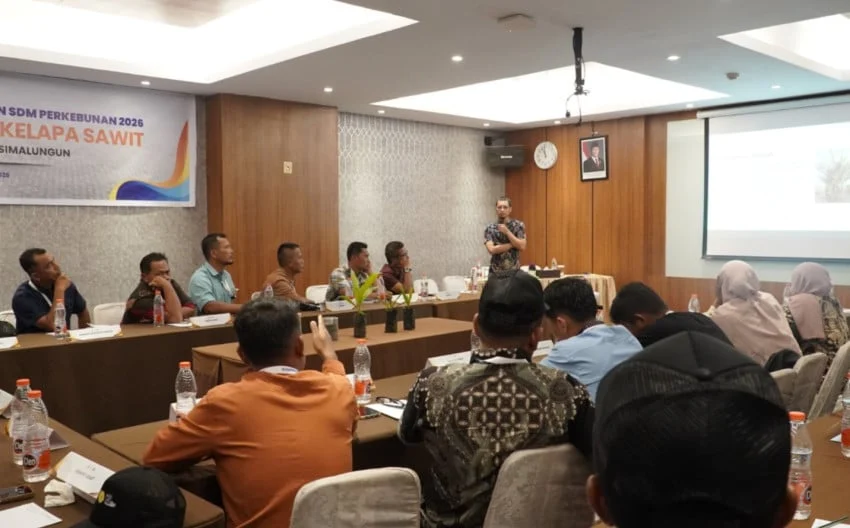
The Pusat Penelitian Kelapa Sawit (PPKS), operating under the umbrella of PT Riset Perkebunan Nusantara (RPN), has officially initiated a strategic human capital development program aimed at revolutionizing the productivity of smallholder oil palm plantations in Simalungun, North Sumatra. The initiative, part of the broader 2026 Human Resource Development Program for Oil Palm Plantations (SDMP), brought together 126 local farmers for an intensive capacity-building exercise held in Medan from September 13 to September 19, 2026. This collaborative effort, supported by the Oil Palm Plantation Fund Management Agency (BPDPKS) and the Directorate General of Estates (Ditjenbun) at the Ministry of Agriculture, marks a pivotal shift toward science-based agricultural practices in Indonesia’s vital palm oil sector.
Bridging the Gap Between Research and Field Application
For decades, the disparity between the yields of industrial-scale plantations and independent smallholders has remained a significant challenge for the Indonesian palm oil industry. While corporate entities utilize high-yielding genetic materials and precise agronomic management, many smallholders still rely on traditional, less efficient methods.
The 2026 SDMP training program serves as a bridge, aiming to translate advanced scientific research into actionable practices. Manager of Consulting Services at PPKS-RPN, Agus Eko Prasetyo, emphasized that the core objective of this program is the effective transfer of technology. "We are encouraging the application of research results to directly improve the productivity and income of smallholders," Agus stated during the opening ceremony. He noted that the training is not merely a theoretical exercise but a platform for integrating the deep, localized experience of farmers with the expert knowledge of researchers.
Chronology and Program Scope
The intensive six-day training program was structured to cover the entire lifecycle of oil palm cultivation. From September 13 to 19, 2026, participants from Simalungun were immersed in a curriculum designed to address the specific technical bottlenecks faced in their region. The program was divided into several core modules:
- Soil Fertility and Fertilizer Management: Focused on optimizing nutrient input based on soil analysis to reduce wastage and increase fruit bunch weight.
- Plant Maintenance and Canopy Management: Techniques for pruning and maintaining optimal stand density to maximize photosynthesis.
- Integrated Pest and Disease Management (IPM): Strategies for identifying and controlling common oil palm pathogens and weeds without over-relying on synthetic chemicals.
- Harvesting Protocols: Best practices for ensuring optimal ripeness, which directly impacts the Crude Palm Oil (CPO) extraction rate at mills.
The program concluded with a practical evaluation designed to ensure that the farmers could translate these concepts into their daily operations. According to the organizers, the success of the program will be measured by the tangible improvements observed in the participants’ plantations over the next 12 to 24 months.
Contextualizing the Importance of Smallholders
Indonesia remains the world’s largest producer of palm oil, with smallholders managing approximately 41% of the country’s total oil palm plantation area, which spans over 16 million hectares. Despite their significant footprint, smallholders often struggle with aging trees, poor-quality seedlings, and a lack of technical support, leading to yields that are often 30% to 50% lower than those of industrial estates.
The involvement of the BPDPKS is critical in this context. As the agency responsible for managing the export levy funds from palm oil products, its mandate includes the rejuvenation of smallholder plantations and the enhancement of human capital. By funding programs like the 2026 SDMP, the government is attempting to stabilize the livelihoods of millions of smallholders, making them more resilient to fluctuations in global commodity prices and more compliant with sustainability standards such as ISPO (Indonesian Sustainable Palm Oil).
Expert Analysis: The Path to Sustainable Productivity
Industry analysts suggest that the emphasis on "technology transfer" rather than just "provision of materials" represents a maturing of national agricultural policy. In previous years, government support was often limited to providing subsidized fertilizer or seeds. However, the current strategy recognizes that the efficacy of these inputs is entirely dependent on the technical competence of the user.
"The challenge is not just the access to technology, but the ‘last mile’ of adoption," noted an agricultural economist familiar with the program. "If a farmer receives a high-yielding seed but lacks the knowledge to manage its specific fertilizer requirements, the potential of that seed is wasted. By training 126 farmers from a specific region like Simalungun, the RPN is creating a localized ‘hub’ of knowledge. These farmers become ambassadors who can influence their peers in their respective villages, effectively scaling the impact of the training."
Official Responses and Future Implications
During the training sessions, participants were encouraged to engage in open dialogue with researchers. Agus Eko Prasetyo reiterated that the farmers’ real-world experience is a valuable asset. "You have a wealth of experience from your respective regions. When that experience is integrated with the expertise and scientific information provided by our instructors, it creates a powerful solution for productivity," he explained.
The implications of this initiative extend beyond individual yield increases. As global markets, particularly the European Union with its Deforestation Regulation (EUDR), demand higher standards of traceability and sustainable practice, the education of smallholders becomes a matter of national economic security. If smallholders can prove they are employing sustainable, high-productivity methods, it helps secure Indonesia’s position in the global supply chain.
Addressing Barriers to Adoption
Despite the optimism, the transition to scientific farming faces hurdles. Financial constraints often prevent farmers from purchasing recommended high-quality fertilizers or hiring labor for intensive pruning. Furthermore, the land tenure status of some smallholders can complicate long-term investment in the soil.
The PPKS-RPN program acknowledges these barriers by focusing on "technologies that are adaptable." Rather than promoting expensive, capital-intensive machinery, the training highlights "precision agronomy"—using existing resources more efficiently. For example, teaching farmers how to perform leaf analysis to determine the exact nutritional deficiency of their trees can prevent the over-application of expensive, generic fertilizers.
Looking Ahead: 2026 and Beyond
The 2026 SDMP program is scheduled to continue with further iterations across other regencies in Sumatra and Kalimantan. The goal is to establish a standardized curriculum that can be adapted to different soil types and climates across the archipelago.
As the program concludes, the focus shifts to the monitoring phase. PPKS has signaled its intent to maintain contact with the Simalungun cohort, providing ongoing consulting services. This post-training support is vital to ensure that the knowledge gained during the one-week workshop is not forgotten, but rather becomes a standard operating procedure for the farmers involved.
Ultimately, the initiative in Simalungun is a microcosm of Indonesia’s broader ambition: to transform the oil palm industry from a labor-intensive, low-efficiency sector into a modernized, sustainable, and highly productive pillar of the national economy. By investing in the human element—the farmers themselves—the RPN, BPDPKS, and the government are laying the groundwork for a more prosperous and sustainable future for Indonesia’s palm oil smallholders. As the farmers return to their plantations, the success of this program will be written in the quality and volume of the harvest, marking a significant milestone in the evolution of Indonesian agriculture.