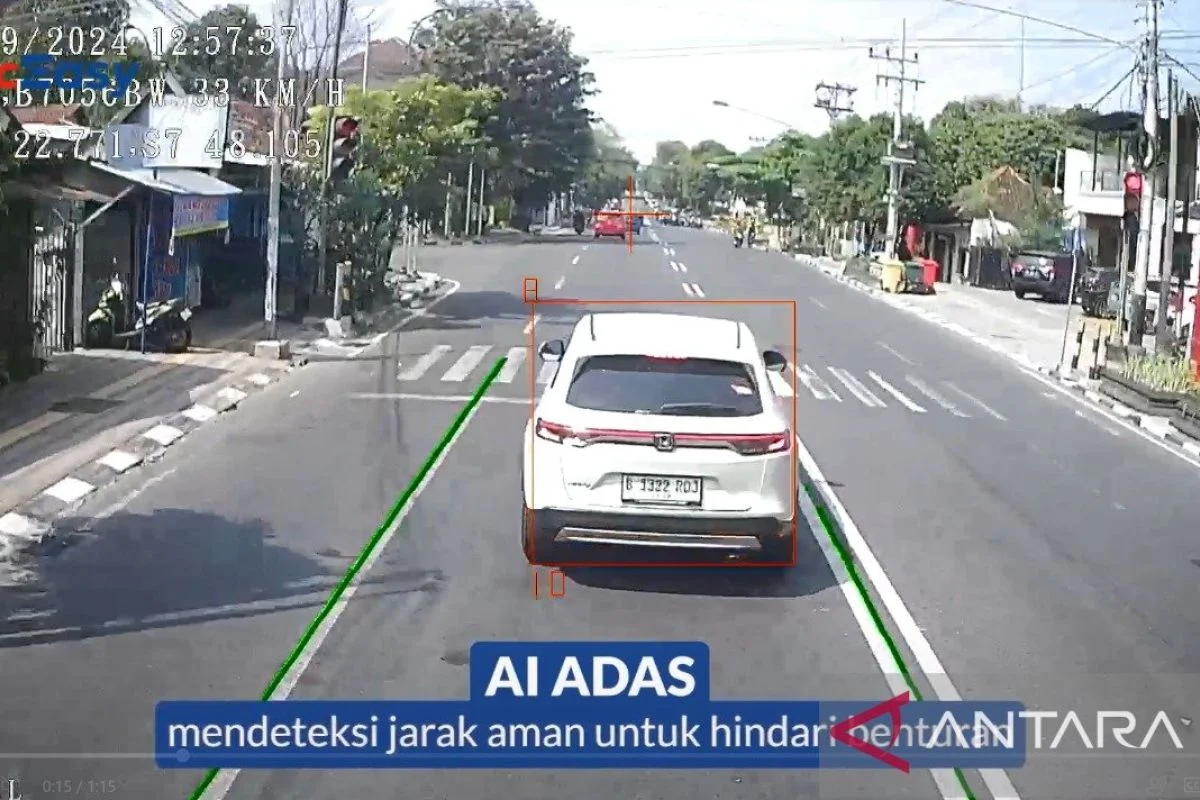
The global automotive landscape is undergoing a fundamental transformation, shifting away from a historical reliance solely on passive safety structures toward sophisticated, proactive prevention mechanisms. Today, the valuation of a modern passenger vehicle extends far beyond raw engine efficiency, luxurious cabin amenities, or expansive infotainment displays. Instead, active safety architecture—specifically Advanced Driver Assistance Systems (ADAS)—has emerged as the paramount battleground for manufacturers and a decisive factor for safety-conscious consumers worldwide.
As regulatory bodies tighten crash-test protocols and sensor technology matures at an exponential rate, features once reserved for ultra-luxury flagships have rapidly trickled down to mass-market segments. This paradigm shift redefines the relationship between human motorists and their machines, introducing an era where digital sentinels continuously monitor the asphalt to mitigate human error, which remains the leading cause of global traffic collisions.
The Technological Anatomy of Modern ADAS
To comprehend the ubiquity of ADAS in contemporary vehicle design, one must examine its underlying mechanics. At its core, an Advanced Driver Assistance System is a suite of integrated technologies engineered to assist motorists during operation by parsing real-time environmental data.
The system relies on an intricate symphony of hardware components, including long- and short-range radar units, optical cameras, ultrasonic sensors, and, increasingly, high-definition LiDAR. These instruments collect a continuous stream of spatial data regarding the vehicle’s surroundings, measuring the proximity, speed, and trajectory of surrounding objects, lane markings, pedestrians, and cyclists.
Once processed by onboard electronic control units (ECUs), this data triggers either auditory and visual warnings or direct physical interventions. Among the most prevalent features integrated into modern production vehicles are:
- Forward Collision Warning (FCW): Alerts the driver of an imminent impact with a preceding vehicle or obstacle.
- Automatic Emergency Braking (AEB): Engages the braking system autonomously if the driver fails to react to a sudden collision threat.
- Lane Keeping Assist (LKA) and Lane Centering Assistance (LCA): Applies subtle steering torque to prevent unintended drifting across lane boundaries.
- Adaptive Cruise Control (ACC): Automatically modulates vehicle speed to maintain a safe, pre-set following distance from the vehicle ahead.
- Blind Spot Monitoring (BSM) and Intervention: Detects vehicles lurking in traditional mirror blind spots and, in advanced iterations, applies counter-steering or braking to prevent unsafe lane changes.
Despite these advanced capabilities, regulatory bodies globally emphasize that ADAS does not equate to autonomous driving. The United States National Highway Traffic Safety Administration (NHTSA) maintains strict operational definitions, classifying these technologies under levels of driving automation where the human driver remains perpetually responsible for continuous environmental monitoring and ultimate vehicular control.
Shifting Regulatory Paradigms: The 20th Century Crash Test to 2026 Protocols
The accelerated adoption of ADAS is deeply intertwined with evolving international safety testing standards. For decades, safety ratings—such as those administered by the European New Car Assessment Programme (Euro NCAP)—focused heavily on "passive safety": how well a vehicle’s crumple zones, airbags, and reinforced cabin structures protected occupants after a collision had occurred.
However, as vehicle density surged and urban traffic complexities multiplied, safety organizations recognized that the most effective collision is the one that never happens. This realization culminated in monumental shifts in safety testing protocols, most notably exemplified by Euro NCAP’s updated framework implemented in 2026.
Under the 2026 testing regime, the assessment methodology shifted dramatically to prioritize active safety and accident avoidance capabilities. Vehicles are no longer evaluated solely on crash survivability; instead, they undergo rigorous, multifaceted scenarios designed to test how effectively their autonomous emergency braking, speed assistance, and lane-support systems prevent accidents before impact. These updated protocols test systems against complex, real-world hazards, including erratic pedestrian movements, obscured cyclists, and unexpected nighttime traffic configurations.
This regulatory evolution has fundamentally altered industry incentives. Automakers can no longer achieve top-tier safety accolades without integrating robust, highly responsive active safety suites, thereby accelerating the democratization of advanced technology across global vehicle lineups.
Why ADAS Dominates Modern Vehicle Engineering
The widespread proliferation of ADAS across contemporary automotive lineups is driven by a convergence of physiological, technological, and market-driven imperatives.
1. Mitigating Human Error and Reducing Collision Risks
Statistical data consistently demonstrates that human error—ranging from distraction and fatigue to delayed reaction times—accounts for the vast majority of traffic accidents. ADAS serves as an infallible digital co-pilot capable of processing threats in milliseconds. Technologies like AEB and FCW provide an essential layer of redundant protection, mitigating the catastrophic consequences of late human intervention.
2. Combating Fatigue During Extended Journeys
Long-distance driving inevitably exacts a toll on human concentration, leading to diminished situational awareness. Features such as Adaptive Cruise Control and Lane Centering Assistance significantly reduce the cognitive and physical workload placed upon motorists during monotonous highway commutes. By managing throttle inputs, braking, and lane positioning, these systems help maintain driver focus, though constant human supervision remains mandatory.
3. Overcoming Environmental Blind Spots
High traffic density and the proliferation of large commercial vehicles create complex blind spots that challenge human vision. Blind Spot Warning and Intervention systems act as persistent lookouts, scanning adjacent lanes and warning motorists of concealed hazards. In congested urban environments where lane-weaving is frequent, these technologies provide a vital margin of error.
4. The Sensor Revolution and Artificial Intelligence Integration
The mechanical feasibility of ADAS is rooted in the rapid advancement and falling production costs of automotive-grade sensors and artificial intelligence. Modern cameras possess high-resolution object recognition capabilities, while advanced radar and LiDAR arrays offer deep spatial mapping unaffected by darkness or adverse weather conditions. Euro NCAP’s 2026 testing protocols explicitly leverage multi-sensor fusion—combining camera, radar, and LiDAR feeds—to evaluate speed assistance accuracy, reflecting a broader technological convergence where AI algorithms process complex environmental data in real time.
5. Intensified Global Market Competition
Safety has transitioned from a backend engineering requirement to a powerful marketing tool. Consumers increasingly demand verified safety credentials alongside comfort and performance. This competitive dynamic was vividly illustrated in late 2026, when Euro NCAP released evaluation data under its stringent new protocols, awarding prestigious five-star safety ratings to emerging Chinese manufacturers, including models from AION, Geely, and Leapmotor. These outcomes signal that advanced active safety is no longer exclusive to high-end luxury segments, but is now a universal baseline for global competitiveness.
Industry Perspectives and Institutional Responses
Transportation ministries and automotive conglomerates worldwide have increasingly aligned their strategic messaging around the life-saving potential of integrated vehicle technologies. Regulatory bodies, such as the Indonesian Ministry of Transportation (Kemenhub), have consistently highlighted that modern technological features directly correlate with a reduction in fatal highway incidents.
Similarly, major global manufacturers—including major EV pioneers like BYD—have publicly emphasized that deploying comprehensive driving assistance systems significantly suppresses severe accident rates across high-mileage commercial and private fleets. Studies and industry data indicate that while human drivers often possess intuitive hazard interpretation skills, machine reaction speeds and relentless vigilance provide a quantifiable advantage in emergency braking and trajectory maintenance scenarios.
Nevertheless, industry analysts and safety advocates remain acutely vocal about the dangers of over-reliance. The transition toward partial automation has fostered a phenomenon known as "automation complacency," where drivers surrender too much attention to the vehicle, falsely believing that a car equipped with Level 1 or Level 2 automation can navigate unaided.
The Fine Line Between Assistance and Autonomy
To understand the boundaries of current automotive technology, industry standards classify vehicle automation into distinct tiers, as established by organizations like SAE International and referenced by safety regulators:
- Level 1 (Driver Assistance): The system controls either steering or acceleration/braking using information about the driving environment, but the human driver performs all remaining aspects of driving.
- Level 2 (Partial Automation): The system can simultaneously control steering and acceleration/braking, but the human driver must maintain continuous, active supervision of the driving environment and be fully prepared to take over at a moment’s notice.
Current mass-market ADAS implementations strictly occupy Levels 1 and 2. True autonomous driving—where the vehicle assumes complete operational control without human oversight—remains largely restricted to experimental geofenced test fleets rather than consumer driveways.
Challenges such as unpaved roads, obscured lane markings due to heavy rain or snow, unmapped construction zones, and unpredictable pedestrian behavior continue to test the limits of optical and radar sensors. Consequently, automotive journalists, safety engineers, and regulatory bodies continuously caution against misleading marketing terms that frame modern vehicles as "self-driving."
Conclusion: The Future of Responsible Mobility
The rapid integration of Advanced Driver Assistance Systems into modern automobiles marks a monumental leap forward in vehicular safety. By blending multi-sensor data processing with proactive intervention mechanisms, contemporary vehicles are better equipped than ever to protect their occupants and surrounding road users from the devastating impacts of traffic collisions.
Yet, as Euro NCAP’s 2026 protocols and NHTSA guidelines underscore, technology is a shield, not a substitute for human accountability. The evolution of ADAS does not absolve the motorist of their fundamental duty; rather, it elevates the driver from a stressed reactor to an informed supervisor. As the automotive industry charges toward an increasingly digitized future, the ultimate realization of safer roadways will rely not solely on the sophistication of silicon sensors and algorithms, but on the disciplined, attentive human being behind the wheel.