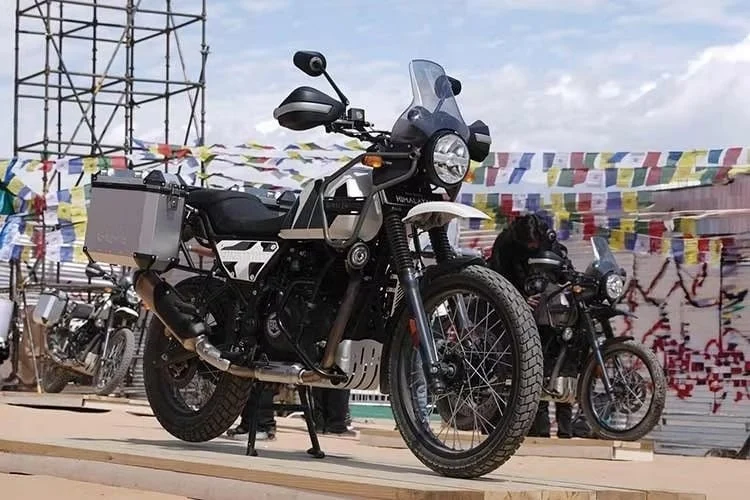
The global motorcycle landscape is constantly evolving, balancing the demands of modern technological integration with the enduring appeal of mechanical simplicity. In response to this dynamic, iconic motorcycle manufacturer Royal Enfield has officially announced the upcoming release of the Royal Enfield Himalayan 440 for the 2026 model year. This strategic introduction serves a dual purpose: it marks the momentous tenth-anniversary milestone of the original Himalayan lineage, and it revitalizes a beloved platform by bridging the mechanical gap between the legacy Himalayan 411 and the high-tech, liquid-cooled Himalayan 450. By taking the familiar, rugged architecture of the original Himalayan 411 and injecting it with the updated 440cc air-oil-cooled platform derived from the upcoming Scram 440, Royal Enfield is deliberately carving out a niche for riders who prefer mechanical straightforwardness, ease of maintenance, and dependable off-road capability without the complexity of liquid cooling or excessive electronic rider aids.
Main Facts and Core Specifications of the 2026 Himalayan 440
At the heart of the new Royal Enfield Himalayan 440 lies a thoroughly revised power plant. While the original Himalayan 411 was defined by its leisurely, long-stroke 411cc single-cylinder engine that produced modest power outputs, the new 440cc platform promises a more responsive throttle, improved mid-range torque, and smoother power delivery across varied terrains. This engine is housed within the tried-and-true semi-double cradle frame, maintaining the robust structural integrity that made its predecessor a favorite among budget-conscious global overlanders.
Suspension dynamics have also seen a notable refinement. Compared directly to its platform sibling, the Scram 440, the 2026 Himalayan 440 boasts increased suspension travel to better absorb the rigors of off-road exploration. The front end is managed by robust telescopic forks offering 200mm of wheel travel, while the rear utilizes a responsive monoshock setup providing 180mm of travel. For context, the Scram 440 features a slightly shorter 190mm of front suspension travel, highlighting the Himalayan 440’s distinct orientation toward serious adventure touring and obstacle clearance.
Further cementing its credentials as an authentic adventure motorcycle, the Himalayan 440 features an impressive ground clearance of 220mm, eclipsing the 200mm clearance found on the Scram 440. This elevated stance ensures that riders can clear jagged rocks, deep ruts, and fallen timber with minimal risk of bottoming out the engine case. The motorcycle rolls on traditional wire-spoked wheels—a 21-inch front wheel paired with a 17-inch rear wheel—which remains the gold standard for adventure motorcycles, allowing riders to easily source and mount a wide variety of heavy-duty off-road and dual-sport tires.
Stopping power has received critical attention from Royal Enfield’s engineering division. The braking system consists of a large 300mm front disc and a 240mm rear disc. Crucially, Royal Enfield has upgraded the brake calipers, outfitting them with larger pistons to significantly enhance initial bite, modulation, and overall stopping performance under heavy loads. A dual-channel Anti-lock Braking System (ABS) comes standard to ensure safety on tarmac, while the system retains the vital capability for off-road enthusiasts to switch off the rear ABS completely, granting superior control and rear-wheel slide management when navigating loose dirt, gravel, or mud.
The Chronology of the Himalayan Lineage: A Decade of Adventure
To fully understand the market significance of the 2026 Himalayan 440, one must trace the chronological evolution of Royal Enfield’s adventure portfolio. When the Himalayan 411 was first introduced in 2016, it was met with a mixture of curiosity and skepticism. At a time when the adventure motorcycle segment was dominated by heavy, expensive, high-horsepower European and Japanese machines loaded with complex electronics, Royal Enfield offered something radically different: a lightweight, accessible, utilitarian adventure tourer designed specifically for the punishing conditions of the Himalayas.
Despite initial reports concerning early-production mechanical hiccups and build-quality concerns, the Himalayan 411 quickly established a dedicated global following. It proved itself across the globe—from the altitudes of Ladakh to the demanding trails of South America, Europe, and Australia. It became the definitive entry-level adventure bike, praised for its fix-it-anywhere simplicity and forgiving riding dynamics.
By the early 2020s, however, emission regulations and consumer demands shifted. The introduction of stricter environmental standards, such as Bharat Stage 6 (BS6) in India and Euro 5 in international markets, forced manufacturers to update their engines. Furthermore, rider expectations evolved, demanding higher highway cruising speeds and modern connectivity features. This culminated in the late 2023 unveiling of the Himalayan 450. Built upon the brand’s first-ever liquid-cooled engine platform (dubbed the Sherpa 450), the newer model represented a massive technological leap forward, featuring ride-by-wire, comprehensive TFT instrumentation, and mapping modes.
Yet, as the Himalayan 450 moved upscale in both price and technological complexity, a distinct segment of the motorcycling community voiced nostalgia for the raw, mechanical purity of the original 411. Recognizing this divide, Royal Enfield made the strategic decision to celebrate the ten-year anniversary of the Himalayan brand by creating a bridge between eras. Rather than letting the iconic 411 chassis and styling languish, the company paired it with the modernized 440cc air-oil-cooled engine. Consequently, the Himalayan 440 is slated to sit alongside the Himalayan 450 in dealerships, offering customers a choice between a high-tech, liquid-cooled modern adventure tourer and a traditional, mechanically simpler, and more affordable expedition machine.
Integration of Modern Technology: The Tripper Navigation System
While the 2026 Himalayan 440 heavily leans into a retro-inspired, utilitarian aesthetic, Royal Enfield has wisely ensured that it is not entirely devoid of modern conveniences. One of the standout additions to the cockpit of the Himalayan 440 is the integration of the proprietary Tripper navigation interface.
Originally developed in partnership with Google, the Tripper navigation pod is a minimalist, dedicated circular display unit mounted next to the primary instrument cluster. It pairs via Bluetooth to the rider’s smartphone through the Royal Enfield App, providing turn-by-turn directions using clean, easy-to-read graphical arrows. This system deliberately avoids complex maps, text notifications, or distracting infotainment features, thereby allowing the rider to maintain absolute focus on the road or trail ahead.
The inclusion of the Tripper navigation system on the Himalayan 440 addresses one of the primary criticisms leveled against the original 411 model, which relied on a cluttered multi-dial analog dashboard accompanied by an optional, cumbersome off-board GPS accessory mount. By streamlining the cockpit interface while preserving the classic analog-digital primary gauges, Royal Enfield has successfully modernized the rider-machine interface without compromising the motorcycle’s rugged, timeless character.
Market Context and Strategic Implications
The dual-track strategy of offering both the Himalayan 450 and the new Himalayan 440 carries significant implications for Royal Enfield’s market dominance within the mid-capacity adventure segment. As global markets grapple with economic uncertainties, rising inflation, and escalating vehicle prices, the cost of entry into motorcycle touring has increased substantially. High-end adventure bikes now frequently cross price thresholds that alienate younger riders and purists alike.
By utilizing existing tooling, sharing engine platforms with the Scram 440, and retaining the stamped-and-welded chassis architecture of the 411, Royal Enfield is able to produce the Himalayan 440 at a highly competitive price point. This positions the motorcycle as an ideal acquisition for budget-conscious adventurers, rental fleet operators in tourist regions, and riders in developing markets where sophisticated diagnostic equipment is scarce, and roadside repairability is paramount.
Industry analysts suggest that this move will insulate Royal Enfield against aggressive competition from emerging rivals in the sub-500cc adventure category. While competitors focus heavily on pushing horsepower figures and adding complex electronic rider aids, Royal Enfield is doubling down on its core brand identity: accessible motorcycling, timeless design, and go-anywhere utility. Furthermore, keeping the classic silhouette alive serves as a powerful marketing tribute to a decade of adventure heritage, reassuring long-time brand loyalists that their favorite design language has not been entirely discarded in the pursuit of modernization.
Official Responses and Customer Reception
Although formal global press events are still rolling out, initial customer reception following the official specifications release has been overwhelmingly positive, particularly across online forums and enthusiast communities. Dealership inquiries have surged following the announcement that order books for the 2026 model are officially open.
While Royal Enfield’s corporate leadership has emphasized that the Himalayan 440 is designed to complement—rather than replace—the flagship Himalayan 450, internal statements suggest the company is acutely aware of the deep emotional connection riders maintain with the original 411 styling. Representatives have highlighted that the decision to upgrade the engine to the 440cc displacement was driven directly by consumer feedback requesting improved low-end tractability and slightly better highway manners, without sacrificing the forgiving ergonomics and low center of gravity that made the original machine accessible to riders of all statures.
Safety, Control, and Off-Road Ergonomics
Adventure motorcycles are judged not merely by their spec sheets, but by how they handle when pushed off the beaten path. The ergonomic triangle of the Himalayan 440 remains true to its lineage, offering a commanding upright seating position that facilitates comfortable standing while riding over rough terrain. The handlebar placement, footpeg positioning, and sculpted fuel tank recesses are meticulously designed to accommodate knee gripping, allowing riders to maintain balance and leverage during technical ascents and descents.
Safety enhancements extend beyond the upgraded braking system. The inclusion of switchable rear ABS is a critical feature for serious off-road riders. When descending loose dirt tracks, locking the rear wheel intentionally allows an experienced rider to pivot the motorcycle, control descent speed, and manage traction far more effectively than an intrusive, always-on street-biased ABS system would allow. By granting the rider the agency to deactivate the rear safety net, Royal Enfield demonstrates a deep understanding of genuine off-road riding requirements.
Moreover, the chassis geometry has been tuned to provide a predictable, stable front-end feel. The long wheelbase, combined with the 21-inch front wheel, ensures that the motorcycle tracks straight through deep sand, mud, and gravel, minimizing the jarring feedback transmitted to the rider’s wrists. This emphasis on mechanical compliance over stiff, race-tuned suspension damping means the Himalayan 440 absorbs fatigue-inducing high-frequency bumps with ease, making long-distance overland journeys significantly more comfortable.
Conclusion: A Fitting Tribute and a Pragmatic Future
The introduction of the Royal Enfield Himalayan 440 for 2026 represents a masterclass in product lifecycle management and brand heritage celebration. As the Himalayan lineage enters its second decade, Royal Enfield has successfully resisted the temptation to force every model into the exact same technological mold. Instead, the company has chosen to cater to two distinct segments of the adventure touring community.
For those demanding bleeding-edge performance, liquid cooling, and modern electronic ecosystems, the Himalayan 450 remains the flagship choice. However, for the purist, the overlander seeking field-repairable simplicity, the budget-conscious explorer, and the nostalgic fan of the original 2016 design, the Himalayan 440 stands as the ultimate synthesis of old-school charm and modern mechanical refinement. With its upgraded 440cc engine, enhanced suspension travel, improved braking hardware, and the integration of the Tripper navigation system, the 2026 Himalayan 440 is well-equipped to write the next successful chapter in Royal Enfield’s storied adventure touring legacy.