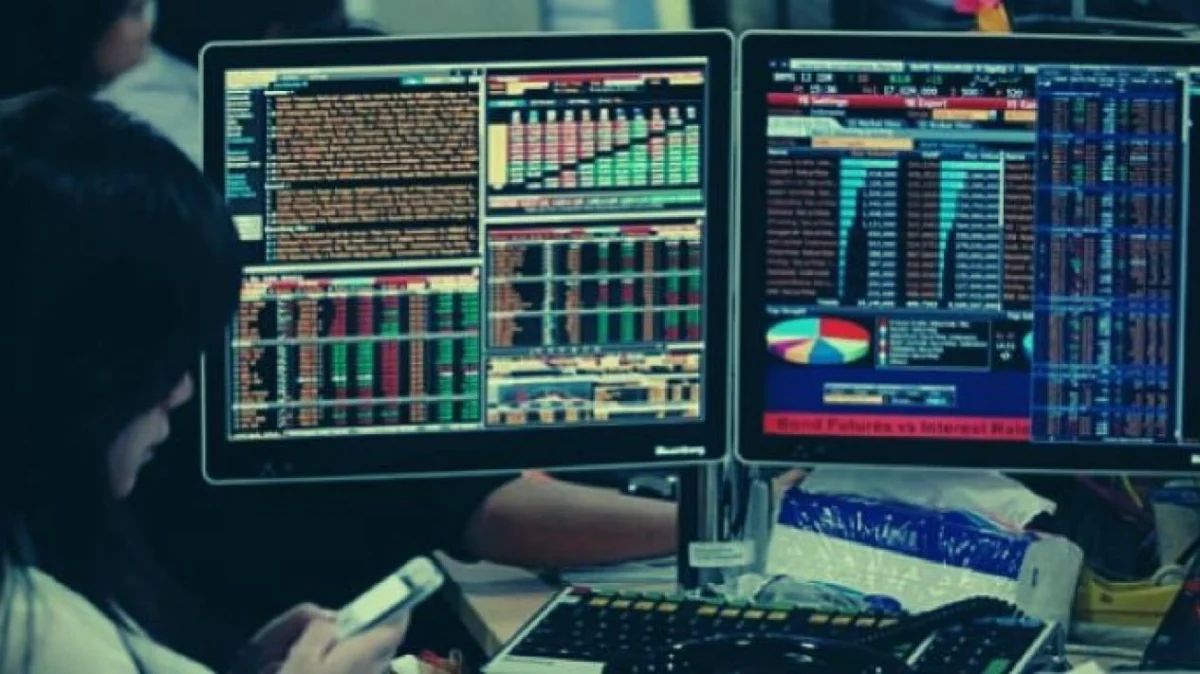
The allure of earning billions of rupiah from trading has long captured the public imagination, painting a picture of financial independence, luxury, and success achieved entirely from behind a computer screen. In this romanticized vision, market participants buy and sell financial assets with effortless precision, pocketing substantial profits from daily price fluctuations. However, this glossy portrayal represents only a fraction of reality. Behind the promise of lucrative returns lies a high-stakes environment characterized by volatile price swings, severe capital depletion, immense psychological pressure, and the very real possibility of sustaining devastating financial losses within minutes.
This ongoing debate regarding the true nature of trading was thrust back into the public spotlight following a viral social media post by Yudo Sadewa, the son of prominent public figure Purbaya Yudhi Sadewa. In his online statements, Yudo touched upon the lucrative nature of the trading profession, noting that skilled practitioners could theoretically pull in billions of rupiah per month. The statement immediately ignited widespread discussions across various social media platforms, drawing curious novices and seasoned financial analysts alike into a debate about the accessibility and sustainability of such staggering incomes.
For many individuals seeking an escape from the traditional 9-to-5 corporate grind, trading is often viewed as an attractive alternative—a shortcut to wealth where one is supposedly beholden to no boss. Yet, financial experts continually emphasize that trading is far more complex than simply buying an asset when its price dips and selling it when it climbs. Navigating the modern financial markets requires a sophisticated blend of specialized knowledge, disciplined strategies, sufficient initial capital, dedicated time management, and rigorous risk management protocols. To understand whether the lofty claims surrounding trading hold any water, it is essential to examine the multifaceted pros and cons of the profession, drawing insights from institutional perspectives such as those outlined by financial services firm Fidelity.
The Allure of the Markets: The Pros of Becoming a Trader
While the risks are undeniably high, the trading profession offers distinct advantages that continue to attract millions of participants globally. Understanding these benefits helps clarify why so many individuals are drawn to the financial markets despite the inherent dangers.
Capitalizing on Rapid Price Movements
One of the primary catalysts drawing individuals to trading is the unparalleled opportunity to generate profits from short-term price movements. Unlike traditional long-term investing, which typically relies on the gradual appreciation of asset value over several years or decades, active traders look to exploit volatility within days, hours, or even minutes. This dynamic nature allows agile market participants to capitalize on economic events, earnings reports, and sudden shifts in market sentiment. Nevertheless, financial literacy advocates consistently remind the public that the potential for rapid gains is mirrored by an equally rapid potential for losses. The presence of opportunity does not equate to guaranteed profitability, and every executed trade carries inherent downside risk.
Diverse Asset Classes and Instrument Selection
Modern financial technology has democratized access to a vast array of tradable instruments. Depending on the chosen brokerage platform and regulatory jurisdiction, contemporary traders are no longer restricted to domestic equities. Today’s market participants can seamlessly trade exchange-traded funds (ETFs), government and corporate bonds, global commodities, foreign exchange (Forex) pairs, and an expanding ecosystem of digital assets. This extensive diversification allows traders to tailor their portfolios and strategies to align with their specific areas of expertise, risk tolerance, and capital availability. For instance, a trader with a deep understanding of macroeconomic policy might gravitate toward currency markets, while someone with strong corporate analytical skills may focus on individual equities.
Sharpening Analytical Skills and Market Literacy
Engaging in active trading fundamentally transforms an individual’s relationship with global economics and financial data. To succeed, or even to survive, a trader must develop a robust framework for analyzing market conditions. This requires poring over complex price charts, identifying macro and micro trends, interpreting corporate earnings reports, digesting breaking global news, and evaluating geopolitical events that could sway asset valuations. Over time, this rigorous process cultivates a disciplined mindset. Traders learn to filter out emotional noise, base their decisions on empirical data rather than gut feelings, and adapt dynamically to shifting economic landscapes. These analytical competencies often translate into enhanced financial literacy that benefits participants well beyond the trading terminal.
The Dark Side of the Market: The Cons and Risks of Trading
Despite the glamorous narratives often propagated across social media platforms, the structural realities of trading reveal a punishing environment where the vast majority of retail participants ultimately lose money. Regulatory bodies and financial institutions consistently report that retail CFD and forex traders, in particular, face failure rates often exceeding 70 to 80 percent.
Severe Financial Vulnerability and Capital Loss
The most immediate and tangible risk of trading is the potential for catastrophic financial loss. Because trading often involves leverage—borrowed funds provided by brokers to amplify potential gains—losses can easily outstrip the initial capital deposited by the trader. A single miscalculated trade or an unexpected macroeconomic shock, such as an unscheduled central bank interest rate hike or a sudden geopolitical conflict, can wipe out months or even years of accumulated savings within seconds. Unlike long-term investors who can afford to wait out a market downturn, active traders are frequently forced to cut their losses at unfavorable prices due to margin calls or strict risk management rules.
Immense Psychological and Emotional Strain
The psychological toll of trading is frequently underestimated by newcomers. Constantly monitoring fluctuating price feeds triggers a rollercoaster of emotions, ranging from the euphoria of a winning streak to the despair and anxiety of sudden drawdowns. This emotional volatility can lead to dangerous psychological pitfalls, such as "revenge trading"—the impulsive act of doubling down on losing positions in an attempt to claw back lost money, which almost invariably leads to deeper financial ruin. Maintaining emotional detachment, discipline, and strict adherence to a trading plan requires a level of psychological resilience that very few individuals naturally possess.
Time-Intensive and High-Stress Lifestyle
The popular myth of passive trading—where one supposedly checks a smartphone app for five minutes a day while lounging on a beach—stands in stark contrast to the grueling reality faced by professional traders. Successful trading demands relentless dedication. It involves hours of pre-market analysis, continuous monitoring during trading sessions, and post-market journaling and strategy review. For day traders and swing traders, this screen-bound lifestyle can lead to chronic fatigue, burnout, strained personal relationships, and a sedentary routine that adversely impacts physical and mental health.
Contextualizing the Billion-Rupiah Claims: Rhetoric Versus Reality
The recent discourse sparked by public figures and social media influencers regarding monthly incomes reaching billions of rupiah requires careful academic and journalistic scrutiny. While it is mathematically possible for high-net-worth algorithmic traders, hedge fund managers, or elite proprietary traders managing vast pools of capital to generate such returns, these figures represent statistical outliers rather than standard outcomes for the average retail trader.
When influencers broadcast astronomical profits, they rarely highlight the denominator—the multi-billion-rupiah capital base required to generate such returns safely, nor do they publicize the preceding string of catastrophic losses. In the financial industry, return on investment (ROI) is calculated as a percentage of capital. Achieving a 10 percent monthly return is considered exceptionally elite performance. To generate one billion rupiah in profit from a 10 percent monthly return, a trader must actively risk a capital base of ten billion rupiah. Presenting absolute profit figures without contextualizing the underlying risk exposure and capital requirements creates a misleading and potentially predatory narrative that lures financially vulnerable individuals into high-risk markets with unrealistic expectations.
Regulatory Warnings and Industry Perspectives
Global financial regulators, including Indonesia’s Financial Services Authority (Otoritas Jasa Keuangan or OJK) and the Commodity Futures Trading Regulatory Agency (Bappebti), have repeatedly issued stern warnings to the public regarding illegal investment schemes and high-risk speculative trading platforms. Regulatory bodies emphasize that public enthusiasm for quick riches often blinds individuals to the legality and credibility of the platforms they use. Unregulated offshore brokers, predatory signal providers, and social media "trading gurus" often promise guaranteed returns while concealing the conflict of interest inherent in their business models—many of which profit directly from the retail traders’ losses.
Financial advisors consistently recommend that anyone considering entering the trading arena should adhere to fundamental safeguards. These include utilizing only risk capital—money that can be entirely lost without impacting one’s basic standard of living—pursuing comprehensive financial education, starting with demo accounts to test strategies without financial risk, and maintaining a diversified long-term investment portfolio alongside any active trading endeavors.
Conclusion: Navigating the Reality of the Markets
The fascination with trading as a pathway to immense wealth is unlikely to fade, continually fueled by viral anecdotes and the dream of financial liberation. However, as the experiences of seasoned market participants and institutional data clearly demonstrate, trading is not a get-rich-quick scheme. It is a rigorous, demanding profession that requires deep technical knowledge, strict emotional control, and an unyielding respect for risk management.
While the market offers legitimate opportunities to generate short-term profits, diversify income streams, and master advanced analytical skills, these rewards are counterbalanced by the very real threat of severe financial loss and psychological burnout. Prospective traders must look past the sensationalized headlines of billion-rupiah windfalls and approach the markets with sobriety, diligence, and a clear-eyed understanding of the arduous journey required to achieve sustainable success.