Jakarta — The persistent and disruptive fuel queues that paralyzed traffic across Makassar, South Sulawesi, over recent days have laid bare a complex combination of consumer behavior shifts and illicit hoarding operations. Energy and Mineral Resources (ESDM) Minister Bahlil Lahadalia addressed the crisis directly, highlighting that the unauthorized migration of consumers from non-subsidized fuels to government-backed alternatives, alongside rampant illegal modifications of vehicle tanks, served as the primary catalysts for the regional energy bottleneck.
The crisis, which peaked during the second week of September 2026, crippled major thoroughfares, caused gridlock extending over kilometers, and prompted immediate intervention from local governments, law enforcement agencies, and state-owned energy giant Pertamina. As normalcy gradually returns to fuel stations across the city, the incident has reignited national discussions regarding the structural vulnerabilities of Indonesia’s energy subsidy framework and the challenges of ensuring targeted distribution.
Anatomy of the Crisis: Shifting Consumption and Illicit Hoarding
Speaking at the Innovation Technology for Social and Environmental Awards (InTechSEA) ceremony held in Jakarta, Minister Bahlil provided critical insights into the underlying mechanics of the fuel shortages. According to the ESDM Minister, a notable portion of the congestion stemmed from a widespread market phenomenon known as shifting—where motorists and commercial operators traditionally reliant on non-subsidized commercial fuels began opting for heavily subsidized variants to cut operational costs amidst fluctuating economic pressures.
However, consumer behavioral shifts accounted for only part of the equation. Bahlil expressed deep frustration over the blatant exploitation of the subsidy system by criminal elements engaged in large-scale hoarding. Law enforcement investigations uncovered alarming practices wherein vehicle owners systematically overhauled the fuel infrastructure of ordinary cars and heavy trucks.
Instead of factory-standard configurations, authorities seized vehicles retrofitted with oversized auxiliary tanks capable of swallowing up to 700 liters or even a full metric ton (1,000 liters) of subsidized fuel in a single trip. These mobile reservoirs were routinely used to siphon massive volumes of subsidized products from various Public Fuel Filling Stations (SPBU) across Makassar, subsequently diverting the precious commodity toward industrial or black-market channels at steep profit margins.
“What is happening right now is a partial shift, where those who previously did not use subsidized fuel are now migrating to it,” Bahlil stated during the Jakarta forum. Highlighting the severity of illegal modifications, he added, “Beyond that, we found cars and trucks rigged with massive tanks holding up to 700 liters or a ton of fuel. In my heart, I wonder, what kind of model is this? If this continues, even if we brought an ESDM Minister straight from the heavens, the situation would remain exactly the same.”
Chronology and Escalation: Three Days of Gridlock
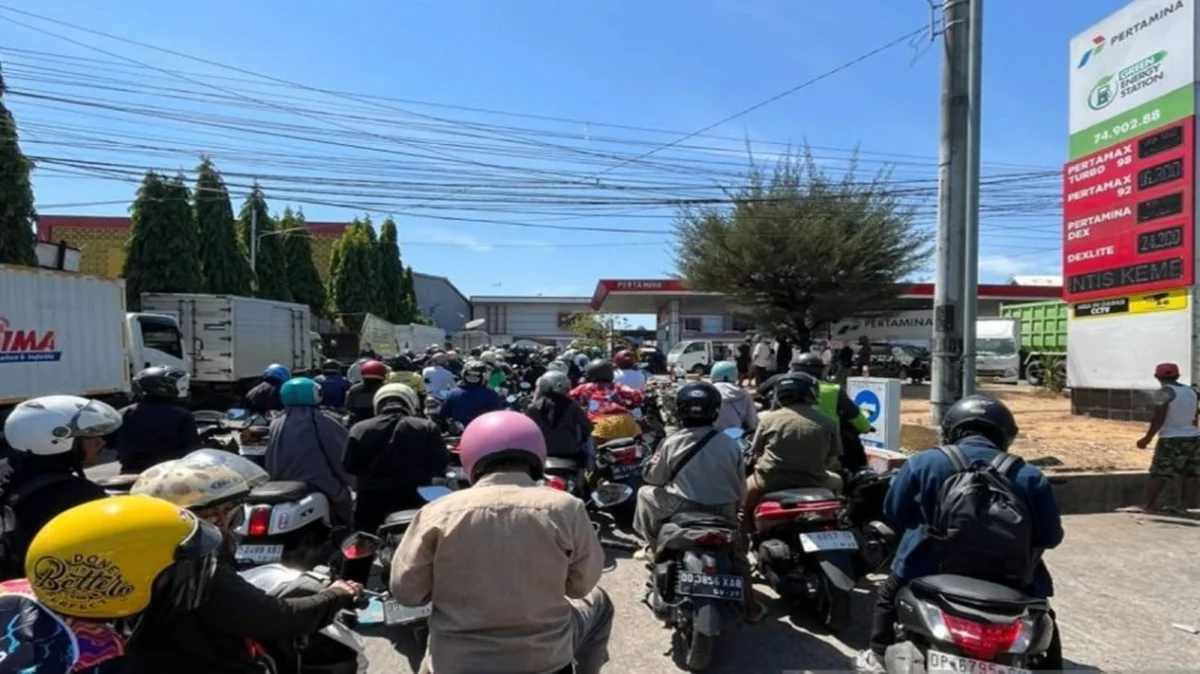
The repercussions of the fuel shortage materialized swiftly, plunging Makassar’s transportation network into chaos. For approximately three consecutive days leading up to mid-September 2026, vehicular queues at numerous local SPBUs swelled exponentially, expanding by more than 50 percent compared to standard daily averages.

The overwhelming influx of vehicles spilling out of fuel stations severely compromised traffic mobility across key urban arteries. Motorists reported enduring hours of idling under the scorching sun, while public transportation schedules suffered severe delays, affecting commuters, school children, and logistical operators alike. The situation reached a critical juncture on major thoroughfares such as Jalan AP Pettarani, where snake-like queues of cars, motorcycles, and commercial trucks brought auxiliary lanes to a near-complete standstill.
By Monday morning, however, joint stabilization efforts began yielding tangible results. Field observations along Jalan AP Pettarani indicated a significant de-escalation of the crisis. Queues had receded to manageable proportions, featuring only a dozen or so waiting vehicles per station, allowing fuel attendants to process transactions smoothly without causing cascading traffic snarls.
Multi-Sectoral Intervention: Policy Measures and Enforcement
Faced with mounting public frustration and economic disruption, the government deployed a multifaceted mitigation strategy combining strict administrative regulations, intensified law enforcement, and supply-side adjustments.
Recognizing that ordinary consumers were bearing the brunt of the logistical failure, the local government in South Sulawesi introduced rigorous regulatory frameworks to restore order at retail fuel points. Among the primary enforcement tools was the implementation of an odd-even license plate restriction system for fuel purchases, designed to mathematically cap the volume of vehicles descending upon service stations on any given day.
Furthermore, authorities instituted stringent scheduling rules for heavy transport vehicles. Commercial operators, including large trucks and inter-city buses, were legally barred from purchasing fuel during peak daytime traffic hours. Instead, heavy transport refueling was restricted to designated nocturnal windows, effectively eliminating the primary physical obstruction causing daytime traffic paralysis on urban roads.
Concurrently, state-owned energy enterprise Pertamina took decisive operational steps to normalize supply chains. The company executed a rapid surge in fuel distribution, dispatching additional tanker fleets to replenish depleted underground storage reserves across Makassar. Furthermore, operating hours at high-demand SPBUs were systematically extended to round-the-clock schedules, maximizing throughput capacity and accommodating the backlog of waiting motorists.
Minister Bahlil commended the collaborative framework forged between the Ministry of ESDM, the South Sulawesi regional government, and the Indonesian National Police (Polri). This inter-agency synergy not only successfully dismantled several localized hoarding rings but also restored fluid traffic conditions across the provincial capital. “Now, thank God, the queues have begun to dissolve. We will continue executing essential measures to ensure that our energy subsidies remain strictly targeted toward those who genuinely qualify,” Bahlil affirmed.
Broader Economic Implications and Vulnerabilities of the Subsidy Regime
While the immediate crisis in Makassar has been successfully mitigated through emergency administrative controls and heightened policing, the episode serves as a glaring symptom of deeper structural challenges plaguing Indonesia’s national energy architecture.

Energy subsidies represent a massive fiscal burden on the state budget (APBN), designed fundamentally as a social safety net to protect lower-income households and micro-enterprises from global commodity price volatility. However, the structural divergence in pricing between subsidized fuels (such as Pertalite and Solar) and their non-subsidized commercial counterparts (such as Pertamax and Dexlite) creates a permanent, highly lucrative arbitrage opportunity.
This structural price gap acts as an economic magnet, incentivizing both individual consumers seeking personal cost reductions and organized criminal syndicates looking for high-margin illegal arbitrage. When enforcement mechanisms slacken or regional distribution monitoring falters, subsidized products inevitably leak into commercial, industrial, or illicit export channels.
The revelation of customized trucks hauling up to a metric ton of fuel underscores the sophistication of modern fuel-smuggling operations. These syndicates not only distort market supply and trigger artificial scarcity for ordinary citizens but also drain billions of rupiah from state coffers, depriving the national treasury of resources that could otherwise be allocated toward infrastructure, healthcare, or education.
Policy Outlook: Strengthening Oversight and Future-Proofing Distribution
In the wake of the Makassar incident, energy analysts and policymakers have renewed calls for a comprehensive overhaul of how energy subsidies are monitored and distributed across the archipelago. Relying solely on reactive policing—intervening only after severe shortages and massive queues materialize—is widely viewed as an unsustainable long-term strategy.
The Ministry of ESDM faces mounting pressure to accelerate the integration of digital tracking systems at all retail fuel stations nationwide. Implementing mandatory digital registration, such as the MyPertamina application or QR-code verification systems linked to national identification data (NIK) and vehicle registration documents (STNK), remains the most viable technological barrier against unauthorized bulk purchases and multi-station hoarding.
Moreover, enhanced inter-agency intelligence sharing between local law enforcement, highway authorities, and energy regulators will be vital to detecting and intercepting modified vehicles before they can siphon vital supplies from public stations. The crackdown in Makassar demonstrates that while physical enforcement and supply surges can resolve acute crises in the short term, securing Indonesia’s energy independence and fiscal integrity requires unyielding vigilance, technological modernization, and a fundamental reassessment of how energy subsidies are delivered to the populace.