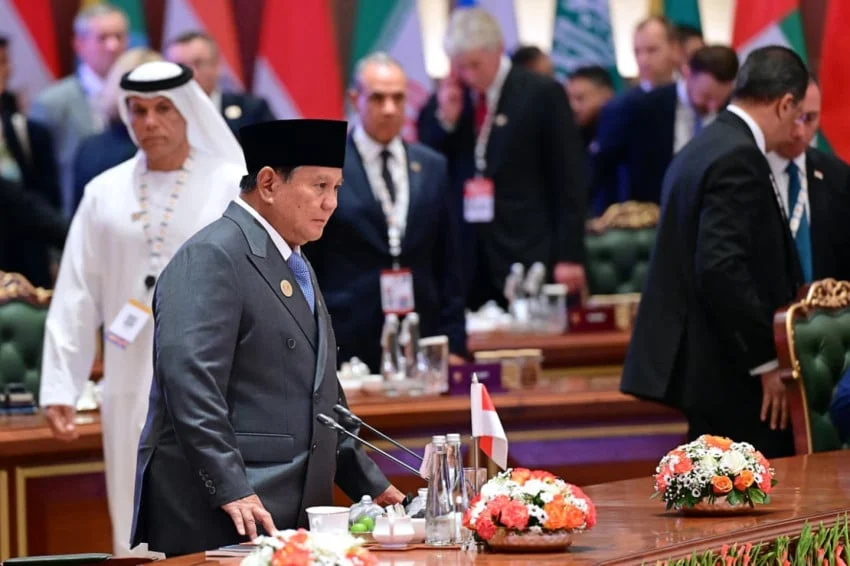
JAKARTA — Indonesian President Prabowo Subianto placed national resilience, food sovereignty, and economic self-reliance at the core of his diplomatic agenda during the 18th BRICS Summit held in New Delhi, India. Addressing an exclusive restricted session themed Inclusive Global Governance and Strengthening Multilateralism, the Indonesian leader articulated a vision of collective strength rooted in domestic empowerment. The address underscores Indonesia’s evolving foreign policy stance following its recent formal integration into the BRICS economic bloc, signaling a strategic diversification of Jakarta’s international partnerships in an increasingly multipolar global landscape.
The high-level diplomatic engagement in the Indian capital marks a pivotal milestone for Indonesian foreign policy. President Prabowo’s remarks focused on the fundamental prerequisites of national sovereignty, arguing that true geopolitical influence and multilateral resilience must emanate from a state’s foundational capacity to sustain its citizenry. By engaging with emerging economies within the BRICS framework, Indonesia aims to champion the interests of the Global South while fortifying its domestic economic architecture against external systemic shocks.
Core Themes of President Prabowo’s Address
During the restricted session, President Prabowo elaborated on the intrinsic link between domestic welfare and international standing. He posited that the structural strength of any nation is not measured solely by its military capabilities or financial reserves, but by its foundational ability to secure the basic necessities of its population.
According to the Indonesian head of state, collective solidarity among BRICS member states serves to amplify individual national resilience, provided that such cooperation is built upon a bedrock of internal self-sufficiency. Prabowo stressed that external alliances should act as force multipliers for domestic development rather than substitutes for it.
"With unity, we also become stronger. Strength always begins from within our country alongside our people—through our ability to meet their food needs, guarantee the energy supplies they require, educate our children, and provide them with opportunities to live prosperous lives. That is how we build a resilient and truly independent nation," President Prabowo stated during the session.
This philosophy directly mirrors his administration’s domestic policy priorities in Jakarta, which have heavily emphasized nationwide food estate developments, downstream mineral processing to retain economic value, and aggressive transitions toward renewable energy independence. By projecting these domestic imperatives onto the international stage at the BRICS Summit, Prabowo sought to align Indonesia’s national development goals with broader developmental narratives shared by emerging market economies.
Background and Context of Indonesia’s Integration into BRICS
Indonesia’s participation in the 18th BRICS Summit follows a transformative period in its diplomatic trajectory. The decision to formally seek and accept membership in the bloc represents a calculated pivot toward enhanced economic diplomacy. BRICS—originally comprising Brazil, Russia, India, China, and South Africa, and subsequently expanded to include several other influential developing nations—represents a significant share of the global population, territorial mass, and economic output.
For decades, Indonesia maintained a strictly non-aligned foreign policy doctrine, famously summarized as "free and active" (bebas aktif), avoiding formal alignment with major geopolitical blocs while maintaining robust trade and diplomatic relations with both Western powers and Eastern giants. Joining BRICS does not signal a departure from this foundational doctrine, but rather an adaptation to contemporary geopolitical realities. As traditional multilateral institutions face criticism for failing to adequately represent the interests of developing nations, emerging platforms like BRICS offer alternative avenues for financial cooperation, infrastructure funding, and trade reform.
The timing of Prabowo’s accession to BRICS has been met with significant domestic and international commentary. Indonesian economic policymakers view membership as a strategic gateway to alternative financial architectures, potentially reducing dependency on traditional Western-dominated institutions such as the International Monetary Fund (IMF) and the World Bank, particularly through potential engagement with the New Development Bank (NDB).
Chronology of Events Leading to the New Delhi Summit
The path to President Prabowo’s address in New Delhi on Saturday, September 12, 2026, was paved by months of intensive diplomatic preparations and domestic policy alignment:
- Early 2024 to Late 2025: Following the transition of executive power in Jakarta, the Indonesian administration conducted comprehensive reviews of its multilateral engagements, weighing the economic benefits and geopolitical implications of joining alternative economic blocs.
- Mid-2025: Formal expressions of interest regarding BRICS membership were conveyed through diplomatic channels, reflecting a desire to expand trade partnerships beyond traditional traditional OECD markets.
- Late 2025 to Early 2026: Technical negotiations and high-level diplomatic visits cemented Indonesia’s status as an incoming member state, culminating in official acceptance into the bloc.
- September 12, 2026: President Prabowo Subianto attends the 18th BRICS Summit in New Delhi, India, marking his inaugural appearance at the summit as the leader of a full member state and delivering his key address on inclusive global governance and national self-sufficiency.
Supporting Data and Economic Implications
To contextualize President Prabowo’s emphasis on food, energy, and education security, economic analysts point to key macroeconomic indicators defining Indonesia’s current developmental phase. As Southeast Asia’s largest economy, Indonesia maintains a GDP exceeding USD 1.3 trillion, driven largely by domestic consumption and a demographic dividend characterized by a young, increasingly urbanized workforce.
However, structural vulnerabilities remain, particularly regarding global supply chain disruptions that impact domestic food prices and energy import bills. By aligning with BRICS—a bloc that accounts for over 40 percent of global crude oil production and possesses vast agricultural and mineral resources—Indonesia positions itself to secure critical supply chains.
- Food Security: Indonesia’s ongoing national food estate programs and agricultural modernization initiatives aim to insulate the archipelago from international grain price volatility. Cooperation within BRICS agricultural working groups could facilitate technology transfers in climate-resilient farming and fertilizer production.
- Energy Transition: While Indonesia is a major exporter of coal, it has committed to aggressive net-zero emissions targets by 2060 or sooner. Partnerships within BRICS, particularly with nations possessing advanced renewable technology and rare earth processing capabilities, are expected to accelerate Jakarta’s green energy transition without compromising baseload power reliability.
- Financial Inclusion and De-Dollarization Discussions: Although Indonesia maintains a stable macroeconomic policy anchored by prudent fiscal management and Bank Indonesia’s monetary stance, discussions within BRICS regarding local currency settlement systems are of profound interest to Jakarta. Utilizing local currencies for bilateral trade with BRICS partners could reduce transaction costs and mitigate foreign exchange exposure risks.
Official Responses and Domestic Reactions
The announcement of Indonesia’s integration into BRICS and President Prabowo’s articulation of self-reliance at the New Delhi summit elicited diverse reactions from domestic stakeholders, political analysts, and economic commentators.
Government officials in Jakarta have hailed the membership as a historic diplomatic achievement. High-ranking representatives from the Ministry of Foreign Affairs emphasized that joining BRICS provides Indonesia with a strategic platform to advocate for reform in global governance structures, ensuring that international trade rules are fair, equitable, and sensitive to the developmental needs of the Global South.
Business associations, including the Indonesian Chamber of Commerce and Industry (KADIN), expressed cautious optimism. Industry leaders noted that while multilateral trade agreements within BRICS could open new export markets for Indonesian manufactured goods, commodities, and agricultural products, domestic industries must remain competitive to withstand potential influxes of foreign goods from massive industrial economies within the bloc.
Meanwhile, economic analysts have pointed out that while the rhetoric of self-sufficiency resonates well domestically, practical implementation will require meticulous institutional coordination. Experts emphasize that food and energy security cannot be achieved through protectionist measures alone, but require substantial investments in research, infrastructure, logistics, and human capital development—echoing President Prabowo’s specific reference to the necessity of educating the nation’s youth.
Broader Geopolitical and Economic Impact
President Prabowo’s address at the 18th BRICS Summit carries profound implications for the regional and global geopolitical architecture. By articulating a philosophy that balances international cooperation with rigorous domestic self-reliance, Indonesia projects an image of a confident middle power capable of navigating the complex rivalries between major global superpowers.
In the broader context of multilateralism, Indonesia’s active participation in BRICS serves to reinforce the bloc’s legitimacy as a representative voice for developing economies. Rather than viewing BRICS as an anti-Western coalition, Indonesian foreign policy framing treats the platform as an inclusive space for constructive dialogue aimed at reshaping global financial governance, enhancing supply chain resilience, and promoting sustainable development.
As the summit concludes, the focus will shift from diplomatic declarations to practical execution. The Prabowo administration faces the dual challenge of maximizing the tangible economic benefits of BRICS membership for domestic industries while safeguarding national sovereignty and maintaining balanced diplomatic relations across the global spectrum. The success of this strategic maneuver will likely define Indonesia’s economic and geopolitical standing for decades to come.