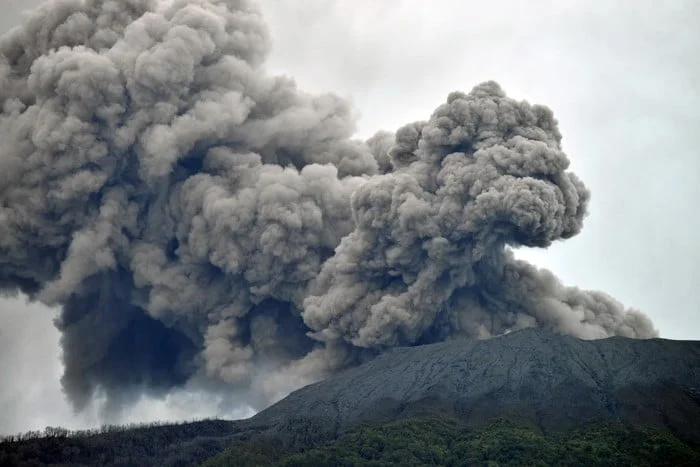
The aftermath of a volcanic eruption often presents a deceptive visual landscape, where a picturesque blanket of gray dust settles over homes, vegetation, and streets, masking a far more insidious environmental hazard. Far from being ordinary household dust, volcanic ash is a complex, abrasive aggregate of pulverized rock, minerals, and sharp silica particles that microscopically resemble jagged shards of broken glass. When volcanoes erupt, the violent fragmentation of magma and solid rock hurls these abrasive particles into the atmosphere, where they can travel vast distances depending on wind patterns and the explosivity of the event. As communities grapple with the immediate logistical nightmare of cleanup and property damage, public health officials are increasingly turning their attention to an invisible crisis: the severe and long-lasting health implications of sustained volcanic ash exposure.
To address these mounting concerns, the Emergency Medical Team (EMT) of the Muhammadiyah Disaster Management Center (MDMC) has issued urgent advisories detailing the multifaceted health risks associated with volcanic activity and outlining practical, life-saving mitigation strategies for affected populations. According to medical experts, the microscopic dimensions of volcanic ash particles are precisely what make them so dangerous. Because these particles are often less than 10 micrometers in diameter, they easily evade the body’s primary respiratory defenses—such as the nasal hairs and mucus membranes—allowing them to penetrate deep into the lower respiratory tract and settle within the delicate air sacs of the lungs.
Understanding the Anatomy of Volcanic Ash and Immediate Health Risks
The chemical composition and physical structure of volcanic ash dictate its toxicity. The sharp edges of the silica particles can cause severe mechanical irritation to biological tissues upon contact. Dr. Corona Rintawan, Chair of the EMT-MDMC, emphasizes that the spectrum of respiratory complications ranges from acute irritation and inflammation to chronic, debilitating conditions. For the general population, breathing in ash-laden air can trigger coughing, shortness of breath, throat irritation, and acute bronchitis.
However, the risk is exponentially higher for individuals with pre-existing chronic respiratory ailments, such as asthma, chronic obstructive pulmonary disease (COPD), and chronic bronchitis. For these vulnerable groups, even brief exposure to volcanic ash can precipitate severe bronchospasm, asthma attacks, and rapid deterioration of lung function, frequently requiring emergency medical intervention. "Now you might not feel the effects, but over a long period of time, the cumulative impact can be felt," Dr. Corona cautioned, highlighting the insidious nature of chronic particulate inhalation, which can lead to long-term pulmonary scarring and reduced lung capacity.
Beyond the respiratory system, volcanic ash poses significant threats to the eyes and skin. The abrasive nature of the silica particles makes them act like sandpaper when trapped under eyelids, leading to severe conjunctivitis, corneal abrasions, and painful eye ulcers, particularly for individuals wearing contact lenses during ash fall events. Dermal exposure, meanwhile, can strip the skin of its natural moisture barrier, causing contact dermatitis, severe dryness, secondary bacterial infections through scratching, and chemical burns if the ash is acidic.
Vulnerable Populations and the Hydro-Meteorological Impact
The hazards of volcanic ash extend beyond direct human contact, severely compromising vital community resources, most notably water supplies. When heavy ash falls blanket a region, precipitation washes the material into open water reservoirs, rivers, streams, and municipal wells. This inundation alters the chemical composition of the water, significantly increasing turbidity, lowering pH levels, and introducing heavy metals and sulfur compounds. Consuming or utilizing ash-contaminated water for daily hygiene can precipitate gastrointestinal illnesses, skin infections, and systemic toxicity. Consequently, water treatment facilities in eruption zones often face unprecedented operational challenges, necessitating emergency distribution of clean drinking water to affected communities.
Public health frameworks universally identify specific demographic cohorts as exceptionally vulnerable to environmental disasters, and volcanic eruptions are no exception. Children, the elderly, pregnant women, and individuals with cardiovascular or respiratory comorbidities require heightened protection during active eruption phases. Children are at higher risk because their respiratory systems are still developing, they breathe at a faster rate relative to their body weight, and they are more likely to play outdoors near contaminated ground surfaces. The elderly, often burdened with age-related cardiovascular decline, face increased risks of heart attacks and strokes triggered by the systemic inflammatory response to inhaled particulates. Pregnant women must guard against systemic stress that could adversely affect fetal development, while outdoor workers endure prolonged exposure windows that amplify cumulative toxicity.
Given these compounded vulnerabilities, public health directives consistently recommend that high-risk individuals strictly shelter in place and minimize outdoor exposure for the entirety of the eruption and ash-fall cycle.
Comprehensive Personal Protection and Environmental Remediation Strategies
Navigating an active volcanic ash event requires strict adherence to evidence-based personal protective measures. When outdoor exposure is unavoidable, respiratory protection is paramount. Medical consensus, reinforced by the MDMC, dictates that N95 or N100 respirators provide the gold standard of defense. These specialized masks are engineered to filter out at least 95 to 99.97 percent of airborne particles, including the ultrafine silica shards characteristic of volcanic emissions.
However, disaster relief operations frequently encounter logistical bottlenecks where specialized respirators become scarce, unavailable, or prohibitively expensive due to market inflation and disrupted supply chains. Addressing this pragmatic reality, Dr. Corona emphasized a flexible, risk-mitigated approach: "If it is indeed deemed impossible to buy the ideal mask, it is better to use any mask available, although ideally, you should still use an N95." While surgical masks, cloth face coverings, or improvised damp cloths offer substantially lower filtration efficiency against sub-micron particles, utilizing available barriers is vastly superior to unprotected inhalation, serving as a critical interim measure to reduce particulate load.
Inside the home, managing the intrusion of volcanic ash requires methodical cleanup protocols to prevent secondary re-suspension into the indoor air supply. Sweeping dry ash with traditional brooms is strongly discouraged, as kinetic energy flings fine particles back into the atmosphere, creating a dense indoor aerosol hazard that increases inhalation risks. Instead, surfaces should be gently dampened with water mist before sweeping or wiping, allowing the heavy moisture to bind the particles together for safe removal. Homes should keep windows and doors tightly sealed during peak ash fall, and air conditioning units should be turned off or set to recirculate indoor air to prevent outdoor intake.
Chronology of Disaster Response and Institutional Coordination
The management of volcanic crises relies on a seamless continuum of disaster governance, spanning early warning, emergency response, and recovery. Typically, the chronology of a volcanic event begins with heightened seismic monitoring by geological agencies, detecting magma movement and recording tectonic tremors beneath active stratovolcanoes. Once monitoring parameters breach critical thresholds, volcanic observatories issue immediate alert level escalations, prompting disaster management agencies—such as the National Board for Disaster Management (BNPB) and regional civil protection units—to activate emergency response protocols.
During the immediate onset of an eruption, civil authorities issue evacuation orders for high-risk red zones, establishing secure perimeter checkpoints and opening temporary evacuation shelters equipped with basic sanitation, food supplies, and medical triage units. Concurrently, medical response wings, including Muhammadiyah’s EMT and MDMC units, deploy frontline medical personnel to set up field clinics, distribute personal protective equipment, and monitor public health indicators for outbreaks of respiratory and ophthalmic ailments.
As the eruption transitions into a prolonged ash-fall phase, the focus shifts from immediate rescue to environmental mitigation, infrastructure clearing, and public health surveillance. Government ministries, particularly the Ministry of Health, coordinate nationwide public awareness campaigns, dispatching epidemiological teams to monitor disease trends and ensuring that regional health clinics maintain adequate stockpiles of bronchodilators, eye drops, and respiratory supplies.
Fact-Based Implication Analysis and Socio-Economic Fallout
A rigorous, fact-based analysis of volcanic ash crises reveals profound socio-economic implications that ripple far beyond the immediate blast zone. Economically, agricultural sectors suffer catastrophic losses as ash blankets arable land, halting photosynthesis, crushing delicate crops, and contaminating soil chemistry, which can render farmland sterile for subsequent seasons unless heavily treated with soil amendments and neutralizing agents. Livestock farming faces severe threats from ingested abrasive ash, which damages digestive tracts, induces fluorosis from toxic chemical coatings, and leads to secondary starvation.
Furthermore, transportation networks experience paralysis. Airborne ash reduces visibility to near zero, forcing the immediate cancellation of commercial and cargo flights due to the catastrophic risk of jet engine turbine failure—melted glass deposits can choke engine components. Ground transportation is similarly crippled as fine ash creates treacherous, slick driving conditions, clogs vehicle air filters, and abrades mechanical moving parts. The cumulative economic toll on regional commerce, tourism, and infrastructure repair routinely stretches local government budgets, necessitating national disaster relief funds and international humanitarian assistance.
Public health infrastructure is also subjected to severe strain. Hospitals and community health centers often experience surges in emergency room visits, testing the limits of pharmaceutical supplies, oxygen tanks, and medical staffing capacities. The psychological toll on affected populations—manifested as disaster-related anxiety, post-traumatic stress, and chronic uncertainty—adds an invisible psychological burden to the physical injuries sustained during the disaster.
Conclusion and Official Policy Recommendations
In light of the comprehensive risks posed by volcanic ash, public health authorities and disaster management organizations urge uninterrupted vigilance, disciplined adherence to safety protocols, and absolute reliance on official information channels. The propensity to underestimate the long-term toxicity of microscopic silica particles remains a primary obstacle in post-eruption public safety campaigns.
The Muhammadiyah Disaster Management Center reiterates its core message to the public: do not underestimate the invisible threat. Communities residing in active volcanic zones must institutionalize disaster preparedness, maintaining emergency kits equipped with approved respirators, sealed water supplies, and basic medical provisions. Vulnerable groups must be prioritized for sheltering and early evacuation when necessary. By fostering a culture of informed preparedness, strictly adhering to governmental and medical directives, and employing rigorous cleaning and protective measures, affected populations can significantly mitigate the health hazards of volcanic activity, transforming a potential public health catastrophe into a managed, survivable challenge.