Nahdlatul Ulama (NU), widely recognized as Indonesia’s and arguably the world’s largest Islamic organization, is actively pursuing an expansive global mission, a vision symbolically embedded in its very emblem: the globe. This inherent international outlook, conceived by its founders nearly a century ago, positions NU not merely as a national entity but as a pivotal actor within the broader international community, striving to project a moderate, compassionate, and just interpretation of Islam on a global scale. With an estimated membership exceeding 90 million in Indonesia alone, and a growing diaspora network, NU’s trajectory is increasingly defined by its commitment to universal values rooted in the teachings and example of Prophet Muhammad SAW.
The Genesis of a Global Outlook: NU’s Founding Principles
Founded on January 31, 1926, in Surabaya, East Java, Nahdlatul Ulama emerged from a critical juncture in Islamic history, both locally and globally. Its establishment was primarily a response to the perceived threats to traditional Sunni Islamic scholarship and practices, particularly in the face of Wahhabist movements gaining traction in the Arabian Peninsula and modernist ideologies challenging established interpretations elsewhere. The founding fathers, revered scholars known as kyai, including figures like Hasyim Asy’ari and Wahab Hasbullah, envisioned an organization dedicated to preserving Ahlussunnah wal Jama’ah (the People of the Sunnah and the Community) – a balanced, moderate, and tolerant approach to Islam rooted in classical Islamic jurisprudence and Sufi ethics.
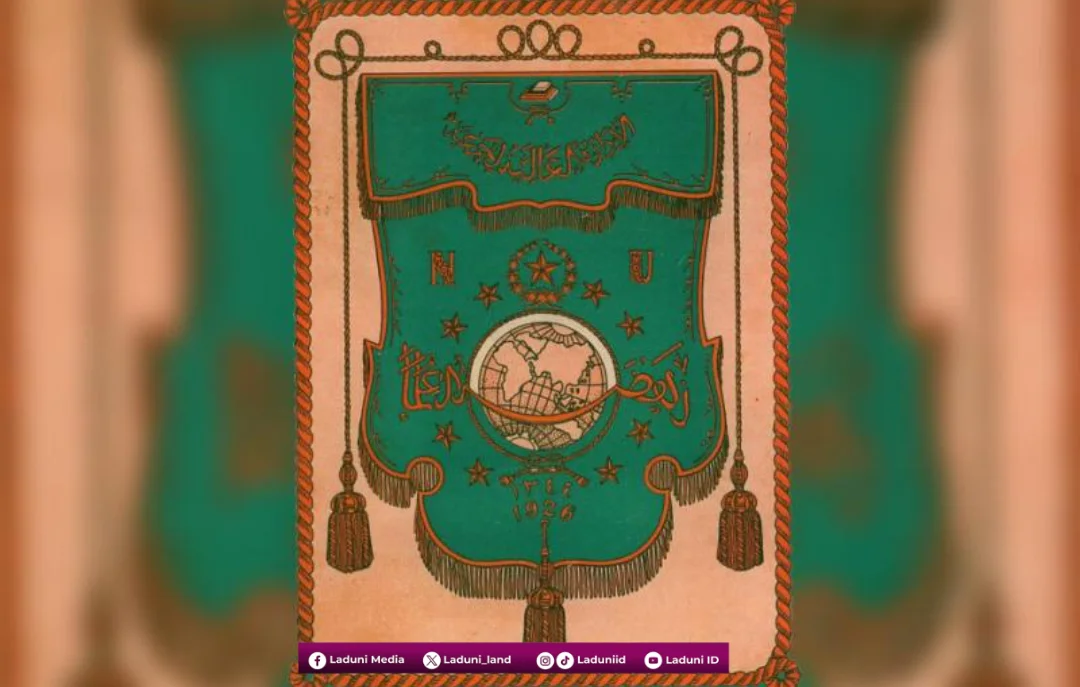
Crucially, the decision to incorporate a globe at the center of NU’s emblem was not an afterthought but a deliberate and profound statement of intent. Designed by K.H. Ridlwan Abdullah, the globe symbolizes a worldview that transcends local boundaries, indicating that the concerns and responsibilities of NU’s kyai and followers were never meant to be confined to Indonesia. Instead, their intellectual heritage, spiritual lineage, and moral obligations extended to the entire Muslim ummah and indeed, to humanity at large. This global consciousness was nurtured by the founders’ own experiences studying in Mecca, Cairo, and other centers of Islamic learning, where they forged international networks and absorbed diverse intellectual traditions. They understood that the challenges facing Muslims, and humanity, were interconnected and required a universal response.
The Prophetic Blueprint for Global Engagement
The original article alludes to "seven points built by Rasulullah SAW" as the foundation for NU’s global mission. While not explicitly detailed in the truncated source, these can be logically inferred as the core tenets and practices exemplified by Prophet Muhammad’s mission, which NU seeks to emulate in its contemporary global engagement. These principles form a timeless blueprint for fostering peace, justice, and human flourishing:
-
Compassion and Mercy (Rahmatan lil ‘Alamin): The Prophet Muhammad’s mission is characterized as a mercy to all creation. NU embodies this by advocating for humanitarian causes, promoting peace over conflict, and emphasizing empathy and understanding across all divides. This principle underpins NU’s extensive social welfare programs within Indonesia and its growing involvement in international humanitarian efforts, aiming to alleviate suffering irrespective of faith or background.
-
Justice and Fairness (Al-Adl): Prophet Muhammad established a society founded on principles of justice, equity, and the protection of the vulnerable. NU, in turn, champions these values globally, advocating for human rights, opposing all forms of oppression, and promoting good governance. This includes speaking out against injustices faced by Muslim minorities worldwide and contributing to international legal and ethical discourse.
-
Wisdom and Dialogue (Al-Hikmah wal Hiwar): The Prophetic tradition encourages seeking knowledge, engaging in reasoned discourse, and resolving disputes through dialogue. NU embraces this by fostering intellectual exchange, promoting interfaith and intercultural dialogue, and using persuasion rather than coercion. Its leaders frequently engage with religious scholars, political figures, and civil society representatives from diverse backgrounds to bridge gaps in understanding and build consensus on shared global challenges.
-
Inclusivity and Community Building (Ukhuwah Insaniyah): The Prophet’s community in Medina was a model of pluralism, uniting diverse tribes and faiths under a common social contract. NU translates this into promoting ukhuwah insaniyah (human fraternity) – fostering unity not just among Muslims (ukhuwah Islamiyah) or Indonesians (ukhuwah wathaniyah), but among all human beings. This principle guides NU’s efforts to build bridges between communities, counter xenophobia, and celebrate diversity as a source of strength.
-
Moral Leadership and Example (Uswatun Hasanah): Prophet Muhammad is considered the perfect example (uswatun hasanah) for Muslims. NU’s global mission involves projecting an image of moral leadership, demonstrating ethical conduct, integrity, and responsible citizenship on both national and international stages. This means leading by example in promoting peace, tolerance, and constructive engagement, thereby offering a positive model of Islamic practice to the world.
-
Social Welfare and Empowerment (Maslahah Ammah): The Prophet’s mission significantly focused on improving the social and economic well-being of his community, emphasizing care for the poor, orphans, and needy. NU extends this concern for maslahah ammah (public good) to the global arena, engaging in sustainable development initiatives, poverty alleviation, education, and healthcare programs, often through partnerships with international organizations.
-
Moderation and Balance (Wasatiyyah): Islam, as taught by the Prophet, is described as a middle path, avoiding extremes. NU is a fervent proponent of wasatiyyah (moderation), actively countering extremist ideologies, promoting a balanced and nuanced understanding of Islamic teachings, and advocating for a pragmatic approach to contemporary issues. This principle is particularly vital in an era marked by rising religious extremism and polarization, offering a compelling alternative narrative.
Tracing NU’s International Footprint: A Chronology of Engagement
While NU’s global vision was inherent from its inception, its active international engagement has evolved significantly over time.
- Early Connections (1920s-1950s): Even before Indonesia’s independence, NU leaders maintained scholarly ties with the broader Islamic world, particularly through pilgrimages and studies in Mecca, Damascus, and Cairo. These informal networks laid the groundwork for future international outreach.
- Post-Independence Era (1950s-1980s): With Indonesia’s independence, NU’s focus largely remained domestic, navigating the country’s complex political landscape. However, its leaders occasionally participated in international Islamic conferences, gradually raising its profile.
- Late 20th Century Expansion (1990s-2000s): As Indonesia democratized and global communication improved, NU began to formalize its international presence. The establishment of Pengurus Cabang Istimewa Nahdlatul Ulama (PCINU) – special branches for overseas members – commenced, particularly in countries with significant Indonesian diaspora communities such as Malaysia, Singapore, Australia, Saudi Arabia, and later in Europe and North America.
- 21st Century Acceleration and "Humanitarian Islam": The new millennium marked a significant acceleration in NU’s global engagement.
- 2004: International Conference of Islamic Scholars (ICIS): NU hosted the inaugural ICIS in Jakarta, bringing together hundreds of scholars from across the globe to discuss pressing issues facing the Muslim world, emphasizing moderation and interfaith dialogue. This event significantly elevated NU’s international standing.
- 2014-Present: Islam Nusantara and Humanitarian Islam: Under the leadership of figures like Said Aqil Siroj and subsequently Yahya Cholil Staquf, NU has actively promoted the concept of "Islam Nusantara" (Archipelagic Islam) – a contextualized, moderate, and culturally adaptable form of Islam that has flourished in Indonesia. This concept has been reframed and expanded into "Humanitarian Islam," emphasizing universal human values and challenging exclusivist interpretations.
- Global Conferences and Initiatives: NU leaders have become prominent voices in international forums, addressing the United Nations, the Vatican, the World Council of Churches, and various interfaith and peace-building summits. They advocate for religious freedom, human rights, and a global ethic of peace.
- Partnerships and Collaborations: NU has forged partnerships with international academic institutions, think tanks, and non-governmental organizations to promote education, research, and collaborative projects aimed at countering extremism and fostering interreligious harmony. Examples include collaborations with the Bayt ar-Rahmah in North Carolina, USA, and various European institutions.
- G20 Religion Forum (R20): In 2022, NU, in collaboration with the Muslim World League, co-hosted the first-ever G20 Religion Forum (R20) in Bali, Indonesia. This landmark event brought together religious leaders from various faiths worldwide to discuss how religion can be a source of solutions, rather than problems, for global challenges. This initiative underscored NU’s aspiration to position religious communities as active partners in global governance.
Data and Statistics Reinforcing Global Reach
NU’s global reach is quantifiable. As of 2023, there are over 40 PCINU branches spanning five continents, from Egypt to Germany, Japan to the United States. These branches serve not only as community hubs for Indonesian expatriates but also as platforms for cultural and religious exchange, introducing NU’s moderate Islamic teachings to broader international audiences. NU’s vast network of pesantren (Islamic boarding schools) and universities, such as Universitas Nahdlatul Ulama (UNU) institutions, increasingly attract international students and scholars interested in studying the Indonesian model of Islam.
The strategic importance of NU also lies in its demographic weight. Indonesia is home to the world’s largest Muslim population, and NU represents the largest organized segment of this population. In a world grappling with extremism, the sheer size and unwavering commitment of NU to moderation, pluralism, and traditional jurisprudence offer a powerful counter-narrative. Its model of Islam, which harmonizes religious piety with national identity and democratic values, provides a compelling alternative to radical ideologies that often reject modern nation-states and pluralistic societies.
Statements and Perspectives on NU’s Global Role
Leaders within Nahdlatul Ulama consistently articulate the organization’s global imperative. The current General Chairman of NU’s Executive Board (PBNU), Kyai Haji Yahya Cholil Staquf, has been a particularly vocal proponent of NU’s international mission. He frequently emphasizes the urgent need for NU’s moderate voice on the global stage, especially in combating extremism and promoting peace.
"Our mission extends far beyond national borders," Staquf has remarked in various international forums. "It is a universal call for compassion, justice, and solidarity, directly mirroring the Prophet’s teachings. We believe that religion must be a solution to global problems, not a source of conflict. NU offers a model of Islam that is deeply rooted in tradition yet fully engaged with modernity, pluralism, and human rights."
Similarly, other prominent NU figures and scholars highlight the importance of interfaith dialogue and cultural exchange as cornerstones of their global strategy. They stress that true global engagement requires mutual respect and a willingness to understand diverse perspectives.
International observers and academics have also acknowledged NU’s unique position and potential as a global thought leader for moderate Islam. Dr. Robert W. Hefner, a leading scholar of Indonesian Islam at Boston University, has often pointed to NU as a critical bulwark against radicalism, stating, "NU offers a compelling alternative narrative to extremist ideologies, rooted in a rich intellectual tradition and a commitment to pluralism that is vital for global stability." Such recognition underscores the growing appreciation for NU’s distinct contributions to global peace and interreligious understanding.
Implications and Future Trajectory
The implications of NU’s expanding global footprint are profound and multifaceted:
- Combating Extremism: NU’s steadfast adherence to Ahlussunnah wal Jama’ah, its emphasis on traditional jurisprudence, and its strong rejection of violence and extremism serve as a potent antidote to radical ideologies worldwide. By actively promoting wasatiyyah, NU provides a credible and widely accepted model for Muslims seeking to reconcile faith with modern challenges without resorting to radicalism.
- Promoting Interfaith Harmony: Through its consistent engagement in interfaith dialogue and collaboration, NU significantly contributes to global understanding and peace. Its leaders actively foster an environment where religious differences are respected, and common values are emphasized, thereby reducing religious tensions and fostering social cohesion.
- Shaping Global Discourse on Islam: NU’s "Humanitarian Islam" concept offers a distinct and inclusive narrative that can profoundly influence international policy and public perception of Islam. It challenges orientalist stereotypes and extremist caricatures by presenting Islam as a force for good, deeply committed to universal human dignity and peaceful coexistence.
- A Model for Democratic Islam: In a world where democracy and Islam are often portrayed as incompatible, NU demonstrates that a vibrant, democratic society can coexist harmoniously with a deeply religious populace. Its long history of advocating for democratic values within Indonesia offers a practical model for other Muslim-majority nations.
Despite these significant opportunities, NU faces several challenges in expanding its global mission:
- Resources and Funding: Sustaining extensive global operations, including educational initiatives, humanitarian aid, and diplomatic engagement, requires substantial financial and human resources.
- Cultural and Political Nuances: Navigating the diverse cultural, political, and religious landscapes of different countries demands adaptability, sensitivity, and a nuanced understanding of local contexts.
- Effective Communication: Translating NU’s complex theological and social vision, deeply rooted in Indonesian traditions, into a universally understandable and appealing message for a global audience requires sophisticated communication strategies.
- Internal Cohesion: As NU expands internationally, maintaining internal unity and consistency across its diverse branches and constituencies will be crucial.
Nevertheless, the opportunities for NU to consolidate its status as a global thought leader for peace and moderation are immense. The growing demand for moderate Islamic leadership, the increasing interconnectedness facilitated by digital platforms, and the potential for strategic partnerships with international organizations and governments all provide fertile ground for NU’s continued global ascendancy.
In conclusion, Nahdlatul Ulama’s journey towards becoming a full-fledged part of the global community is not a recent aspiration but a foundational commitment inscribed in its very identity. Rooted in the timeless principles of Prophet Muhammad SAW – compassion, justice, wisdom, inclusivity, moral leadership, social welfare, and moderation – NU is strategically positioned to play an increasingly vital role in shaping a more peaceful, just, and harmonious world. Its dedication to a humanitarian Islam offers a compelling vision for the future, one that champions dialogue over division and solidarity over strife, ensuring that its global mission resonates deeply in the hearts and minds of people across the planet.