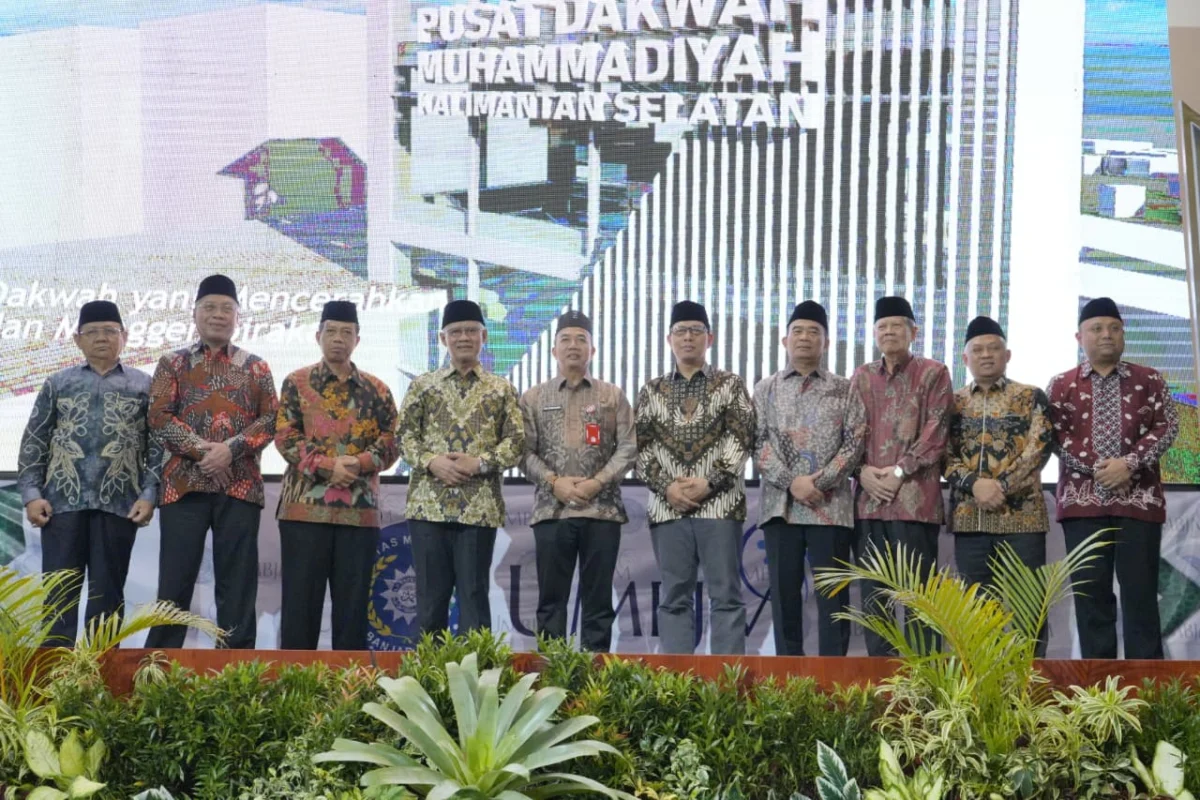
BANJARMASIN, INDONESIA – Universitas Muhammadiyah Banjarmasin (UMBJM) commemorated its 30th anniversary, or "Milad," on Friday, July 24, with a powerful call to strengthen its commitment as a vanguard of intellectual thought and a pivotal center for future Islamic civilization. The milestone event, held at the UMBJM campus, underscored a collective aspiration to transform the institution into a beacon of progress, innovation, and ethical leadership in the challenging landscape of modern higher education. This significant anniversary is not merely a reflection on three decades of existence but a forward-looking declaration, urging the university community to embrace rigorous self-assessment, foster robust collaboration, and relentlessly pursue excellence across all facets of its academic and operational endeavors. The celebration served as a rallying point for faculty, staff, students, and stakeholders to collectively envision and build a future where UMBJM stands as a testament to scholarly distinction and moral fortitude.
A Vision for Intellectual Leadership and Islamic Civilization
Ridhahani Fidzi, Chairman of the Muhammadiyah Regional Leadership (PWM) of South Kalimantan, articulated the central message of the Milad, emphasizing that three decades represent far more than a mere passage of time for a higher education institution. Instead, it signifies a critical juncture for profound introspection, strategic revitalization, and concerted efforts to elevate quality across all domains. Fidzi’s address resonated with urgency, framing the 30th Milad as an opportune moment for collective action. "This 30th Milad must serve as a turning point and a momentum for us to work hand-in-hand, to continuously refine and improve, so that UMBJM genuinely evolves into an intellectual headquarters and a nucleus of future Islamic civilization," he stated emphatically. This vision extends beyond academic prowess, aiming to cultivate an environment where intellectual discourse is intertwined with the foundational values of Islam, fostering graduates who are not only academically competent but also ethically grounded and socially responsible.
Fidzi further elaborated that this ambitious aspiration stems from a deep awareness of the escalating complexities facing contemporary higher education. The pervasive influence of technological disruption, the fierce currents of global competition, and the ever-increasing demands from society for high-quality, relevant graduates necessitate an unwavering commitment to adaptation and innovation. "We recognize that the challenges confronting higher education in the future are increasingly formidable. Technological disruption, global competition, and societal demands for the quality of graduates are realities that must be confronted with readiness, innovation, and strong commitment," Fidzi asserted, highlighting the imperative for UMBJM to proactively anticipate and navigate these transformative forces. This foresight underlines a strategic approach that acknowledges the dynamic nature of knowledge creation and dissemination, preparing the institution to remain pertinent and impactful in an ever-evolving world.
The Transformative Journey of UMBJM: A Chronology of Growth
Rector of UMBJM, Khudzaifah Dimyati, provided a comprehensive overview of the university’s remarkable journey over the past three decades, detailing a path marked by significant milestones and overcome challenges. His report painted a vivid picture of institutional evolution, illustrating how UMBJM meticulously navigated regulatory landscapes and expanded its academic offerings to meet changing educational demands. "In its milestones, in 1996, this university began as an Academy of Nursing (Akper), then in 2003, it transitioned into a College of Health Sciences (Stikes), and finally, in 2015, it was established as Universitas Muhammadiyah Banjarmasin. This has certainly been a long and arduous journey for us," Dimyati recounted, his words reflecting the perseverance embedded in the institution’s DNA.
This chronological progression is not merely an administrative record but a testament to UMBJM’s strategic foresight and adaptability within the Indonesian higher education system. The transformation from a specialized academy to a comprehensive university reflects a broader trend in Indonesia where institutions initially focused on vocational or specific fields often evolve to offer a wider range of disciplines, thereby enhancing their impact and appeal. The journey from Akper to Stikes, and ultimately to a full-fledged university, signifies a deliberate expansion of academic scope, faculty development, and infrastructure, all geared towards serving a more diverse student body and addressing a broader spectrum of societal needs. This phased growth allowed UMBJM to build a strong foundation in health sciences before diversifying, ensuring quality and relevance at each stage of its development.
Strategic Expansion: New Study Programs Addressing Evolving Needs
In his report, Rector Dimyati proudly announced the establishment of five new study programs, a significant development underscoring UMBJM’s commitment to academic diversification and responsiveness to market demands. These new programs include: first, a Bachelor’s degree in Management; second, a Bachelor’s degree in Primary School Teacher Education (PGSD); third, a Bachelor’s degree in Communication Studies; fourth, a Bachelor’s degree in Law; and fifth, a Diploma program in English. This strategic expansion is a critical step in broadening UMBJM’s academic portfolio beyond its traditional strength in health sciences, signaling a robust intent to cater to a wider array of student interests and professional aspirations.
The introduction of these programs is particularly timely. The Management program aims to equip graduates with essential leadership and entrepreneurial skills, vital for driving economic growth in South Kalimantan and beyond. The PGSD program addresses the perennial need for qualified and innovative educators, particularly at the foundational levels of schooling, ensuring a strong educational pipeline for future generations. Communication Studies is designed to produce graduates adept at navigating the complex modern media landscape, critical for effective public discourse and organizational transparency. The Law program will contribute to strengthening the legal framework and justice system, producing ethical legal professionals. Finally, the Diploma in English reflects a recognition of the increasing importance of global communication skills in an interconnected world, enhancing the employability of graduates in various sectors. These new programs are poised to attract a broader demographic of students, enrich the academic environment through interdisciplinary collaborations, and contribute directly to regional development by supplying a skilled workforce in high-demand areas. This proactive approach ensures UMBJM remains competitive and relevant in an educational landscape that increasingly values versatility and practical applicability.
Government Endorsement and Regional Impact
The significant strides made by UMBJM did not go unnoticed by regional authorities. Muhammad Syarifudin, the Provincial Secretary of South Kalimantan, representing the Governor, offered a ringing endorsement of UMBJM’s trajectory and future potential. His remarks underscored the provincial government’s recognition of the university’s pivotal role in educational development and human resource cultivation within the region. "Observing the journey of UM Banjarmasin, we can clearly see this institution’s unwavering commitment to building education. This institution possesses a strong vision, sound governance, and an ardent spirit for progress. It is undeniable that UM Banjarmasin is capable of continually adapting to the demands of the times," Syarifudin declared.
This official commendation is not merely ceremonial; it carries significant weight, signaling governmental support and acknowledgment of UMBJM’s contributions to the social and economic fabric of South Kalimantan. A strong vision and good governance are crucial pillars for any institution aiming for sustained growth, and Syarifudin’s recognition validates UMBJM’s internal strategies. The ability to "continually adapt to the demands of the times" is particularly salient in a rapidly changing world, where educational institutions must be agile and responsive. Such adaptability ensures that graduates are equipped with skills relevant to contemporary and future job markets, thereby reducing unemployment and fostering regional prosperity. The provincial government’s perspective highlights the symbiotic relationship between academic institutions and regional development, where universities like UMBJM act as key engines for progress by nurturing talent and fostering innovation. This mutual reinforcement bodes well for UMBJM’s continued expansion and its deeper integration into the regional development agenda.
Muhammadiyah’s Guiding Philosophy: Islam Berkemajuan
The spirit of building a progressive future, so evident in UMBJM’s Milad celebrations, perfectly aligns with the overarching philosophy championed by Haedar Nashir, Chairman of the Central Leadership of Muhammadiyah. Nashir articulated a profound interpretation of "Milad," urging that it should transcend a mere annual observance of an institution’s founding. Instead, he posited, a Milad must serve as a sacred space for "muhasabah" – a deep, critical self-reflection – and, more significantly, as a dynamic launching pad for meticulously charting future projections with an unwavering orientation towards excellence. "More than just a reminder of the birth year, let us make this Milad a moment for muhasabah and, more importantly, for envisioning future projections. The keyword is building excellence," Haedar stated, encapsulating the essence of Muhammadiyah’s progressive vision.
This philosophy, known as "Islam Berkemajuan" (Progressive Islam), is the ideological bedrock upon which all Muhammadiyah institutions, including UMBJM, are built. Islam Berkemajuan is characterized by a commitment to intellectualism, social justice, scientific advancement, and humanitarianism, all rooted in Islamic teachings. It advocates for a dynamic interpretation of Islam that is relevant to modern challenges, eschewing stagnation and embracing innovation. For UMBJM, this means integrating these progressive values into its curriculum, research agenda, and community engagement initiatives. It demands an academic environment that fosters critical thinking, encourages scientific inquiry, and promotes ethical leadership. The emphasis on "excellence" is not just about academic rankings but about producing graduates who are not only competent professionals but also individuals of high moral character, capable of contributing meaningfully to society and upholding the values of their faith in a constructive and inclusive manner. This guiding philosophy ensures that UUMBJM’s growth is not just quantitative but also qualitative, driven by a deeply embedded commitment to societal betterment and intellectual rigor.
Cultivating an Ecosystem of Excellence and Innovation
As Universitas Muhammadiyah Banjarmasin steps into its 30th year, the expectations are clear: it is not merely about institutional growth in terms of size or numbers, but about fostering a vibrant, innovative, and progressive academic ecosystem. This vision for UMBJM extends beyond traditional metrics of success, aiming to cultivate an environment where groundbreaking research flourishes, interdisciplinary collaboration is the norm, and an entrepreneurial spirit permeates the campus culture. The goal is to create a dynamic space where faculty and students are inspired to push the boundaries of knowledge, challenge conventional wisdom, and develop creative solutions to complex problems.
The foundational values of "Islam Berkemajuan," intrinsic to the Muhammadiyah movement, are expected to serve as the guiding principles for this endeavor. These values, which champion intellectual curiosity, social justice, and a commitment to humanitarianism, will inform every aspect of UMBJM’s development. By integrating these principles, UMBJM is poised to solidify its role as a premier center for the advancement of science and knowledge, producing not just graduates, but well-rounded human resources with integrity, critical thinking skills, and a strong sense of social responsibility. This holistic approach ensures that the university contributes to nation-building by shaping individuals who can lead with both competence and conscience.
Furthermore, UMBJM aims to firmly establish itself as an intellectual headquarters that actively addresses the multifaceted challenges confronting the community, the nation, and humanity at large. This means engaging in research that has real-world impact, developing programs that meet societal needs, and fostering a culture of service among its constituents. Whether tackling issues of public health, environmental sustainability, economic development, or social equity, UMBJM seeks to be a catalyst for positive change. By combining academic rigor with a profound commitment to its foundational values, UMBJM is set to become a beacon of progress, offering tangible solutions and contributing to a more just, prosperous, and enlightened global society. The institution’s journey into its fourth decade is thus marked by an ambitious commitment to not only grow but to also deepen its impact, ensuring it remains at the forefront of educational and societal advancement.
Broader Implications for Education and Society
The journey and future aspirations of UMBJM, particularly as articulated during its 30th Milad, carry significant implications for the broader landscape of Indonesian higher education and society. In an era where technological advancements are reshaping industries and economies, UMBJM’s proactive stance on innovation and adaptation positions it as a model for other private universities. Its commitment to expanding academic programs, particularly in fields like management, communication, and law, demonstrates a strategic response to the evolving demands of the job market and the need for a diversified workforce in South Kalimantan. This move is crucial for enhancing regional competitiveness and providing local talent with opportunities to contribute to various sectors.
Moreover, UMBJM’s emphasis on becoming a "center of Islamic civilization" underscores the enduring relevance of faith-based education in fostering holistic development. In Indonesia, a country with a large Muslim population, institutions like UMBJM play a vital role in integrating religious values with modern scientific and intellectual pursuits. This approach helps cultivate graduates who are not only professionally capable but also ethically grounded, contributing to a more moral and cohesive society. The concept of "Islam Berkemajuan" championed by Muhammadiyah is particularly impactful, promoting a progressive, inclusive, and socially responsible interpretation of Islam that counters extremist narratives and encourages constructive engagement with global challenges.
The provincial government’s endorsement of UMBJM’s vision further highlights the recognition of private institutions as indispensable partners in national development. By fostering strong collaborations between academia and government, UMBJM can amplify its impact on public policy, community service, and regional planning. Its growth trajectory also contributes to the decentralization of educational excellence, ensuring that high-quality higher education is accessible beyond major metropolitan centers.
Ultimately, UMBJM’s 30th Milad is not just an internal celebration; it is a public declaration of its renewed commitment to producing future leaders, innovators, and problem-solvers. By fostering an ecosystem of excellence, embracing technological disruption, and staying true to its progressive Islamic values, UMBJM is poised to make profound contributions to the intellectual, social, and economic development of South Kalimantan, Indonesia, and indeed, the wider global community. Its journey exemplifies the transformative power of education rooted in a clear vision and unwavering dedication to progress.