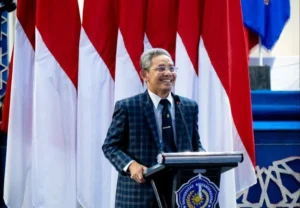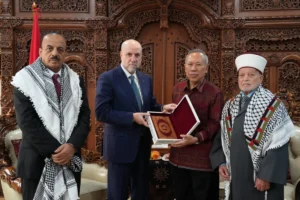
The Nahdlatul Ulama Executive Board (PBNU), Indonesia’s largest Islamic organization, and the Ministry of Health have officially cemented their commitment to enhance cooperation, specifically targeting the successful implementation of critical government public health programs. This strengthened alliance primarily focuses on expanding access to Free Health Checks (CKG) and accelerating the national effort to eradicate tuberculosis (TBC). The landmark agreement was reached during a pivotal meeting held on Tuesday, July 21, 2026, between PBNU Chairman KH Yahya Cholil Staquf and the Minister of Health of the Republic of Indonesia at the Ministry of Health Office in Kuningan, Jakarta. This collaboration is poised to leverage PBNU’s unparalleled grassroots reach and extensive network of educational and social institutions, particularly pesantren and madrasah, to deliver vital health services and information directly to communities that are often underserved by conventional healthcare infrastructure.
The Strategic Alliance for Public Health
The partnership between PBNU and the Ministry of Health represents a significant step towards achieving comprehensive public health goals in Indonesia. PBNU, with its estimated 90 million members, operates a vast network spanning thousands of pesantren (Islamic boarding schools), madrasah (Islamic schools), universities, hospitals, clinics, and community organizations across the archipelago. This deep penetration into society, particularly in rural and remote areas, provides an invaluable conduit for health interventions. The Ministry of Health, on its part, is tasked with formulating and implementing national health policies, ensuring equitable access to healthcare, and addressing prevalent health challenges such as infectious diseases and non-communicable diseases. The convergence of governmental resources and expertise with PBNU’s social capital and community trust creates a powerful synergy capable of overcoming long-standing barriers to effective public health outreach.
Indonesia faces persistent public health challenges, including a high burden of infectious diseases like tuberculosis, the rising prevalence of non-communicable diseases, and disparities in healthcare access between urban and rural populations. Preventive care, early detection, and health literacy remain crucial areas for improvement. Furthermore, specific communities, such as the santri (students of pesantren), often live in communal settings that necessitate tailored health strategies, particularly concerning hygiene and disease prevention. This collaboration acknowledges these complex realities and seeks to integrate health promotion and disease prevention into the very fabric of community life through PBNU’s established platforms. The discussions during the meeting also specifically delved into improving the health of students and santri, strengthening community-based health services, and addressing Water, Sanitation, and Hygiene (WASH) issues, which are fundamental to preventing illness and fostering healthy environments, especially within pesantren. The Minister of Health underscored the critical importance of working with NU, recognizing its status as the largest mass organization in Indonesia, whose extensive reach is deemed a decisive factor for the success of priority programs like CKG and TBC eradication.
A Timeline of Collaborative Momentum
The current agreement is not an isolated event but rather the culmination of existing collaborative efforts and PBNU’s long-standing commitment to public welfare, including health.
-
Prior to 2025: Foundational Engagement. PBNU has historically been involved in various social and welfare initiatives, operating numerous health facilities, including Rumah Sakit NU (NU Hospitals) and community clinics. These institutions have provided essential medical services, particularly to low-income communities, demonstrating PBNU’s enduring dedication to public health long before formal government partnerships on this scale. Their involvement in social campaigns and disaster relief efforts also frequently included health components, establishing a track record of community service.
-
2025: Pilot Phase of CKG Santri. A significant precursor to the current expanded partnership was the initiation of the "Free Health Checks for Santri" (CKG Santri) program. Spearheaded by the Coordinating Ministry for Human Development and Culture (Kemenko PMK), this initiative successfully brought together the Ministry of Health (Kemenkes), the Ministry of Religious Affairs (Kemenag), and Rabithah Ma’ahid Islamiyah (RMI) PBNU – the association of Islamic boarding schools under PBNU. This multi-ministerial and organizational synergy led to the successful implementation of CKG Santri in several regions, including notable pilot projects at Pesantren Lirboyo and Ploso Kediri. These initial efforts provided valuable insights into the logistical challenges and effective strategies for delivering health services within the unique environment of pesantren, proving the viability and necessity of such partnerships.
-
July 21, 2026: Formalizing the Expanded Partnership. The meeting at the Ministry of Health Office in Kuningan, Jakarta, marked a formalization and expansion of these existing collaborations. The presence of high-level officials, including PBNU Chairman KH Yahya Cholil Staquf and the Minister of Health, underscored the strategic importance attached to this alliance. The discussions moved beyond just santri health to encompass broader community-based health services and the nationwide eradication of TBC. This meeting served as a commitment point to scale up successful pilot programs and introduce new initiatives leveraging PBNU’s extensive network.
-
Post-July 21, 2026: Towards Mass Implementation. Following this agreement, the expectation is a rapid scale-up of the CKG Santri program, aiming for a more massive implementation across a wider geographical area. Furthermore, the partnership will extend to other critical health priorities, particularly TBC eradication, signifying a long-term strategic alliance rather than a project-specific collaboration. The objective is to make promotive, preventive, and curative health efforts more effective and sustainable through consistent, coordinated action at the grassroots level.
Key Pillars of the Partnership: Addressing Critical Health Challenges
The collaborative framework between PBNU and the Ministry of Health is structured around several key pillars designed to tackle some of Indonesia’s most pressing health issues.

Free Health Checks (CKG) – A Proactive Approach
The Free Health Checks (CKG) program is a cornerstone of this partnership, emphasizing a proactive rather than reactive approach to healthcare. CKG is vital for early detection of diseases, which is crucial for timely intervention and preventing the progression of conditions into more severe stages. This program will enable the screening for common non-communicable diseases like hypertension and diabetes, as well as initial signs of infectious diseases, including tuberculosis. By identifying health issues early, individuals can receive appropriate guidance, treatment, or referrals, thereby reducing the burden on advanced curative care facilities.
PBNU’s vast network, encompassing pesantren, madrasah, local community centers (like majlis taklim), and ranting (grassroots branches), offers an unparalleled infrastructure for delivering CKG services. These locations are trusted community hubs, making them ideal entry points for health screening, especially for populations that might otherwise face geographical or socio-economic barriers to accessing healthcare. The involvement of NU’s local leadership and volunteers can also significantly improve health literacy within communities, educating individuals about the importance of regular check-ups, healthy lifestyles, and preventive measures. For santri and students, CKG provides an essential safety net, ensuring their health is monitored in communal living environments where diseases can spread rapidly.
Accelerating Tuberculosis Eradication – A National Imperative
Tuberculosis (TBC) remains a significant public health challenge in Indonesia, which ranks among the top countries globally for TBC burden. The World Health Organization (WHO) estimates that Indonesia accounts for a substantial portion of the world’s TBC cases, with hundreds of thousands of new cases diagnosed annually. The challenges include early diagnosis, ensuring treatment adherence (which can be long and complex), and addressing stigma associated with the disease.
PBNU’s involvement is critical for accelerating TBC eradication efforts. Its extensive presence in rural and remote areas, often beyond the reach of conventional health services, is invaluable for case finding and community tracing. PBNU’s network can facilitate direct observed treatment short-course (DOTS), a highly effective strategy where patients are observed taking their medication by a healthcare worker or a trained community volunteer, thereby improving treatment adherence and reducing drug resistance. Furthermore, NU’s strong community ties can help combat the social stigma often associated with TBC, encouraging individuals to seek testing and treatment without fear of discrimination. This partnership directly aligns with national and global "End TB Strategy" goals, aiming for a world free of TB by reducing incidence and mortality.
Health of Students and Santri – Investing in the Future
The well-being of students and santri is a particular focus of this collaboration. Pesantren are unique educational and living environments, often housing large numbers of students in close quarters. While fostering strong communal bonds, these settings can also pose specific health challenges related to hygiene and the rapid spread of infectious diseases. The discussions explicitly highlighted the importance of Water, Sanitation, and Hygiene (WASH) initiatives within pesantren. Improving access to clean water, adequate sanitation facilities, and promoting good hygiene practices (like handwashing) are fundamental to preventing diseases such as diarrhea, skin infections, and respiratory illnesses.
By focusing on pesantren and madrasah as primary entry points for CKG and health education, the partnership aims to create healthier learning environments. These institutions serve as vital microcosms of Indonesian society, and by fostering health-conscious santri, the program indirectly contributes to the health of their families and future communities. Health education provided within these settings can empower santri to become advocates for health and hygiene within their own circles, amplifying the impact of the program far beyond the institutional walls.
Strengthening Community-Based Health Services
Beyond specific programs, the partnership aims to bolster the broader landscape of community-based health services. This involves leveraging PBNU’s existing health facilities, like clinics and hospitals, and integrating them more effectively into the national health system. The grassroots structure of NU, extending to its ranting (village-level branches), allows for the identification of local health needs and the mobilization of community health cadres and volunteers from within PBNU’s ranks. These volunteers, often trusted members of the community, can serve as crucial links between formal health services and the local population, providing basic health education, facilitating referrals, and supporting adherence to treatment. This approach moves towards a more participatory health governance model, where communities are active agents in managing their own health. The objective is to make health services more accessible, culturally sensitive, and sustainable by rooting them deeply within existing social structures.
Official Statements and Perspectives: Voices of Commitment
The unified commitment from both PBNU and the Ministry of Health underscores the strategic importance of this collaboration.
The Minister of Health articulated the government’s perspective, emphasizing the unparalleled reach of Nahdlatul Ulama. "It is very important to be able to work together with NU as the largest mass organization in Indonesia," the Minister stated, highlighting the recognition that PBNU’s extensive network is not just an asset but a decisive factor for the success of national health programs. This statement reflects a deep understanding of the socio-cultural landscape of Indonesia, where community trust and established social structures often serve as more effective channels for public initiatives than top-down mandates alone. The Minister’s emphasis on CKG and TBC eradication as priority programs further signals the government’s strategic focus and its belief in NU’s capacity to deliver on these fronts.
PBNU Chairman KH Yahya Cholil Staquf responded with a reaffirmation of NU’s enduring commitment, stating that it "is not a new thing and has been proven in the field." He articulated, "PBNU is committed and has proven its commitment to work with the government to serve the community, including in the health sector. Among the examples are Covid-19 vaccination and stunting reduction." This statement not only acknowledges the invitation for collaboration but also grounds it in a history of successful partnership and social service. The examples of COVID-19 vaccination and stunting reduction are particularly relevant, showcasing PBNU’s ability to mobilize its vast network for urgent national health campaigns and achieve tangible results. For instance, during the pandemic, NU played a critical role in promoting vaccine acceptance and facilitating vaccination drives, especially in communities initially hesitant or difficult to reach. Similarly, its involvement in stunting reduction efforts through local clinics and educational programs has contributed to national targets. Kiai Yahya further elaborated on the strategic value of CKG, recognizing its potential to strengthen early detection, disease prevention, and access to health services for a wide demographic, including santri and students. He confirmed NU’s readiness to act as an implementing partner, designating pesantren and madrasah as the initial points of entry for these programs. This commitment reflects PBNU’s theological and social mission of khidmah (service) to the community, viewing health as an integral component of holistic human development.

Gus Ulun Nuha, Special Staff to the Coordinating Minister for Human Development and Culture (Menko PMK), provided crucial context regarding the existing groundwork. He explained that Kemenko PMK had already initiated multi-sectoral synergy since 2025, bringing together Kemenkes, Kemenag, and RMI PBNU to implement CKG Santri. "Since 2025, Kemenko PMK has fostered synergy between Kemenkes, Kemenag, and RMI PBNU to conduct CKG Santri in several areas, including at Pesantren Lirboyo and Ploso Kediri. It is hoped that this year the implementation of CKG Santri can be more massive," Ulun Nuha remarked. His statement highlights the proven success of the pilot phase and the optimistic outlook for expanding the program’s reach. The involvement of Kemenko PMK emphasizes the integrated approach across different ministries and civil society organizations, signifying a well-coordinated effort to maximize impact.
Broader Impact and Implications: A Model for Public-Social Partnership
The strategic alliance between PBNU and the Ministry of Health carries profound broader implications for public health in Indonesia and potentially serves as a model for public-social partnerships globally.
Enhanced Health Equity: By intentionally targeting underserved communities through PBNU’s grassroots network, this partnership has the potential to significantly reduce disparities in health access and outcomes. Health services will no longer be limited to areas with established government health centers but will extend into remote villages and specific community settings like pesantren, fostering greater health equity across the nation.
Sustainable Health Initiatives: PBNU’s deep roots and long-term presence in communities provide a strong foundation for sustainable health initiatives. Unlike programs that might wane with changes in government policy or funding cycles, PBNU’s commitment ensures continuity. The established trust between NU and its constituents means that health messages and interventions are more likely to be accepted and maintained over time, contributing to lasting behavioral changes and improved health practices.
Empowering Communities: This collaboration shifts the paradigm from purely top-down health governance to a more participatory and community-led approach. By leveraging local leaders, volunteers, and existing community structures, the program empowers communities to take ownership of their health. This can lead to more contextually relevant interventions and a greater sense of responsibility for collective well-being.
Strengthening National Resilience: A healthier population is inherently a more productive and resilient nation. By reducing the burden of preventable diseases like TBC and promoting overall wellness through CKG, the partnership contributes to a stronger workforce, a more engaged citizenry, and a reduced strain on the national healthcare budget in the long run. It builds resilience against future health crises by strengthening primary care and preventive mechanisms at the community level.
Potential for Replication: The success of this model in Indonesia could offer valuable lessons for other countries facing similar challenges in delivering public health services to diverse and widespread populations. The effectiveness of leveraging large, trusted civil society organizations with extensive grassroots networks could inspire similar partnerships in other social sectors or with other non-governmental entities.
Challenges and Opportunities: While the commitment is strong, implementation will undoubtedly face challenges, including ensuring consistent funding, maintaining effective coordination across multiple layers of government and organizational structures, and providing adequate training for health cadres and volunteers. However, the demonstrated political will and PBNU’s proven capacity for mobilization present significant opportunities to overcome these hurdles. The long-term vision is to institutionalize these collaborative mechanisms, making them an enduring feature of Indonesia’s public health landscape.
In conclusion, the reinforced partnership between PBNU and the Ministry of Health represents a powerful commitment to transforming public health in Indonesia. By strategically combining government resources with PBNU’s extensive grassroots network and social capital, the alliance is well-positioned to significantly advance critical programs like Free Health Checks and Tuberculosis eradication. This collaborative model, rooted in a history of shared service and community trust, promises not only to enhance health outcomes for millions of Indonesians, particularly santri and underserved communities, but also to set a precedent for effective public-social partnerships in national development. The ongoing efforts signal a proactive and integrated approach to building a healthier, more resilient Indonesian society, aligning with the broader national goals of equitable development and human well-being.