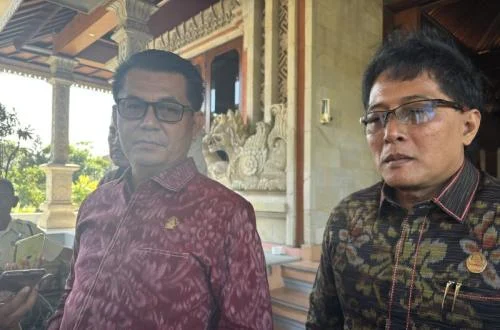
DENPASAR, Bali – The Special Committee on Spatial Planning, Assets, and Licensing (Pansus TRAP) of the Bali Regional House of Representatives (DPRD) is set to continue its crucial work despite the recent withdrawal of two members from the Golkar Party faction. Chairman of the Bali DPRD, Dewa Made Mahayadnya, affirmed that the committee remains steadfast in its commitment to resolve seven outstanding cases of alleged violations by its designated deadline of October 6, 2026. This decision underscores the DPRD’s dedication to upholding spatial planning regulations and addressing public grievances concerning land use, permits, and provincial assets across the island, even as internal political dynamics unfold.
“This development does not impede the committee’s work. As agreed, seven cases remain, and we are committed to resolving them by October 6, 2026,” stated Dewa Mahayadnya in Denpasar on Monday, emphasizing the continuity of Pansus TRAP’s mandate. The committee’s ongoing efforts highlight the persistent challenges Bali faces in managing its rapid development and preserving its unique environmental and cultural landscape.
Background and Formation of Pansus TRAP
Pansus TRAP was established to systematically investigate and address numerous complaints regarding alleged infringements of spatial planning regulations, licensing procedures, and asset management within Bali province. Its formation stemmed from a growing recognition of widespread issues, including unauthorized constructions, deviations from designated land use, and irregularities in the issuance of permits for various development projects, particularly in the booming tourism sector. The committee was conceived as a vital mechanism for the DPRD to exercise its oversight function, provide a formal channel for public complaints, and ensure accountability in governance.
The urgency for such a body became increasingly apparent as Bali experienced unprecedented growth, particularly in its tourism infrastructure. While this growth brought economic prosperity, it also exerted immense pressure on the island’s finite land resources, delicate ecosystems, and traditional way of life. Reports of illegal villas encroaching on green belt areas, commercial establishments built without proper permits, and the misuse of state-owned or communal assets became more frequent, leading to public outcry and a demand for concrete action. Pansus TRAP was designed to be a multi-factional body, comprising representatives from various political parties within the DPRD, ensuring a broad political consensus and collective responsibility in tackling these complex issues. Its mandate was not merely to identify violations but also to recommend corrective measures, policy adjustments, and legal enforcement actions to the provincial government.
Golkar Faction’s Withdrawal and Rationale
The recent decision by the Golkar Party faction to withdraw its two members from Pansus TRAP has introduced a notable dynamic within the DPRD. The faction’s leadership articulated that, rather than continuing the existing committee, a complete reformation or a new committee altogether would be more appropriate. Furthermore, they emphasized the importance of adhering strictly to the initial scope and terms outlined in the committee’s original Decree (SK) when it was first established.
While specific details of Golkar’s concerns were not extensively elaborated in public statements, their stance suggests a potential divergence in opinion regarding the committee’s operational efficacy, its expanded scope over time, or even a desire for a more streamlined and focused approach to its objectives. It could be inferred that the faction might believe the committee has either deviated from its original mandate, become too broad in its investigations, or that its current structure is not optimal for achieving timely resolutions. Such withdrawals, while not uncommon in parliamentary bodies, often signal internal disagreements over strategic direction, political priorities, or procedural interpretations. For the Golkar faction, a fresh start might be seen as an opportunity to re-evaluate the committee’s objectives and ensure its activities align more closely with established protocols and specific, measurable outcomes. This move could also be a tactical decision to assert influence or advocate for a particular methodology in tackling the complex issues of spatial planning and governance.
The Persistence of Pansus TRAP: Addressing Seven Critical Cases
Despite the internal political developments, the leadership of the Bali DPRD has unequivocally stated its intention to maintain the operational continuity of Pansus TRAP. The committee currently faces the formidable task of resolving seven outstanding cases of alleged violations, each representing a complex interplay of legal, environmental, and socio-economic factors. These cases, which have accumulated over the committee’s operational period, range from instances of large-scale land encroachment and unauthorized construction in protected areas to disputes over permits for tourism facilities and the illegal transfer or exploitation of provincial assets.
The nature of these violations often involves significant financial interests and can have far-reaching implications for Bali’s ecological balance, cultural heritage, and the livelihoods of local communities. For instance, illegal constructions in coastal zones contribute to environmental degradation and impact marine ecosystems, while deviations from spatial plans for agricultural land can threaten Bali’s food security and the integrity of its traditional subak irrigation system, a UNESCO World Heritage site. The committee’s mandate includes thorough investigation, evidence gathering, consultation with relevant stakeholders, and the formulation of recommendations for enforcement actions or policy reforms. The October 6, 2026, deadline serves as a critical benchmark for the committee to ensure that these lingering issues are brought to a definitive conclusion, demonstrating the DPRD’s commitment to accountability and justice. The continued processing of public complaints further underscores the committee’s role as a vital conduit for citizens to voice their concerns and seek redress for injustices related to spatial planning and development.
DPRD Leadership’s Stance and Dialogue
Chairman Dewa Mahayadnya emphasized that the DPRD Bali respects the political stance of each faction while prioritizing the overarching goal of public welfare. He clarified that as of the latest reports, no formal letter or proposal detailing Golkar’s withdrawal had been officially submitted. This procedural nuance suggests that there remains a window for dialogue and reconciliation.
Mahayadnya expressed a keen interest in engaging in direct communication with the Golkar faction’s leadership through formal faction leadership meetings. His intention is to revisit the existing rules of procedure (tatib) governing the committee’s operations, aiming to find a mutually agreeable solution through consensus and deliberation. “We will, of course, resolve this through deliberation and consensus. This demonstrates the healthy and dynamic nature of our institution in the DPRD. Differences in interpreting our existing rules of procedure are perfectly normal,” he remarked, underscoring a commitment to internal democratic processes. He further asserted that such internal dynamics are a healthy indicator of the DPRD members’ increasing focus on accountability and adherence to institutional regulations. The Chairman reiterated that despite any internal disagreements, the ultimate goal of all factions is to serve the best interests of the community. Consequently, he ruled out an immediate overhaul of Pansus TRAP, preferring instead to foster dialogue to align perceptions and ensure the committee’s work continues unimpeded. This approach reflects a pragmatic understanding of parliamentary politics, where constructive engagement is often prioritized over abrupt decisions, especially when dealing with critical public issues.
Broader Context: Spatial Planning Challenges in Bali
Bali’s spatial planning challenges are multifaceted and deeply intertwined with its identity as a global tourism destination. The island’s limited land area, coupled with intense development pressure, particularly in popular tourist regions like Badung, Denpasar, and Gianyar, has created a complex landscape for governance. The Rencana Tata Ruang Wilayah (RTRW) or Regional Spatial Plan, which dictates land use zoning and development guidelines, is constantly under pressure from various stakeholders.
Key challenges include:
- Rapid Urbanization and Tourism Development: The continuous influx of tourists and investors has led to the proliferation of hotels, villas, restaurants, and other tourism-related infrastructure, often at the expense of agricultural land or natural landscapes.
- Environmental Degradation: Uncontrolled development contributes to issues such as waste management crises, water scarcity, coastal erosion, and the loss of biodiversity. Wetlands, crucial for water filtration and flood control, are frequently converted for commercial use.
- Cultural Preservation: Bali’s unique Hindu culture and traditional village structures are intrinsically linked to its land use patterns, including sacred sites (pura), rice fields (sawah), and water temples. Deviations from spatial plans can disrupt these traditional systems and erode cultural heritage.
- Enforcement Weaknesses: Despite existing regulations, enforcement can be challenging due to various factors, including bureaucratic complexities, resource limitations, and, at times, allegations of corruption or undue influence.
- Land Speculation: The high demand for land has driven up prices, making it difficult for local communities to afford property and contributing to the conversion of agricultural land.
Pansus TRAP’s work is therefore critical not just for legal compliance but for safeguarding Bali’s long-term sustainability, cultural integrity, and the quality of life for its residents. Its continued operation is seen by many as a bulwark against unchecked development and a mechanism to restore balance to the island’s growth trajectory.
Vice Governor’s Perspective
I Nyoman Giri Prasta, the Vice Governor of Bali, also weighed in on the situation, expressing confidence in Pansus TRAP’s ability to function effectively regardless of the internal DPRD dynamics. He affirmed that the provincial executive branch respects the autonomy of the DPRD in managing its internal affairs, particularly regarding the formation and operation of special committees and decisions made by political parties.
“The issue of the special committee is a decision for the DPRD, related to political party decisions, and we would never dare to interfere. However, I believe it will not disrupt the work of the special committee,” the Vice Governor stated, drawing a clear line between the executive’s role and the legislative body’s internal processes. His statement provides an assurance that the provincial government remains supportive of the committee’s objectives to combat spatial planning violations, viewing Pansus TRAP as a crucial partner in upholding law and order in development. This executive endorsement adds another layer of legitimacy to the committee’s continued work, signaling a unified front against illegal activities that threaten Bali’s sustainable development goals.
Implications and Future Outlook
The persistence of Pansus TRAP despite the Golkar faction’s withdrawal carries several significant implications.
- Commitment to Oversight: It reinforces the Bali DPRD’s commitment to its oversight function, demonstrating that critical issues like spatial planning violations will not be sidelined by internal political differences. This can enhance public trust in the legislative body’s dedication to good governance.
- Inter-Factional Dynamics: While the immediate impact might be perceived as a minor setback, the situation highlights the dynamic nature of inter-factional relations within the DPRD. The outcome of the proposed dialogue between the Chairman and the Golkar faction will be crucial in determining future collaborations and maintaining political cohesion.
- Pansus TRAP’s Legitimacy and Effectiveness: The committee’s ability to successfully resolve the remaining seven cases by the 2026 deadline will be a critical test of its effectiveness and legitimacy. Public perception will largely hinge on tangible outcomes and whether the committee can deliver concrete solutions to long-standing problems.
- Enforcement of Spatial Planning: The continued work of Pansus TRAP is vital for strengthening the enforcement of spatial planning regulations in Bali. Its investigations can uncover systemic issues, inform policy adjustments, and contribute to a more disciplined approach to development across the island.
- Sustainable Development: Ultimately, the success of Pansus TRAP directly contributes to Bali’s sustainable development agenda. By curbing illegal constructions and ensuring adherence to proper land use, the committee helps protect the island’s environment, preserve its cultural heritage, and promote equitable growth.
In conclusion, the Bali DPRD’s decision to ensure Pansus TRAP’s continuity, even amidst internal political shifts, underscores a resolute commitment to addressing critical issues concerning spatial planning, assets, and licensing. The ongoing dialogue between factions, coupled with the executive’s support, indicates a collective determination to navigate political complexities while prioritizing the long-term well-being and sustainable development of Bali. The coming years will be crucial for Pansus TRAP to demonstrate its effectiveness in resolving the remaining cases and solidifying its role as a key institution in upholding governance standards on the Island of Gods.