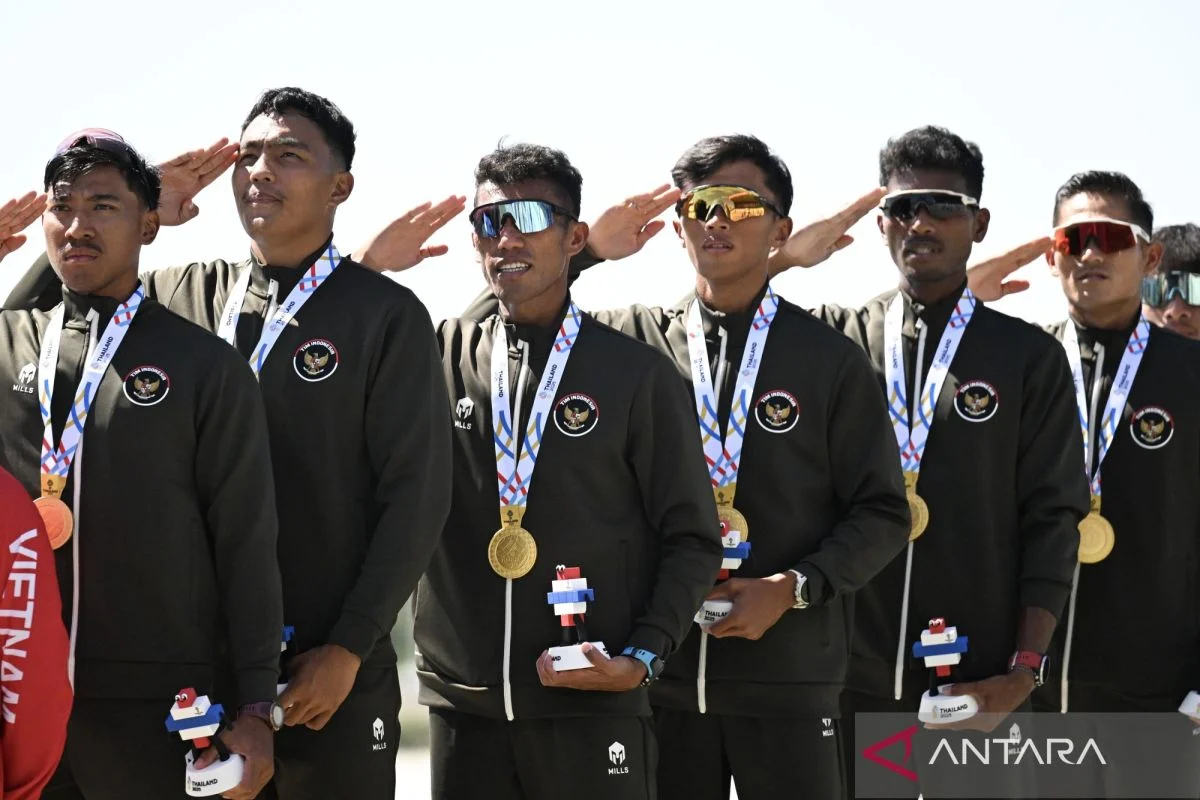
The 33rd edition of the Southeast Asian Games (SEA Games), the region’s premier multi-sport event, is set to officially commence on December 9 and conclude on December 20, with Thailand proudly hosting the prestigious competition. This biennial event, traditionally held in odd-numbered years, serves as a crucial platform for athletes from across ASEAN nations to showcase their prowess, foster camaraderie, and elevate the standard of sports within the region. Operating under the auspices of the Southeast Asian Games Federation (SEAGF) and guided by the principles of the International Olympic Committee (IOC) and the Olympic Council of Asia (OCA), the SEA Games embodies a commitment to athletic excellence and regional unity.
Genesis of a Regional Sporting Tradition: From SEAP Games to SEA Games
The origins of the SEA Games trace back to a visionary idea conceived in 1957 by Laung Sukhumnaipradit, then the Vice President of the Thai Olympic Committee. He envisioned an athletic competition that would transcend borders and forge stronger bonds of brotherhood among Southeast Asian nations through the unifying power of sport. Sukhumnaipradit also aspired to establish a regional sporting event that mirrored the organizational standards and competitive spirit of the Asian Games and the Olympic Games, thereby promoting a consistent trajectory of athletic development across ASEAN member states.
This ambitious concept was shared with Dave Kitcher, the then-coach of the Thailand Athletics Association. In February 1958, Kitcher took the initiative to discuss Sukhumnaipradit’s proposal with representatives from Cambodia and Vietnam, who readily lent their support to the burgeoning idea. The momentum continued to build, culminating in a pivotal meeting of the Thai Olympic Committee on February 22, 1958. This gathering was attended by delegates from Thailand, Cambodia, and Vietnam, alongside representatives from Myanmar, Laos, and Malaysia.
During this historic assembly, a unanimous decision was reached to officially launch the Southeast Asian Peninsular Games (SEAP Games) in Bangkok, Thailand, in December 1958. The participating nations also agreed upon a bi-annual schedule for the event and the formation of a dedicated SEAP Games Federation Committee. This foundational meeting established Thailand, Vietnam, Malaysia, Cambodia, Myanmar, and Laos as the pioneering nations behind the SEAP Games.
The Inaugural Games and Gradual Expansion
The very first SEAP Games unfurled in Bangkok, Thailand, from December 12 to 17, 1959. While initially intended to include Cambodia, the nation’s absence led to Singapore stepping in as a participant. In the same year, Singapore officially became a member of the SEAP Games.
The evolution of the SEAP Games continued, marked by significant expansions. At the 8th SEAP Games in 1975, the Federation Committee made the momentous decision to welcome Indonesia, Brunei Darussalam, and the Philippines as new members. These nations formally joined the federation in 1977. Coinciding with this expansion, the SEAP Games Federation was officially renamed the Southeast Asian Games Federation (SEAGF), and consequently, the SEAP Games were rebranded as the SEA Games.
The most recent addition to the SEA Games family was Timor-Leste, which joined in 2003, bringing the total number of participating nations to eleven, a configuration that has remained consistent to this day. This gradual but steady expansion reflects the growing importance and recognition of the SEA Games as a major regional sporting spectacle.
The Unique Allure of the SEA Games: A Platform for Cultural Expression
A distinctive feature that sets the SEA Games apart from other major international sporting events, such as the Olympics, is the flexibility granted to host nations in curating the sporting program. This policy allows host countries to incorporate specific sports that hold cultural significance or reflect their unique heritage. This innovative approach not only provides a competitive platform for athletes but also serves as a vibrant showcase of national identity and cultural traditions.
Examples of this cultural integration abound throughout the history of the SEA Games. In 2003, Vietnam astutely included traditional sports like becak (rickshaw) racing and pencak silat (a martial art) in its program. The Philippines, during its hosting in 2019, introduced obstacle course racing, a dynamic and challenging discipline. More recently, Cambodia, in its 2023 hosting duties, proudly presented bokator, an ancient Khmer martial art, highlighting the rich tapestry of Southeast Asian martial traditions.
For the upcoming 2025 SEA Games, Thailand is set to host an expansive program featuring 50 different sports. The competition will be spread across three key locations: Bangkok, the bustling capital; the coastal province of Chonburi; and the southern province of Songkhla, offering a diverse geographical and logistical landscape for the athletes and spectators.
Economic and Social Impact: Beyond the Medals
The SEA Games are more than just a sporting event; they represent a significant undertaking with far-reaching economic and social implications for the host nation and the region. The influx of athletes, officials, media, and spectators generates considerable economic activity through tourism, hospitality, and local commerce. Infrastructure development, often undertaken in preparation for the Games, can leave a lasting legacy, enhancing transportation networks, sporting facilities, and urban amenities.
Furthermore, the Games foster a sense of national pride and unity. The collective effort required to host such a large-scale event often brings together various sectors of society, from government agencies and local communities to volunteers and corporate sponsors. The performances of national athletes can inspire a new generation of sportsmen and women, encouraging greater participation in physical activity and promoting healthy lifestyles.
The competitive spirit ignited by the SEA Games also contributes to diplomatic relations within the region. The shared experience of competition, mutual respect, and the pursuit of sporting excellence can strengthen bonds between nations, fostering a more collaborative and understanding Southeast Asia. While the primary focus remains on athletic achievement, the SEA Games undeniably play a vital role in shaping regional identity and promoting a shared sense of belonging.
Looking Ahead: The Future of SEA Games
As Thailand prepares to host the 33rd SEA Games, anticipation is building for another memorable chapter in the region’s sporting history. The continued evolution of the Games, with its blend of traditional athleticism and cultural representation, ensures its enduring appeal. The commitment of the SEAGF and the participating nations to uphold the spirit of fair play and regional solidarity will undoubtedly guide the SEA Games toward a bright and promising future, continuing to inspire athletes and unite communities across Southeast Asia for decades to come. The inclusion of new sports and the potential for greater professionalization within various disciplines will likely further elevate the competitive standard and global visibility of the SEA Games in the years ahead.
This article was originally published by ANTARA News Agency.