The geopolitical landscape of the Middle East has shifted into a state of high-intensity confrontation following a decisive military order from Washington. President Donald Trump has officially authorized a series of targeted strikes against Iranian strategic assets, declaring an end to the fragile ceasefire that had previously managed to prevent a full-scale direct kinetic engagement between the two nations. As American cruise missiles and precision-guided munitions targeted facilities across the Iranian mainland, the President issued a stern condemnation of the leadership in Tehran, asserting that the period of diplomatic restraint has concluded in response to what the administration characterizes as repeated provocations and violations of regional security protocols.
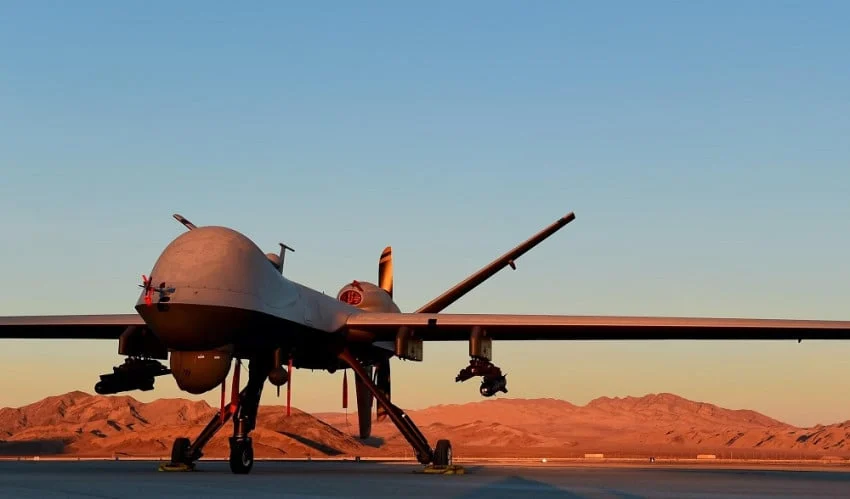
Central to this escalating conflict is a startling report regarding the attrition of United States aerial assets. According to high-ranking defense officials, the Iranian military has successfully downed approximately 30 MQ-9 Reaper drones since the onset of the current hostilities. This figure represents a significant blow to the United States Air Force’s (USAF) unmanned surveillance and strike fleet, highlighting a shift in the nature of modern aerial warfare where sophisticated integrated air defense systems (IADS) are increasingly capable of challenging platforms that once enjoyed uncontested dominance in the skies over Iraq and Afghanistan.
The Strategic Role of the MQ-9 Reaper
The MQ-9 Reaper, manufactured by General Atomics Aeronautical Systems, has been the cornerstone of American counter-terrorism and intelligence-gathering operations for nearly two decades. Entering service in 2007, the Reaper was designed as a "hunter-killer" platform, capable of long-endurance high-altitude surveillance while carrying a lethal payload of AGM-114 Hellfire missiles and GBU-12 Paveway II laser-guided bombs.
Throughout the wars in the Middle East, the Reaper allowed the U.S. military to conduct persistent overwatch and surgical strikes with minimal risk to personnel. However, military analysts have long warned that the Reaper was primarily designed for "permissive environments"—airspaces where the enemy lacks sophisticated radar and surface-to-air missile (SAM) capabilities. The recent losses over Iranian territory suggest that Tehran has successfully leveraged its domestic missile technology to turn its airspace into a "contested environment," directly challenging the technological superiority of Western unmanned aerial vehicles (UAVs).
General Kenneth Wilsbach, the top officer of the Air Force, recently addressed lawmakers during a budget hearing, emphasizing the Reaper’s critical role despite the high attrition rate. He described the platform as the "most valuable player" in the ongoing operations against Iranian-backed forces. "We have conducted a tremendous number of strikes," Wilsbach stated, noting that no other platform provides the same level of persistence and precision. However, the loss of 30 units represents a substantial financial and operational hurdle for the Department of Defense.
Financial and Industrial Implications
The economic impact of these losses is considerable. While the MQ-9 is often viewed as a cost-effective alternative to manned fighter jets like the F-35, the cumulative loss of 30 units carries a price tag in the hundreds of millions of dollars. According to C. Mark Brinkley, a spokesperson for General Atomics, the final production units of the Reaper were priced at approximately $16 million per aircraft when purchased in a standardized four-unit configuration.
The industrial reality complicates the situation further. The Air Force announced its final five-year procurement contract for the MQ-9 in 2020, and General Atomics officially shuttered the primary production line last year after completing a total of 575 units. With the production line closed, the U.S. military faces a finite inventory. Each drone shot down over Iran cannot be easily replaced by a new airframe off the assembly line, forcing the Pentagon to rely on existing stockpiles or accelerate the development of next-generation stealth UAVs, such as the Collaborative Combat Aircraft (CCA) program.
Chronology of the Escalation
The transition from a tense ceasefire to active hostilities did not occur in a vacuum. A series of events over the past several months laid the groundwork for the current crisis:
- The Breakdown of Diplomatic Channels: Following months of stalled negotiations regarding nuclear enrichment and regional maritime security, diplomatic communication between Washington and Tehran reached a nadir.
- Increased Proxy Activity: U.S. intelligence reports indicated a surge in the supply of advanced loitering munitions and ballistic missiles to non-state actors across the "Axis of Resistance."
- The Tuesday Incident: The immediate catalyst for the current strikes occurred on Tuesday, when Iranian air defenses successfully intercepted a Reaper drone over southern Iran. Tehran claimed the drone had violated its sovereign airspace, while the Pentagon maintained the aircraft was operating in international corridors.
- The Presidential Declaration: Within hours of the drone’s destruction, President Trump announced the termination of the ceasefire, citing the need to protect American assets and restore deterrence.
- Kinetic Response: Large-scale missile strikes were launched against Iranian radar installations, drone launch sites, and command-and-control centers, marking the most significant direct military engagement between the two nations in decades.
Official Responses and Regional Reactions
The Iranian government has remained defiant in the face of the American offensive. State media outlets in Tehran have broadcast footage of what they claim are the remains of "enemy" drones, using the imagery to bolster domestic support and demonstrate the efficacy of their homegrown defense industry. Iranian military officials have warned that any further "aggression" will be met with a "crushing response" that could extend to American bases across the Persian Gulf.
In Washington, the political reaction has been polarized. Supporters of the administration’s "maximum pressure" 2.0 strategy argue that the ceasefire was being used by Iran to re-arm and that a firm military response is the only way to prevent a wider regional war. Critics, however, express concern over the lack of a clear exit strategy and the potential for the conflict to spiral into a global economic crisis, particularly if the Strait of Hormuz—a vital artery for global oil shipments—becomes a primary battleground.
International observers, including the European Union and the United Nations, have called for an immediate de-escalation. There are fears that the conflict could draw in other regional powers, creating a multi-front war that would destabilize the global energy market and exacerbate existing humanitarian crises in the Levant.
Technical Analysis: Why the Reapers are Falling
The loss of 30 MQ-9 Reapers provides a case study in the evolution of anti-access/area-denial (A2/AD) capabilities. Iran has invested heavily in systems like the Khordad-3 and the Bavar-373, which are designed to detect and engage targets at various altitudes. The MQ-9, while advanced, lacks stealth features. Its large wingspan and relatively slow cruise speed make it a visible target on modern radar systems.
Furthermore, Iranian electronic warfare (EW) units have reportedly become more adept at jamming the satellite links and GPS signals that UAVs rely on for navigation and remote piloting. When a drone’s link is severed or its sensors are blinded, it becomes significantly more vulnerable to conventional surface-to-air missiles.
This high attrition rate is likely to accelerate the U.S. Air Force’s pivot toward "attritable" and "stealthy" unmanned systems. The military is increasingly looking toward smaller, cheaper drones that can be deployed in swarms, making it harder for enemy air defenses to neutralize the entire force. Alternatively, they are seeking high-end stealth drones that can penetrate contested airspace without being detected.
Broader Implications and the Path Ahead
The current conflict marks a turning point in 21st-century warfare. The heavy reliance on unmanned systems like the MQ-9 Reaper has hit a technological and strategic ceiling when faced with a near-peer adversary like Iran. As the missiles continue to fall and the drone count rises, the primary question for military planners is how to maintain surveillance and strike capabilities without sustaining unsustainable losses in hardware and prestige.
For the global community, the end of the ceasefire signals a period of extreme volatility. Oil prices have already begun to fluctuate in response to the news, and shipping insurance rates in the Gulf have skyrocketed. The "shadow war" between the U.S. and Iran has now moved into the light, and the consequences of this shift will be felt far beyond the borders of the Middle East.
As President Trump continues to press the offensive, the world watches to see if this show of force will lead to a new set of negotiations from a position of American strength, or if it marks the beginning of a prolonged and costly war of attrition that could redefine the geopolitical order for a generation. The 30 lost Reapers are more than just destroyed equipment; they are a symbol of a changing era where the skies are no longer a safe haven for the world’s most advanced military power.