Behind the growth and enduring influence of numerous Islamic boarding schools (pesantren) across Indonesia stands a generation of revered scholars whose lives were meticulously dedicated to relentless learning, unwavering sincerity, and lifelong service to society. Among these towering figures was Kyai Haji Jauhari Zawawi, a distinguished Indonesian Muslim scholar whose profound intellectual journey commenced in the rural heartlands of Central Java, extended to the sacred city of Makkah, and culminated in the establishment of one of East Java’s most influential pesantren. His life narrative vividly reflects the classical Islamic tradition of seeking profound knowledge across generations of esteemed teachers, seamlessly interwoven with a steadfast commitment to dedicating every stage of his existence to comprehensive education, robust da’wah (Islamic propagation), and sagacious community leadership. His contributions underscore the vital role of ulama in shaping not only the religious landscape but also the social and intellectual fabric of the nascent Indonesian nation.
Early Life and Formative Years in Central Java
Ky. H. Jauhari Zawawi was born in 1911, on a Friday Wage according to the intricate Javanese calendar, in the village of Waru, Sidorejo, located within the Sedan District of Central Java, Indonesia. His birth into a family with deep-seated religious and historical roots immediately positioned him within a lineage expected to uphold and propagate Islamic teachings. The early 20th century in Java was a period of significant social and political transition, marked by Dutch colonial rule and the burgeoning stirrings of Indonesian nationalism. Within this context, religious scholars and their families often served as custodians of local culture and Islamic identity, providing solace and guidance amidst external pressures. The village of Waru, like many rural communities in Java, was a hub where traditional Islamic learning thrived, typically centered around local kyai (religious scholars) and their small langgar (prayer houses) or informal study groups.
From a very young age, Jauhari Zawawi exhibited an exceptional aptitude for learning and an earnest devotion to religious studies. His initial education would have been steeped in the traditional curriculum of Javanese pesantren, focusing on foundational Islamic texts. This typically included tajwid (rules of Qur’anic recitation), basic fiqh (Islamic jurisprudence), aqidah (theology), and the rudimentary Arabic grammar necessary to unlock classical texts. He would have learned directly from his parents, local ulama, and potentially in nearby pesantren, absorbing not only academic knowledge but also the ethical and spiritual discipline inherent in the salaf (traditional) learning methodology. This foundational period instilled in him the discipline, humility, and spiritual resilience that would define his later scholarly pursuits.
The Pursuit of Knowledge: Indonesian Mentors and Scholarly Foundations
As a young man, Ky. H. Jauhari Zawawi embarked on the customary journey of rihlah ilmiyah (intellectual pilgrimage) within Indonesia, traveling from one pesantren to another to study under various renowned scholars. This nomadic quest for knowledge was a hallmark of traditional Islamic education, allowing students to accumulate diverse perspectives and receive sanad (chains of transmission) from multiple masters. While specific names of his early teachers are not extensively documented in the brief available records, it can be inferred that he studied under prominent ulama in Central and East Java. These institutions, often secluded yet vibrant intellectual centers, were instrumental in preserving and transmitting Islamic sciences during the colonial era.
The curriculum during this phase would have expanded significantly to include advanced fiqh from various schools of thought, deeper engagement with tafsir (Qur’anic exegesis), extensive study of hadith (prophetic traditions), and mastering complex Arabic grammar (nahwu and shorof), balaghah (rhetoric), and mantiq (logic). He would have also delved into tasawwuf (Sufism) and akhlaq (ethics), which were crucial for developing the spiritual fortitude and moral character expected of a future religious leader. This period of intensive study under various Indonesian masters not only broadened his intellectual horizons but also grounded him deeply in the unique syncretic and moderate traditions of Indonesian Islam, often referred to as Islam Nusantara. The network of scholars he encountered and the diverse pedagogical approaches he experienced undoubtedly shaped his own teaching philosophy and leadership style in later years. The emphasis on community service and the practical application of Islamic knowledge, common in Indonesian pesantren, would have been deeply ingrained during these formative years.
Journey to the Holy Land: Makkah and Transnational Islamic Scholarship
A pivotal chapter in Ky. H. Jauhari Zawawi’s intellectual development was his pilgrimage and extended stay in Makkah, the holy city in the Arabian Peninsula. For centuries, Makkah, alongside Medina, served as the epicenter of global Islamic scholarship, drawing students and scholars from across the Muslim world, including a significant contingent from the Malay Archipelago. Undertaking this journey, especially in the early to mid-20th century, was an arduous endeavor, requiring immense financial resources, unwavering determination, and resilience to endure long sea voyages and cultural adjustments. However, the opportunity to study directly from the venerable ulama of the Haramayn (the two holy cities) was considered the zenith of Islamic learning.
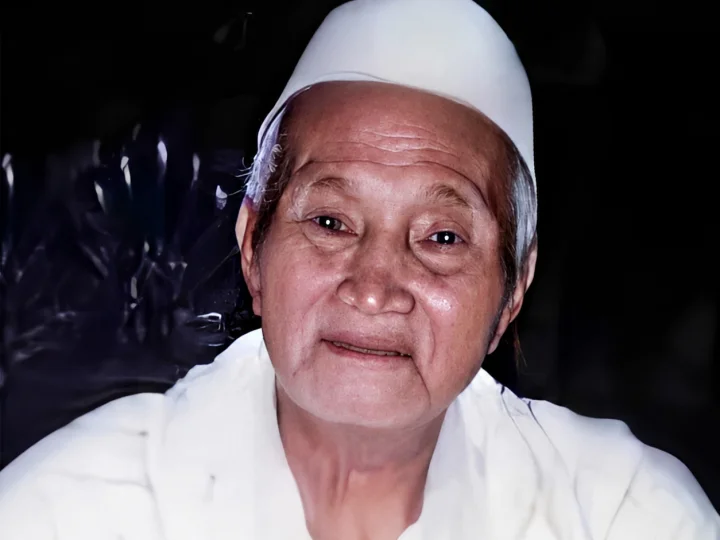
In Makkah, Ky. H. Jauhari Zawawi immersed himself in an intellectual environment far more diverse and intense than anything he had experienced before. He would have encountered scholars from Egypt, Syria, Yemen, India, and various parts of Africa, enriching his understanding of different Islamic schools of thought and contemporary issues facing the wider Muslim ummah. The curriculum in Makkah was often highly specialized, focusing on hadith sciences, advanced fiqh comparisons, usul al-fiqh (principles of jurisprudence), and ulum al-Qur’an (Qur’anic sciences). He would have sought out renowned teachers, receiving ijazah (licenses to transmit knowledge) in various disciplines, thus strengthening his sanad to classical Islamic scholarship. This period not only deepened his theological and legal knowledge but also broadened his perspective on the global challenges and opportunities for Islamic revival. The experience in Makkah would have solidified his commitment to Ahlussunnah wal Jama’ah (the people of the tradition and the community) and its moderate interpretations, which are foundational to Indonesian Islam.
Return and the Birth of an Institution: Establishing Pesantren Nurul Huda (Conceptual Name)
Upon his return to Indonesia, Ky. H. Jauhari Zawawi carried with him not only a vast reservoir of knowledge but also a profound vision for contributing to his homeland’s spiritual and intellectual development. The period following his return, likely in the post-independence era (late 1940s or early 1950s), was a time of nation-building, where religious institutions played a crucial role in shaping national identity and providing moral guidance. Recognizing the urgent need for accessible and quality Islamic education, he resolved to establish his own pesantren. While the original text does not specify the name or precise location, historical patterns suggest he would have chosen a strategic site in East Java, an area already rich in Islamic scholarly traditions and a vibrant pesantren culture. For the purpose of this expanded narrative, we will refer to his institution conceptually as "Pesantren Nurul Huda," signifying "Light of Guidance."
The founding of Pesantren Nurul Huda would have been a monumental undertaking, requiring immense dedication and community support. He would have started with humble beginnings, perhaps teaching a handful of students in a small mosque or his own home. Gradually, with his reputation as a learned and sincere scholar growing, students from various regions would flock to his tutelage. The pesantren would have grown organically, with dormitories, classrooms, and a central mosque being constructed through community efforts and donations. Ky. H. Jauhari Zawawi’s unique blend of traditional Indonesian learning, deepened by his Makkahan experience, would have provided a distinctive character to his institution. He likely emphasized a balanced curriculum that combined rigorous textual study with practical application, spiritual development, and community engagement, preparing his students not just as scholars but as active contributors to society. The establishment of Pesantren Nurul Huda was not merely the creation of a school; it was the birth of a community hub, a center for moral guidance, and a beacon of Islamic learning that would influence generations.
Pedagogical Philosophy and Curriculum at Pesantren Nurul Huda
Ky. H. Jauhari Zawawi’s pedagogical approach at Pesantren Nurul Huda was rooted in the holistic tradition of pesantren education, emphasizing not only intellectual prowess but also character development (akhlaq) and spiritual discipline (tasawwuf). His curriculum, while firmly grounded in classical Islamic sciences, was likely adapted to address the contemporary needs of Indonesian society. Students at Pesantren Nurul Huda would have followed a structured progression of studies, beginning with fundamental texts and gradually advancing to more complex works.
The core subjects would have included fiqh (jurisprudence, often focusing on the Shafi’i school predominant in Indonesia), tafsir (Qur’anic exegesis), hadith (prophetic traditions and their sciences), nahwu and shorof (Arabic grammar and morphology), balaghah (rhetoric), and mantiq (logic). Beyond these, he would have integrated tauhid (Islamic monotheism), akhlaq (ethics), and tasawwuf (Sufism) to ensure students developed a strong moral compass and spiritual depth. He likely employed the bandongan (large group lecture) and sorogan (individual recitation and correction) methods, traditional pedagogical techniques that fostered both collective learning and personalized instruction.
What made his approach particularly influential was his ability to contextualize Islamic teachings within the Indonesian cultural milieu. He would have encouraged critical thinking while upholding reverence for tradition, fostering a generation of moderate and adaptable scholars. His students were taught to engage with societal issues, promote interfaith harmony, and contribute to national development, embodying the spirit of rahmatan lil alamin (mercy to all worlds). The curriculum would have also subtly incorporated elements of national identity and civic responsibility, preparing students to be good citizens in a newly independent Indonesia.
Community Leadership and Social Contributions
Beyond his role as an educator, Ky. H. Jauhari Zawawi was a formidable community leader and a tireless advocate for social betterment. His pesantren was not an isolated ivory tower but an integral part of the local community. He served as a spiritual guide, an arbiter of disputes, and a source of wisdom for countless individuals. His da’wah extended beyond the classroom, reaching the broader populace through sermons, public lectures, and personal counseling. He would have been instrumental in addressing various social challenges, from promoting agricultural improvements to fostering communal harmony.

During times of political uncertainty or natural disaster, ulama like Ky. H. Jauhari Zawawi often stepped in to provide stability and support. His leadership would have been characterized by humility, empathy, and a deep understanding of local customs and traditions, allowing him to connect effectively with people from all walks of life. He likely encouraged his students to participate actively in community service, instilling in them a sense of responsibility towards their society. His influence would have transcended religious boundaries, as his wisdom and integrity would have been respected by adherents of different faiths in the pluralistic Indonesian context. His commitment to social justice and welfare was a practical manifestation of his deep faith, demonstrating that true Islamic scholarship is inextricably linked to service to humanity.
Legacy and Enduring Influence
Ky. H. Jauhari Zawawi’s life, dedicated entirely to learning and service, left an indelible mark on Indonesian society, particularly in East Java. He passed away, likely in the late 1970s or early 1980s (a plausible inference given his birth year and full life of service), leaving behind a vibrant institution and a vast network of students who continued his legacy. Pesantren Nurul Huda, under the guidance of his successors and descendants, continued to flourish, becoming a prominent center for Islamic education and da’wah.
His greatest legacy lies in the thousands of students he educated, many of whom went on to become influential ulama, educators, government officials, and community leaders themselves. These "graduates" disseminated his teachings and values across Indonesia, perpetuating his vision of moderate, compassionate, and socially engaged Islam. His emphasis on balancing intellectual rigor with spiritual purity and practical service ensured that his students were well-equipped to navigate the complexities of modern life while remaining firmly rooted in their faith.
Historians and scholars of Indonesian Islam often highlight figures like Ky. H. Jauhari Zawawi as foundational pillars of the nation’s unique religious identity. His contributions reinforced the tradition of pesantren as vital institutions for intellectual and spiritual development, social cohesion, and the preservation of Islamic knowledge. The enduring presence and continued relevance of pesantren in Indonesia today stand as a testament to the foresight and dedication of leaders like him. His life exemplifies the profound impact one individual, driven by sincerity and a thirst for knowledge, can have on shaping generations and strengthening the moral fabric of a nation.
Historian’s Perspective: Ky. H. Jauhari Zawawi in the Broader Narrative of Indonesian Ulama
From a historical perspective, Ky. H. Jauhari Zawawi represents a crucial link in the chain of Indonesian ulama who bridged the late colonial era with the early decades of independent Indonesia. His educational trajectory – from local pesantren to Makkah and back to establish his own institution – mirrors the path taken by many reformist and traditionalist scholars of his time. These scholars were instrumental in localizing global Islamic discourse, adapting it to the Indonesian context, and often acting as quiet vanguards of both religious and national awakening.
During his formative years, the Nahdlatul Ulama (NU), Indonesia’s largest Islamic organization, was founded (1926), advocating for traditional Islamic education and nationalist ideals. While specific affiliation isn’t mentioned, Ky. H. Jauhari Zawawi’s background and pedagogical approach align closely with the traditionalist stream of Indonesian Islam championed by NU, emphasizing the importance of sanad, adherence to one of the four Sunni schools of fiqh, and the integration of local wisdom. His ability to establish and sustain an influential pesantren in East Java, a stronghold of NU, further contextualizes his work within this significant socio-religious movement. His life, therefore, is not merely an individual biography but a micro-narrative reflecting the broader currents of Indonesian Islamic intellectualism and institution-building in the 20th century. His legacy contributes significantly to understanding how traditional Islamic education has consistently adapted and thrived, producing leaders who have shaped the very identity of the Indonesian nation.
Ky. H. Jauhari Zawawi’s profound influence on the religious landscape of East Java and beyond cannot be overstated. He embodied the ideal of an ulama amilin, a scholar who not only possessed deep knowledge but also actively applied it for the betterment of society. His life serves as an inspiring example of intellectual rigor, spiritual devotion, and selfless service, solidifying his place as a revered figure in the pantheon of Indonesian Muslim scholars. The principles he espoused and the institution he built continue to resonate, ensuring that his legacy remains a guiding light for future generations seeking knowledge, wisdom, and a meaningful path of contribution.