Queen Máxima of the Netherlands has successfully concluded a comprehensive four-day working visit to Indonesia, spanning from Monday, November 24, to Thursday, November 27, 2025. While she is widely recognized as the Dutch monarch, this specific diplomatic mission was conducted in her specialized capacity as the United Nations Secretary-General’s Special Advocate (UNSGSA) for Financial Health. This role, which she has held with distinction, focuses on the global promotion of financial inclusion and the broader concept of financial health—the ability of individuals and households to manage their daily finances, build resilience against economic shocks, and invest in their future goals.
The visit marked a significant milestone in the long-standing collaboration between the United Nations and the Indonesian government. Indonesia has frequently been cited as a global leader in expanding financial access, and the Queen’s visit served to both validate these efforts and identify new frontiers for development, particularly in the realms of digital finance, sustainable housing, and women’s economic empowerment. Throughout her stay, Queen Máxima engaged with a diverse array of stakeholders, ranging from high-ranking government officials and international financial institutions to micro-entrepreneurs and low-income homeowners in rural and suburban areas.
A Legacy of Engagement: Contextualizing the Fifth Visit
This journey represented Queen Máxima’s fifth visit to the Indonesian archipelago, underscoring the strategic importance of the nation in the global financial inclusion landscape. Her previous missions as the UNSGSA occurred in 2012, 2016, and 2018, during which she witnessed the rapid transformation of Indonesia’s financial ecosystem from a cash-heavy society to a burgeoning digital economy. In 2020, she also visited the country in her royal capacity, accompanying King Willem-Alexander on a state visit.
The 2025 mission arrived at a pivotal moment for Indonesia. Under the leadership of President Prabowo Subianto, the country has been aggressively pursuing its "Golden Indonesia 2045" vision, which aims to transform the nation into a top-five global economy. Central to this vision is the National Strategy for Financial Inclusion (Strategi Nasional Keuangan Inklusif or SNKI). Since the Queen’s first visit in 2012, Indonesia has seen its financial inclusion rate soar from under 20% to nearly 90% in 2024, driven largely by the proliferation of mobile banking, digital wallets, and the government’s transition to electronic social assistance payments.
Chronology of the Mission: From Grassroots Initiatives to Policy Summits
The Queen’s itinerary was meticulously designed to observe the entire spectrum of financial health, moving from the implementation level in Central Java to the policy-making hubs in Jakarta.
Tuesday, November 25: Empowerment in Central Java
The mission began in Central Java, a region known for its vibrant manufacturing and artisanal sectors. Queen Máxima first visited a garment factory in Sragen Regency. Here, she observed how formal employment, when coupled with direct-to-account wage payments, can provide a foundation for financial stability for thousands of female workers. By receiving wages digitally, these workers gain immediate access to savings accounts, insurance, and credit facilities that were previously out of reach.
Later that day, the Queen traveled to the historic Kampung Batik Laweyan in Solo. In this cultural hub, she engaged with traditional artisans and small business owners. The discussions focused on how digital payment systems and micro-credit are helping these centuries-old businesses navigate the modern economy. The Queen emphasized that "financial health" goes beyond merely having a bank account; it involves having the tools to manage debt and save for business expansion.
The day concluded at Pura Mangkunegaran in Solo, where Queen Máxima participated in a forum hosted by Women’s World Banking. She held candid conversations with students, young entrepreneurs, and female leaders about their experiences with modern financial products. These dialogues highlighted the unique challenges faced by the youth and women in accessing capital, despite the high penetration of smartphones in the country.
Wednesday, November 26: Institutional Synergy and Sustainable Housing
The third day of the visit shifted the focus toward institutional collaboration and innovative financing models. In Jakarta, the Queen met with representatives from various UN development organizations to harmonize international support for Indonesia’s financial health goals. This was followed by a strategic meeting with the International Finance Corporation (IFC), a member of the World Bank Group. The discussions centered on how private sector investment can be channeled into "impact lending"—loans specifically designed to improve the financial resilience of underserved populations.
A highlight of the day was the Queen’s visit to the Gran Harmoni Cibitung housing complex in Bekasi, West Java. This project represents a groundbreaking intersection of financial inclusion, environmental sustainability, and social welfare. The complex provides low-emission, affordable housing for low-to-middle-income families.
During her tour, Queen Máxima visited the home of a local resident to understand the impact of affordable mortgages on family stability. She also observed a highly innovative program pioneered by Bank Tabungan Negara (BTN), where residents can contribute to their mortgage payments or savings by depositing recyclable waste at a local "waste bank." This "waste-for-mortgage" initiative was praised by the Queen as a creative solution that addresses both financial barriers and environmental challenges simultaneously. She witnessed dozens of prospective homeowners signing their deeds, marking their entry into formal property ownership—a key indicator of long-term financial health.
The evening concluded at the offices of Deloitte Indonesia, where the Queen met with corporate leaders. The agenda focused on the role of employers in fostering the financial wellness of their workforce, advocating for workplace-based financial education and automated savings programs.
Thursday, November 27: High-Level Policy and Presidential Audience
The final day of the mission was dedicated to high-level governance. Queen Máxima participated in a financial literacy summit involving the three pillars of Indonesia’s financial regulatory framework: the Financial Services Authority (OJK), Bank Indonesia (BI), and the Ministry of Finance.
The Queen commended the Indonesian regulators for their proactive stance on consumer protection in the digital age. As more Indonesians move toward digital lending and fintech, the risk of over-indebtedness and predatory lending increases. The discussions focused on strengthening the regulatory "sandbox" to allow for innovation while ensuring that the most vulnerable citizens are protected from financial harm.
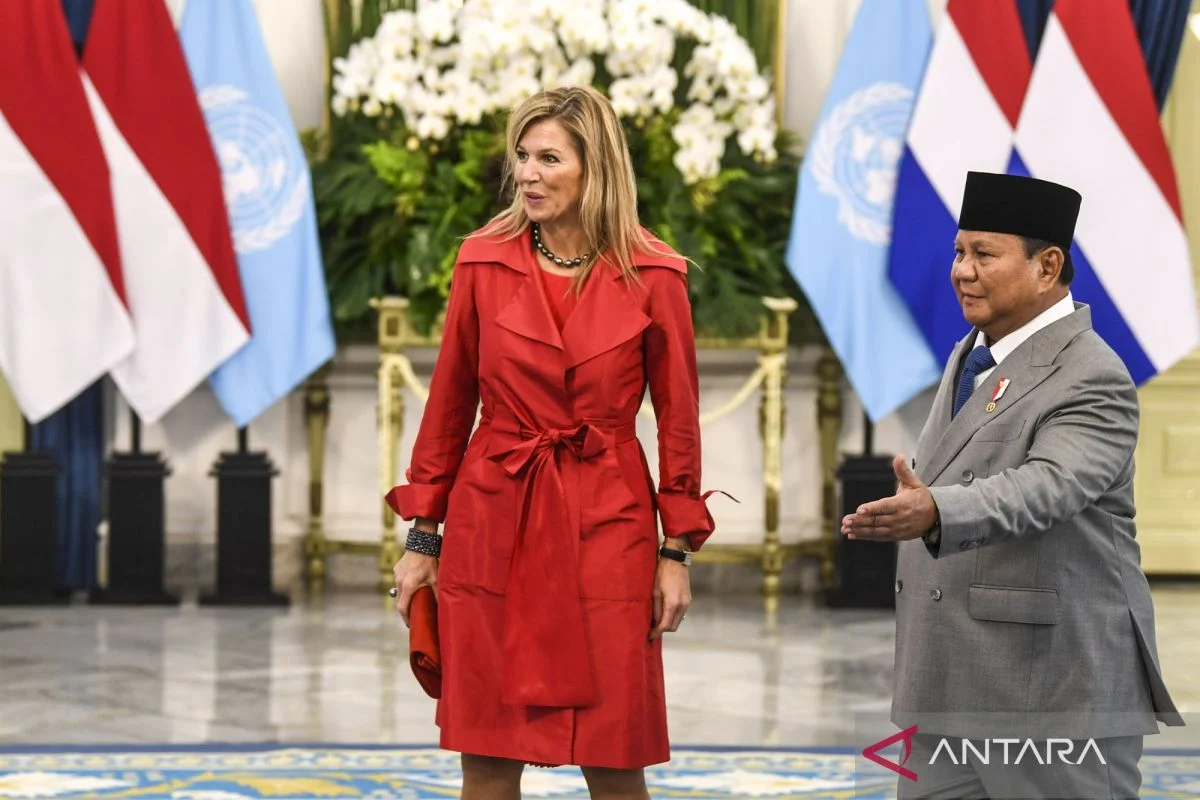
The mission culminated in a formal audience with President Prabowo Subianto at the Merdeka Palace in Jakarta. During a private meeting followed by a working lunch, Queen Máxima presented her findings from the field. She lauded Indonesia’s progress in digital public infrastructure, such as the BI-FAST payment system, which has significantly lowered the cost of transactions for small businesses.
Supporting Data: Indonesia’s Financial Inclusion Trajectory
The Queen’s visit is backed by impressive statistical growth in the Indonesian financial sector. According to data from the OJK and the World Bank’s Global Findex:
- Account Ownership: In 2011, only approximately 20% of Indonesian adults had a formal bank account. By late 2023, this figure had surpassed 75%, with the broader "financial inclusion" index (including insurance and pawnshops) reaching over 88%.
- Digital Payments: The use of the Quick Response Code Indonesian Standard (QRIS) has seen exponential growth, with over 30 million merchants—mostly micro-enterprises—now accepting digital payments.
- Gender Gap: Indonesia has made significant strides in closing the gender gap in financial access. In many regions, women now have equal or even higher rates of account ownership compared to men, largely due to targeted government social assistance programs (PKH) being distributed through "Himbara" (state-owned) bank accounts.
However, the UNSGSA’s office notes that "access" does not always equate to "usage" or "health." While many have accounts, a significant portion of the population remains financially fragile, with little to no emergency savings. This distinction was a core theme of the Queen’s 2025 visit.
Analysis of Implications: From Inclusion to Resilience
Queen Máxima’s visit signals a shift in the global development narrative from "Financial Inclusion 1.0" (getting people into the system) to "Financial Health 2.0" (ensuring the system works for the people). For Indonesia, the implications are multi-fold:
- Integration of Climate and Finance: The visit to the low-emission housing project in Bekasi highlights a growing trend where financial products are being designed to incentivize green behavior. This "Green Inclusion" is likely to become a priority for Indonesian state-owned banks moving forward.
- Digital Literacy as a National Defense: With the rise of "Pinjol" (illegal online lending) in Indonesia, the Queen’s emphasis on financial literacy serves as a call to action for the OJK to accelerate its education programs.
- Economic Stability: By promoting financial health, the UN and the Indonesian government are working to ensure that the "middle-income trap" is avoided. A financially resilient populace is less likely to fall back into poverty during global economic downturns or health crises.
Official Responses and Reactions
President Prabowo Subianto expressed his appreciation for the Queen’s continued commitment to Indonesia’s development. In a statement following the meeting, the President noted that the Queen’s insights on digital infrastructure and micro-financing would be integrated into the government’s upcoming economic policies. He emphasized that "financial health for all Indonesians is a prerequisite for a prosperous and stable nation."
Similarly, Mahendra Siregar, Chairman of the OJK Board of Commissioners, stated that the Queen’s visit provided a valuable "global perspective" on the challenges of digital finance. He reiterated OJK’s commitment to balancing innovation with robust consumer protection, ensuring that the digital transition remains inclusive and safe.
Conclusion
As Queen Máxima departed Jakarta, the resonance of her visit was clear: Indonesia is no longer just a student of financial inclusion but a global laboratory for financial innovation. The transition from purely royal visits to specialized advocacy missions reflects the deepening complexity of the Indonesia-Netherlands relationship, evolving from historical ties to a modern partnership based on shared goals of economic equity and sustainable development.
The 2025 mission reaffirmed that while the tools of finance are becoming increasingly digital, the ultimate goal remains deeply human—ensuring that every Indonesian, from the batik artisan in Solo to the factory worker in Sragen, has the financial security to build a better life. The findings from this visit will likely inform the UN’s global strategy on financial health for years to come, with Indonesia serving as a primary case study for success.