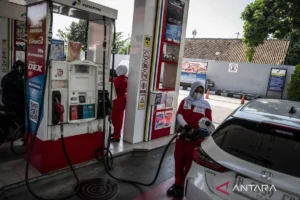
Shell Indonesia is implementing a price adjustment across its network of fuel stations, effective December 1, 2025. This move, which impacts various fuel grades including Shell Super, Shell V-Power, and Shell V-Power Diesel, underscores the company’s commitment to adapting to market fluctuations and evolving operational policies. The price changes, with specific figures for each variant, prompt a renewed focus on consumer awareness regarding the distinct characteristics and benefits of each fuel type. Understanding these nuances is crucial for vehicle owners to make informed decisions that optimize both engine performance and long-term fuel efficiency, especially in light of these upcoming price revisions.
The adjustment sees Shell Super priced around Rp13,000 per liter, Shell V-Power at approximately Rp13,630 per liter, and V-Power Diesel reaching Rp15,250 per liter. The premium offering, V-Power Nitro+, will also see its price adjusted to around Rp13,890 per liter. These revisions are a direct consequence of shifts in supply conditions and the implementation of updated operational strategies by Shell Indonesia. The company emphasizes that by grasping the individual properties and advantages of each fuel, consumers can select the most suitable option for their vehicles while also managing their consumption for greater economy amidst the changing price landscape.
Understanding the Shell Fuel Portfolio: Tailored Solutions for Modern Vehicles
Shell Indonesia’s diverse fuel offerings are engineered to cater to a spectrum of automotive needs, from everyday driving to high-performance demands and long-term engine health. Each product is meticulously formulated, leveraging advanced technologies to deliver specific benefits.
Shell Super: The Foundation for Efficient Daily Driving
Shell Super is formulated to deliver optimal efficiency, enhancing both engine performance and fuel economy. Its core technology, Dynaflex, is designed to minimize friction within the engine. This reduction in friction ensures that the engine operates smoothly and maintains stable performance, whether navigating congested city streets or cruising on open highways.
With a Research Octane Number (RON) of 92, Shell Super is recommended for engines with a compression ratio between 9:1 and 10:1. This makes it a suitable choice for many Light Commercial Goods Vehicles (LCGCs) and motorcycles with engine capacities exceeding 125cc. For drivers prioritizing fuel savings, Shell Super is a popular choice, recognized for its efficiency and consistent performance for daily use. The RON 92 rating signifies a fuel’s resistance to knocking or pinging, which is crucial for preventing engine damage and ensuring optimal power delivery in engines designed for this octane level. The Dynaflex technology, a cornerstone of Shell’s fuel innovation, is designed to actively clean and protect engine components. In Shell Super, it works by forming a protective layer on critical engine parts, reducing wear and tear, and contributing to a cleaner combustion process. This results in more efficient fuel combustion, translating directly to better mileage and a more responsive engine.
Shell V-Power: Enhanced Cleaning and Performance
Shell V-Power is recommended for vehicles with compression ratios ranging from 11:1 to 12:1, boasting a higher octane rating of RON 95. Its primary advantage lies in its advanced Dynaflex formulation, which contains three times the number of cleaning molecules compared to standard fuels. This enhanced cleaning capability is vital for maintaining the cleanliness of the combustion chamber, minimizing friction, and maximizing the energy extracted from each combustion cycle.
The reduced friction afforded by Shell V-Power helps to suppress deposit formation by approximately 80%. This leads to a more responsive and efficient engine, as critical components like fuel injectors and intake valves remain free from harmful buildup. For engines that demand a higher octane fuel to prevent pre-ignition and detonation, Shell V-Power offers a robust solution, ensuring optimal performance and longevity. The higher RON rating signifies a greater resistance to premature ignition, which is particularly important in modern, high-performance engines that often operate under higher compression pressures. The Dynaflex technology in V-Power is specifically engineered to tackle stubborn deposits that can form over time, restoring lost power and improving throttle response. This focus on cleanliness not only enhances immediate performance but also contributes to the long-term health of the engine, reducing the likelihood of costly repairs.
Shell V-Power Nitro+: Unleashing Peak Performance
For drivers who require superior performance, Shell V-Power Nitro+ presents a premium gasoline option featuring an even more advanced friction-reducing technology. This fuel is engineered to deliver increased power, faster acceleration, and smoother engine response. Introduced into the Indonesian market in April 2021, V-Power Nitro+ is targeted at vehicle owners who aim to maintain and significantly enhance their vehicle’s performance capabilities.
Shell V-Power Nitro+ (Highest RON): The Pinnacle of Octane and Purity
As the highest octane variant available at Shell stations, V-Power Nitro+ is ideally suited for engines with compression ratios between 11.3:1 and 12:1, including those equipped with advanced fuel injection systems. Its sophisticated technology is capable of removing up to 100% of existing deposits, effectively restoring engine performance to like-new conditions. Furthermore, this fuel provides optimal protection against corrosion and maintains the cleanliness of engine components over the long term. The result is a noticeable increase in power output and a lighter, more effortless acceleration. The emphasis on cleaning and protection in V-Power Nitro+ goes beyond mere performance enhancement; it actively safeguards the engine’s internal components, extending their lifespan and reducing the risk of premature wear and failure. This makes it a strategic choice for enthusiasts and those who demand the absolute best from their vehicles.
Shell V-Power Diesel: Optimizing Diesel Engine Efficiency and Longevity
Shell V-Power Diesel is specifically formulated for modern diesel vehicles. With a cetane number of 51 and a low sulfur content of 10 ppm, it meets the stringent Euro 5 emission standards. The technology incorporated into V-Power Diesel provides comprehensive cleaning capabilities, targeting Internal Diesel Injector Deposits (IDID) and the Exhaust Gas Recirculation (EGR) system. This dual-action cleaning enhances combustion efficiency and protects the engine from performance-degrading deposits.
The Dynaflex technology in V-Power Diesel also plays a crucial role in maintaining the cleanliness of vital fuel system components, ensuring a longer engine life and a more responsive driving experience. For diesel vehicle owners, this means improved fuel economy, reduced emissions, and a more reliable engine, especially in the face of increasingly strict environmental regulations. The higher cetane number indicates a shorter ignition delay, leading to a smoother and more complete combustion process, which translates to better power and reduced noise. The low sulfur content is critical for modern diesel engines equipped with advanced after-treatment systems, such as diesel particulate filters (DPFs), which can be damaged by high sulfur fuels.
Navigating Fuel Choices Amidst Price Adjustments
The upcoming price adjustments by Shell Indonesia serve as a timely reminder for vehicle owners to reassess their fuel choices. Understanding the distinct properties and advantages of each fuel type is paramount.
Background Context: The global energy market is characterized by its volatility, influenced by geopolitical factors, supply chain dynamics, and fluctuating demand. Fuel prices are a direct reflection of these global trends, as well as local market conditions and government policies. Shell, as a major global energy provider, must continually adapt its pricing strategies to remain competitive and sustainable. The price adjustments effective December 1, 2025, are indicative of these ongoing market realities. In Indonesia, fuel prices are a sensitive issue, impacting household budgets and the broader economy. While official statements often cite "supply conditions and latest operational policies," these adjustments are part of a broader trend seen across various fuel providers in the country.
Timeline of Changes: While the article specifies December 1, 2025, as the effective date for Shell’s price adjustments, it’s important to note that fuel price changes are a recurring event in the Indonesian market. For instance, similar adjustments were reported for other fuel providers like Pertamina and BP around December 1, 2025, indicating a coordinated market response to prevailing economic factors. This consistent pattern highlights the dynamic nature of fuel pricing in Indonesia.
Supporting Data and Analysis: The specific price points provided (e.g., Shell Super at Rp13,000/liter, V-Power at Rp13,630/liter) offer concrete figures for consumers to consider. When analyzing these prices in the context of fuel efficiency, the benefits of higher-octane fuels like V-Power and V-Power Nitro+ can be quantified. For a vehicle that benefits from higher octane, the marginal cost increase may be offset by improved fuel economy and reduced engine wear, leading to lower long-term ownership costs. For example, a 5% improvement in fuel efficiency could negate the price difference over a certain mileage, especially when considering the added benefit of engine protection.
Official Responses and Implications: Shell Indonesia’s communication emphasizes consumer education, urging drivers to understand their fuel options. This proactive approach aims to empower consumers to make choices that align with their vehicle’s requirements and their budget. The implication of these price adjustments extends beyond individual vehicle owners. For commercial fleets, the cost of fuel is a significant operational expense. These price changes will necessitate a review of fleet management strategies to optimize fuel procurement and consumption. Furthermore, the focus on advanced fuel technologies like Dynaflex underscores the industry’s push towards cleaner and more efficient engines, aligning with national and international environmental goals.
Broader Impact: The decision by Shell to adjust its fuel prices, alongside other major players in the market, reflects the complex interplay of global economic forces and domestic policy. The consistent adjustments across different fuel types suggest a strategic effort to balance market competitiveness with the operational costs and the provision of advanced fuel technologies. For consumers, this means a continuous need to stay informed about fuel prices and to make informed choices that balance immediate cost considerations with the long-term health and performance of their vehicles. The emphasis on understanding fuel characteristics – from octane ratings to cleaning technologies – is not merely about choosing a cheaper option but about selecting the most appropriate fuel that contributes to a vehicle’s longevity and efficiency, ultimately impacting both the owner’s wallet and the environmental footprint of their transportation.
In conclusion, as Shell Indonesia adjusts its fuel prices, a deeper understanding of each fuel’s unique benefits becomes more critical than ever. From the everyday efficiency of Shell Super to the high-performance capabilities of Shell V-Power Nitro+ and the specialized technology of Shell V-Power Diesel, each product is designed with specific automotive needs in mind. By making informed choices based on these characteristics, vehicle owners can navigate the evolving fuel market effectively, ensuring optimal engine performance, enhanced fuel economy, and the long-term health of their vehicles, even amidst changing price points.