WASHINGTON — Former United States President Donald Trump announced on Thursday that he had directly pressed Russian President Vladimir Putin to halt and reverse all military aggression across Europe. The pronouncement, delivered via his social media platform Truth Social, marks a notable rhetorical shift for Trump, who just a week prior publicly referred to the Kremlin leader as his friend—a characterization that sparked immediate scrutiny and cautionary responses from American intelligence chiefs.
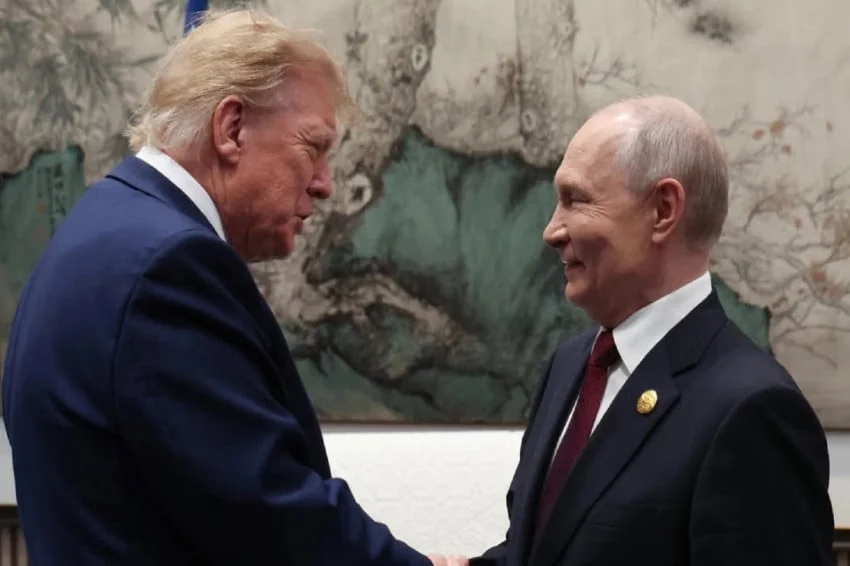
According to Trump, the diplomatic exchange took place during their recent in-person encounter on the sidelines of the Asia-Pacific Economic Cooperation (APEC) summit held in China. The American leader asserted that pulling back military forces is an essential prerequisite to facilitating a durable negotiated settlement to end the prolonged war in Ukraine, which has devastated regional security and claimed hundreds of thousands of military and civilian lives since Moscow launched its full-scale invasion in February 2022.
The timing of Trump’s remarks coincides with intense transatlantic diplomatic coordination. Just a day prior to his public statement, Trump hosted North Atlantic Treaty Organization (NATO) Secretary General Mark Rutte at his Mar-a-Lago estate in Florida. Following their extensive discussions, the two leaders issued a joint communique demanding that Moscow refrain from any further geographical expansion of the conflict and respect the territorial sovereignty of European nations.
The Diplomatic Exchange and Stated Objectives
Detailing the conversation on Truth Social, Trump emphasized the urgency he conveyed to the Russian president regarding the ongoing bloodshed.
"In my conversation in China with Russian President Vladimir Putin, I spent a lot of time talking about my desire that President Putin pull back all of his military aggression against regions throughout Europe," Trump wrote in his post, which was subsequently picked up by major international wire services.
Trump expressed optimism that a cessation of hostilities remains entirely achievable if both sides commit to serious dialogue, underscoring the human cost of the ongoing attrition. "I truly believe this is a very big possibility. Thousands of people are killed every month. This is a TOTAL BLOODBATH, and it would be a great tribute to everyone!" he added.
While Trump’s appeal explicitly mentioned European security writ large, his statements notably omitted explicit geographical boundaries or a direct, granular reference to Ukraine—the primary theater of the war. Nevertheless, international observers universally interpret his remarks within the context of the Russo-Ukrainian conflict, which represents the largest conventional military engagement on the European continent since the conclusion of the Second World War.
Escalating Regional Tensions and European Security Anxieties
Trump’s diplomatic intervention arrives against a backdrop of escalating military friction between Russia and NATO’s eastern flank. European capitals have grown increasingly alarmed by what they characterize as dangerous military provocations by Moscow, raising fears that the conflict could spill over beyond Ukraine’s borders.
A primary catalyst for these heightened regional anxieties occurred just days prior to the APEC summit, when three Russian cruise missiles reportedly violated Polish airspace before impacting targets near the Ukrainian border. Poland, a steadfast NATO member protected under the alliance’s collective defense pact, swiftly mobilized its air defense assets and convened emergency consultations with allied commands.
This incident underscored long-standing European concerns that miscalculations or stray munitions could inadvertently drag the wider Western alliance into direct military confrontation with nuclear-armed Russia. Consequently, European leaders have intensified pressure on Washington to maintain a firm posture against the Kremlin, making Trump’s recent dialogue with Putin a focal point of intense geopolitical analysis.
Background Context and Recent Chronology
To fully understand the weight of Trump’s latest statements, it is necessary to examine the rapid sequence of diplomatic and geopolitical developments that have unfolded over the past fortnight:
- Mid-November: Tensions surge across Eastern Europe following reports of border violations and heightened aerial bombardments by Russian forces targeting critical infrastructure in western Ukraine.
- One Week Prior to APEC: Trump publicly refers to Vladimir Putin as "my friend" during a media appearance, prompting swift, guarded reactions from the U.S. intelligence community regarding national security posture and foreign policy alignment.
- APEC Summit in China: Presidents Donald Trump and Vladimir Putin hold a bilateral meeting on the sidelines of the summit, where Trump reportedly devotes substantial time to discussing European security and the rollback of military operations.
- Wednesday: Trump hosts NATO Secretary General Mark Rutte in Florida. The meeting concludes with a unified call for Russia to halt its war expansion and pursue a negotiated peace.
- Thursday: Trump publishes his statement on Truth Social detailing his demands to Putin regarding European military aggression and highlighting the staggering monthly death toll of the war.
Intelligence Community and Domestic Reactions
Trump’s alternating rhetoric—pivoting swiftly from amicable descriptors to firm ultimatums—has continually generated debate among U.S. national security experts and intelligence officials. Following his initial characterization of Putin as a friend, leaders within the U.S. intelligence apparatus issued public reminders regarding the enduring strategic challenges posed by Moscow to American and Western democratic interests.
Proponents of Trump’s approach argue that maintaining a direct, transactional rapport with adversarial leaders provides a unique channel to force diplomatic breakthroughs that traditional bureaucratic channels often fail to achieve. By leveraging personal engagement, supporters believe Trump can pressure the Kremlin into compromises that lower the temperature of the conflict.
Conversely, critics and international relations scholars remain skeptical. They caution that public pronouncements lacking specific policy details or guarantees for Ukraine’s territorial integrity may embolden Moscow rather than deter it. Furthermore, foreign policy analysts emphasize that any sustainable peace agreement must be anchored in binding international law and coordinated closely with European allies, rather than driven exclusively by high-level personal diplomacy.
Broader Implications for the Transatlantic Alliance
The convergence of Trump’s diplomatic outreach to Moscow and his strategic consultations with NATO Secretary General Mark Rutte highlights the complex balancing act currently defining U.S. foreign policy. As the war approaches its fourth year, the economic and humanitarian toll continues to mount, placing immense pressure on Western taxpayers and supply chains.
The core question facing international policymakers is whether Trump’s reported admonition to Putin will translate into concrete concessions from the Kremlin. Moscow has thus far maintained its core strategic war aims, demanding significant territorial concessions from Kyiv and a formal guarantee that Ukraine will never be permitted to join NATO.
Meanwhile, European capitals are watching closely to see whether Washington will condition any future diplomatic initiatives on a verifiable cessation of Russian military activities. As the geopolitical landscape shifts in the wake of the APEC summit and the Mar-a-Lago meetings, the trajectory of the European security architecture remains precariously balanced between the pursuit of a negotiated settlement and the persistent threat of wider escalation.