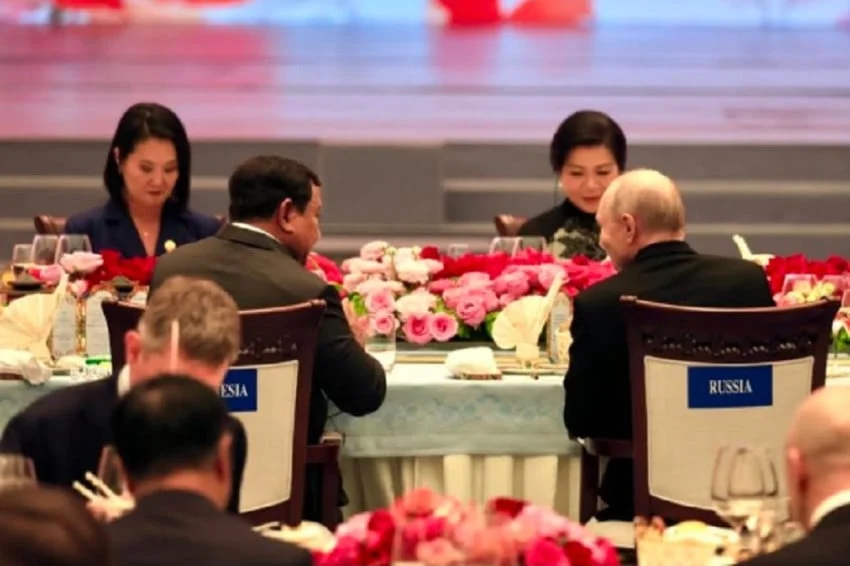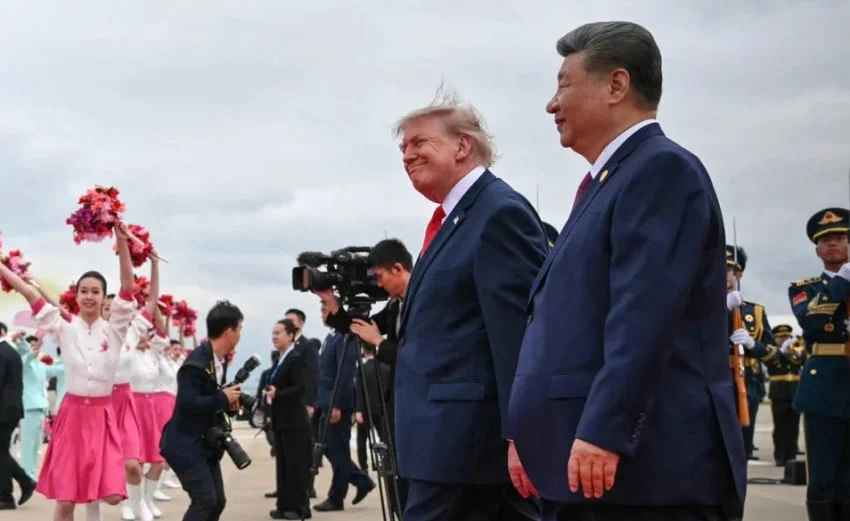
In a significant departure from long-standing diplomatic protocols, Chinese President Xi Jinping personally greeted Donald Trump upon his arrival at the airport in Shenzhen, China. The rare gesture, which saw the head of the Chinese state waiting on the tarmac as Air Force One touched down, signaled a profound shift in the tone of U.S.-China relations ahead of the Asia-Pacific Economic Cooperation (APEC) summit. This high-stakes gathering, which also features Russian President Vladimir Putin, marks a pivotal moment for global geopolitics, as the leaders prepare for a series of consequential bilateral and trilateral discussions regarding trade, security, and the future of the regional order.
The arrival in Shenzhen on Wednesday was characterized by an elaborate display of hospitality, featuring a red-carpet ceremony, traditional performers, and a brief, public embrace between the two leaders. While airport receptions for visiting heads of state are common, they are typically handled by lower-level officials or foreign ministers in China. Xi’s physical presence on the tarmac serves as a potent political symbol, indicating that Beijing is prioritizing a personal rapport with the American president over traditional diplomatic formalities.
Chronology of the Diplomatic Shift
The build-up to the APEC summit in Shenzhen has been marked by intense diplomatic maneuvering. Over the past three months, U.S. and Chinese delegations have engaged in "track 1.5" diplomacy to clear the path for this summit. Following the confirmation that both President Trump and President Putin would be in attendance, the Chinese Ministry of Foreign Affairs spent weeks orchestrating the logistics to ensure that the meeting would be perceived as a success for China’s global standing.
On Wednesday morning, the world’s media outlets focused on the Shenzhen Bao’an International Airport. At approximately 2:15 PM local time, Air Force One taxied to a halt. In a move that surprised veteran diplomatic observers, President Xi Jinping was already standing at the base of the stairs, accompanied by a small security detail and a group of local cultural performers. As President Trump descended the stairs, the two leaders exchanged pleasantries before walking toward their respective motorcades. The event was not merely a logistical arrival; it was a carefully choreographed statement of intent.
Contextualizing the APEC Summit and the Trilateral Dynamic
The APEC summit is historically intended to focus on regional trade integration, economic growth, and technological cooperation among the 21 member economies. However, the 2024 iteration is heavily overshadowed by the presence of three of the world’s most influential leaders, whose interactions will likely redefine the international landscape.
The inclusion of Vladimir Putin adds a complex layer to the proceedings. While the U.S.-China relationship is often defined by trade competition and technological decoupling, the U.S.-Russia dynamic remains strained due to ongoing conflicts and sanctions. The scheduling of a "four-eyes" meeting—a private, one-on-one session—between the U.S. and Russian presidents underscores the urgency of these talks. U.S. officials have confirmed that this meeting is aimed at addressing security architecture in Eastern Europe and the Middle East, though the presence of Xi Jinping suggests that China intends to act as a significant broker or, at the very least, a silent partner in these high-level negotiations.
Data-Driven Analysis of U.S.-China Economic Relations
To understand why such a high level of hospitality was extended to the U.S. delegation, one must look at the current economic data. China’s economy has faced significant headwinds in recent quarters, characterized by a cooling property sector, fluctuating domestic consumption, and a desire to stabilize supply chains that have been disrupted by years of trade friction.
According to recent reports from the National Bureau of Statistics of China, the nation’s GDP growth has moderated, necessitating a stable external environment to foster long-term recovery. For the United States, the focus remains on the trade deficit and the protection of intellectual property. Data from the U.S. Census Bureau indicates that while trade volume between the two nations remains massive, exceeding $600 billion annually, the composition of that trade is shifting toward high-tech sectors where both nations are currently locked in a race for dominance.
Xi Jinping’s decision to personally welcome Trump is likely a strategic effort to lower the temperature on trade rhetoric. By demonstrating a personal commitment to the relationship, Beijing hopes to insulate itself from potential new tariffs or restrictive export controls that could further dampen its economic momentum.
Official Responses and Diplomatic Messaging
The White House press office issued a brief statement following the arrival, emphasizing that the focus of the President’s trip is "the advancement of American economic interests and the cultivation of a stable, predictable, and fair relationship with major global powers." While the statement did not explicitly reference the breach of protocol, anonymous officials within the U.S. delegation noted that the reception was "exceptionally warm" and exceeded their internal expectations.
Conversely, the Chinese state media, including Xinhua and CCTV, highlighted the event as a testament to the "deepening friendship and mutual respect" between the two countries. This rhetoric is designed to project strength to a domestic Chinese audience, portraying Xi Jinping as a leader capable of commanding respect from his international counterparts.
Experts in international relations suggest that the hospitality is not without political risk for both sides. For Trump, being the recipient of such overt favor might be interpreted by some domestic critics as a sign of undue proximity to the Chinese leadership. For Xi, the spectacle could draw scrutiny from regional neighbors who fear that a U.S.-China "grand bargain" might come at the expense of smaller nations in the Asia-Pacific region.
Broader Implications for Global Security
The meeting between Trump, Xi, and Putin represents a realignment of the post-Cold War order. For decades, the international system was anchored by American hegemony. Today, we are witnessing a transition toward a more multipolar framework, where China exerts significant influence through its economic reach, and Russia utilizes its strategic military positioning to remain a relevant actor.
The implications of the discussions in Shenzhen are wide-reaching:
- Trade Stability: If the meetings produce a roadmap for reducing trade barriers, global markets may see a period of renewed optimism, potentially boosting stocks in the manufacturing and technology sectors.
- Geopolitical De-escalation: The face-to-face contact between the leaders of the U.S. and Russia is a critical mechanism for preventing accidental escalation. The mere fact that they are meeting in a structured environment is a net positive for international security.
- Regional Hegemony: Smaller APEC nations, particularly those in Southeast Asia, will be watching closely to see if the U.S. maintains its commitment to the regional security architecture or if it shifts its focus toward a bilateral arrangement with China.
Analyzing the "Personal Diplomacy" Strategy
The tactic of prioritizing personal rapport over institutional negotiation—often referred to as "summit diplomacy"—is a hallmark of both the Trump and Xi leadership styles. By cutting through the bureaucracy of the diplomatic corps, both leaders seek to achieve results that are often stalled in lower-level ministerial talks.
However, historical analysis suggests that summit diplomacy is fragile. Without a robust foundation of institutional agreement, personal bonds between leaders can evaporate quickly if domestic political pressures shift. The effectiveness of this meeting will not be measured by the warmth of the welcome at the airport, but by the tangible commitments made behind closed doors. Issues such as cyber-security, the regulation of emerging technologies like Artificial Intelligence, and the stabilization of global supply chains remain significant hurdles that require more than just a public embrace to resolve.
Conclusion: The Road Ahead
As the APEC summit progresses, the international community remains in a state of cautious anticipation. The unprecedented welcome extended to President Trump has set a high bar for the remainder of the event. Whether this gesture translates into a new era of cooperation or remains a symbolic, albeit impressive, diplomatic outlier will be determined by the content of the upcoming joint declarations.
The world’s eyes are now fixed on the conference rooms of Shenzhen. The decisions made there will reverberate through global financial markets, affect the lives of millions of workers in both the U.S. and China, and ultimately define the strategic trajectory of the 21st century. As the leaders move from the tarmac to the negotiating table, the weight of their respective national interests will be tested against the necessity of global stability. For now, the image of Xi Jinping awaiting the arrival of his American counterpart remains the defining photograph of a summit that is already being categorized as a watershed moment in modern history.