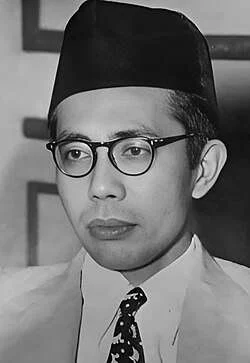
For Mohammad Natsir, the architect of the Mosi Integral and one of Indonesia’s most revered statesmen, political office was never an end in itself. Instead, it was a profound burden of stewardship—a mandate that demanded accountability regardless of whether one sat in the cabinet or served from the opposition. His life and career remain a foundational case study in political ethics, challenging the modern perception of governance as a mechanism for power consolidation and private gain.
The Historical Context: A Nation in Transition
The year 1950 marked a precarious era for the newly recognized Republic of Indonesia. Having secured sovereignty from the Netherlands through the Round Table Conference, the nation was operating under a federal system, the Republic of Indonesia Serikat (RIS), which created deep structural divisions. The country was fragmented into various states and autonomous regions, leading to intense internal friction and a sense of instability that threatened the very fabric of the fledgling nation.
On April 3, 1950, Mohammad Natsir, then serving as the Chairman of the Masyumi faction in the provisional parliament, took to the podium to propose a radical shift. His proposal, which came to be known as the "Integral Motion" (Mosi Integral), called for the dissolution of the federal structure in favor of a unified unitary state. This was not merely a constitutional maneuver; it was an attempt to heal the psychological and political scars of colonialism that had intentionally fostered regional discord to maintain control.
The Philosophy of Mosi Integral
Natsir’s approach to the Mosi Integral was defined by a unique brand of inclusivity. Rather than imposing the will of his own party or the dominant political faction, he sought consensus across the ideological spectrum. He engaged in intensive, often difficult, negotiations with figures from diverse backgrounds, including I.J. Kasimo of the Catholic Party, A.M. Tambunan of the Indonesian Christian Party (Parkindo), and even representatives from secular and communist-aligned factions.
His political philosophy, rooted in a synthesis of Islamic moral principles and democratic practice, argued that a government that arises from the people must intuitively understand their aspirations. In his seminal collection of essays, Capita Selecta, Natsir articulated that politics is not about the dominance of one group over another, but about the ability to solve collective problems through mutual trust. He famously utilized the phrase zakelijk (objective) and sans rancune (without resentment) to describe the ideal conduct of a politician: firm in principle but free from personal vendettas.
Chronology of a Statesman
- 1908: Born in Alahan Panjang, West Sumatra, Natsir received a rigorous education that combined secular western schooling with deep Islamic study.
- 1930s-1940s: Became a prominent educator in Bandung, where he founded the Pendidikan Islam (Pendidikan Islam) school. This period served as his training ground for leadership, as he managed limited resources to serve underprivileged students.
- April 3, 1950: Delivered the historic Mosi Integral address to the Parliament of the Republic of Indonesia Serikat.
- September 1950 – April 1951: Served as the fifth Prime Minister of Indonesia. His cabinet focused on administrative reform and economic stabilization.
- April 26, 1951: Resigned as Prime Minister following deep-seated ideological disagreements with President Sukarno regarding the direction of the state.
- 1958-1960s: Became embroiled in the PRRI (Revolutionary Government of the Republic of Indonesia) movement, leading to his imprisonment by the Sukarno administration.
- 1967: Released after the transition to the New Order regime.
- 1967-1993: Devoted his life to the Dewan Dakwah Islamiyah Indonesia, focusing on education, social development, and ethical advocacy until his passing.
Governance and the Ethics of Resignation
Natsir’s tenure as Prime Minister remains a rare example of political integrity. In an era where power retention is often prioritized over policy effectiveness, Natsir’s resignation in 1951 stands out. He chose to step down when he realized that his vision for a state built on moral responsibility and democratic accountability was no longer aligned with the executive’s trajectory.
He viewed the state as a servant of the people, not a property of the political elite. His criticism of the era—specifically his concerns regarding the subordination of state interests to party interests—remains hauntingly relevant today. He warned that when political parties treat the state as a spoils system to secure influence, the moral foundation of the nation erodes. For Natsir, the legitimacy of a government was not measured by its longevity in power, but by its capacity to serve the public good while maintaining transparent, ethical standards.

Data and Impact Analysis
The impact of Natsir’s political ethics can be measured by the institutional stability achieved through the Mosi Integral. By successfully navigating the transition from a federal to a unitary state without resorting to widespread civil violence, Natsir demonstrated that non-violent, parliamentary diplomacy could resolve existential threats to a nation.
Analysis of his parliamentary record shows that he consistently prioritized institutional integrity over partisan gain. In the 1950s, the Indonesian parliament was a volatile arena. Despite this, Natsir maintained a reputation for "the politics of the middle path." Statistics from that era indicate that his legislative proposals consistently sought to balance the needs of rural, agrarian populations with the administrative requirements of the urban centers, aiming to mitigate the socioeconomic disparities that fueled regional unrest.
The Role of Civil Society: Beyond the Cabinet
Perhaps the most distinctive aspect of Natsir’s legacy is his post-government career. Unlike many of his contemporaries who sought to reclaim power or remain within the inner circles of influence, Natsir transitioned to the realm of civil society. Through the Dewan Dakwah Islamiyah Indonesia, he proved that political impact is not solely the domain of those in office.
By focusing on grassroots education and community development, he extended his influence to the next generation of Indonesian leaders. This shift underscored his belief that political change is unsustainable if it is not supported by a virtuous and informed citizenry. His life in retirement, marked by extreme modesty and a refusal to leverage his former status for personal material gain, serves as a standard against which modern political conduct is often measured.
Contemporary Relevance and Implications
Today, the political landscape in Indonesia—and indeed in many global democracies—is frequently characterized by hyper-partisanship and a focus on short-term electoral cycles. Natsir’s insistence on "working together despite differences" offers a corrective to this polarization. His insistence that trust is the currency of governance ("Tak mungkin bertepuk sebelah tangan" or "It takes two to clap") reminds modern leaders that institutional effectiveness relies on the mutual recognition of rights and responsibilities between the state and its citizens.
Furthermore, his insistence that democracy is not merely about holding elections, but about the willingness of all parties to share the burden of governance, provides a framework for evaluating modern political behavior. When political figures use rhetoric to silence dissent or prioritize party survival over national cohesion, they deviate from the ethical path Natsir championed.
Conclusion: A Legacy of Service
The life of Mohammad Natsir serves as a reminder that the essence of politics lies in the sacrifice of personal ambition for the broader welfare of the community. While his career was marked by significant trials, including imprisonment and political marginalization, his commitment to his principles never wavered.
By analyzing his contributions, one realizes that the true measure of a leader is not found in the titles held or the duration of their tenure, but in the enduring strength of the institutions they help build and the moral character they exhibit in the face of adversity. For the modern observer, Natsir’s legacy is not just a chapter in a history book; it is a rigorous call to re-evaluate the purpose of public service. As society continues to grapple with the complexities of governance, his model of a life defined by service, integrity, and the pursuit of the common good remains a beacon of political maturity and ethical excellence.