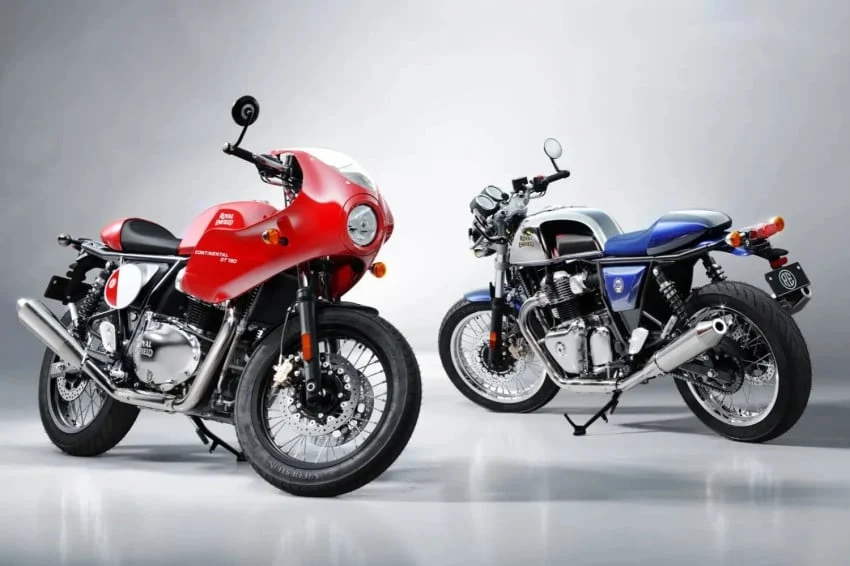
MILAN — Royal Enfield, one of the world’s oldest motorcycle manufacturers in continuous production, has officially strengthened its footprint in the middleweight and large-displacement segments by unveiling the all-new Continental GT 750. The grand global unveiling took place at the Esposizione Internazionale Ciclo Motociclo e Accessori (EICMA) 2026 in Milan, Italy, an event globally recognized as the premier stage for motorcycle industry innovations. This latest machine represents a significant evolutionary leap from the immensely popular Continental GT 650, incorporating a larger displacement engine, elevated hardware specifications, and modern technological integration while fiercely preserving the quintessential, timeless cafe racer aesthetic that defines the British-rooted brand’s modern classic portfolio.
The introduction of the Continental GT 750 at EICMA 2026 underlines Royal Enfield’s strategic global ambitions. By moving past the 650cc ceiling that has anchored their twin-cylinder range for nearly a decade, the brand is targeting riders seeking traditional styling fused with enhanced highway performance and modern engineering capabilities. With two distinct body style configurations catering to diverse consumer preferences, the Continental GT 750 is poised to redefine expectations within the global retro-sports motorcycle category.
Evolution from the 650cc Platform: Historical Context and Chronology
To fully understand the significance of the Continental GT 750, one must examine the trajectory of Royal Enfield’s product development over the past decade. The journey of the brand’s modern twin-cylinder era began in earnest in 2018, when Royal Enfield introduced the Interceptor 650 and the Continental GT 650. Developed at the Royal Enfield Technological Centre in Bruntingthorpe, United Kingdom, in collaboration with their state-of-the-art facility in Chennai, India, those 648cc parallel-twin motorcycles revolutionized the brand’s global standing. They offered accessible performance, reliable engineering, and authentic styling, quickly dominating mid-capacity retro sales charts across Europe, North America, India, and the Asia-Pacific region.
However, as the global motorcycle market evolved, consumer demand shifted toward slightly larger displacement engines capable of effortless high-speed touring without sacrificing the tactile, mechanical charm of analog motorcycling. Rumors of a larger platform began circulating in automotive circles as early as 2023, driven by spy shots and industry insider leaks regarding powertrain testing at various proving grounds.
The timeline accelerated toward late 2025, when Royal Enfield executives hinted at an impending platform expansion. The culmination of this development cycle arrived in Milan in November 2026, where the Continental GT 750 broke cover alongside whispers of shared architecture within the broader Royal Enfield pipeline, notably serving as the mechanical sibling to the newly anticipated Himalayan 750 adventure tourer.
Powertrain Engineering and Performance Metrics
At the heart of the new Continental GT 750 lies a newly developed, liquid-cooled, parallel-twin engine displacing 743cc. This powerplant marks a departure from the air-and-oil-cooled architecture of its 650cc predecessor, reflecting the necessity to meet increasingly stringent global emissions standards—such as Euro 5+ and upcoming mandates—while simultaneously extracting higher specific outputs.
While Royal Enfield engineers have confirmed that the 743cc platform has been specifically tuned for the Continental GT 750 to deliver a sharper, more aggressive power delivery compared to its sibling models, the company has notably withheld official figures regarding maximum horsepower and torque outputs at the time of the EICMA unveiling. Despite the absence of finalized spec sheets, company representatives have strongly indicated during press briefings that the Continental GT 750 will enter the market as the most powerful production motorcycle ever manufactured by Royal Enfield in its storied history.
Industry analysts project that the engine will likely produce an output hovering between 60 and 70 horsepower, accompanied by a robust mid-range torque curve designed to excel in roll-on acceleration. This performance tier strategically positions the motorcycle to compete directly with established offerings from European and Japanese manufacturers in the 700cc to 900cc classic-styled segment, bridging the gap between entry-level retro bikes and high-end, premium heritage machines.
Dual Body Configurations and Design Philosophy
A standout feature of the Continental GT 750 launch is the introduction of two distinct body configurations: a traditional, minimalist un-faired variant and a track-inspired, semi-faired version. This dual-track approach allows Royal Enfield to appeal to two distinct segments of the cafe racer enthusiast community.
The un-faired iteration stays true to the purest traditions of 1960s British cafe racing culture. It retains the clean, uncluttered lines, sculpted fuel tank, rear-set footpegs, and clip-on handlebars that made the Continental GT 650 an instant classic. The absence of bodywork exposes the newly engineered parallel-twin engine and trellis frame, celebrating mechanical purity and industrial design.
Conversely, the newly introduced semi-faired variant draws heavy inspiration from endurance racing motorcycles of the golden era. Featuring a frame-mounted front fairing and an integrated windscreen, this version offers improved aerodynamic protection for sustained high-speed riding while projecting an unmistakable vintage racing silhouette. By offering both options directly from the factory, Royal Enfield eliminates the aftermarket hassle for riders who prefer the look of a period-correct race bike while maintaining factory warranty and build quality.
Premium Component Upgrades and Chassis Dynamics
Beyond the engine upgrade, Royal Enfield has placed considerable emphasis on elevating the overall hardware specification of the Continental GT 750 to match its increased performance potential. The chassis has been comprehensively re-engineered to handle the heavier loads and higher stresses associated with a more powerful powerplant.
Suspension duties are handled by premium upside-down (USD) front forks supplied by industry leaders, replacing the traditional telescopic units found on the 650 models. At the rear, gas-charged twin shock absorbers have been retuned to offer a balance between firm, sport-oriented handling compliance and long-distance ride comfort. Braking performance has similarly been uprated, featuring dual front disc brakes equipped with radial-mount calipers and dual-channel ABS as standard equipment, ensuring stopping power commensurate with the bike’s anticipated velocity.
Ergonomically, the riding triangle remains aggressively forward-leaning, consistent with the cafe racer ethos, yet subtle adjustments to seat padding and handlebar geometry aim to mitigate rider fatigue during extended weekend rides.
Market Implications and Industry Analysis
The debut of the Royal Enfield Continental GT 750 carries profound implications for the mid-to-large capacity motorcycle market. For years, Royal Enfield has dominated the 350cc to 650cc segments in its domestic market of India while rapidly expanding its footprint across international territories through a value-driven pricing strategy.
By pushing into the 750cc displacement bracket, Royal Enfield is challenging traditional market boundaries. The brand has consistently proven its ability to democratize motorcycling by offering high aesthetic value and reliable mechanical packages at competitive price points. If the pricing strategy for the Continental GT 750 follows the precedent set by the 650 twins, established legacy brands in Europe and Japan may face intense competitive pressure in the heritage sector.
Furthermore, the introduction of a shared 750cc platform—bolstered by its cross-application in adventure touring configurations like the Himalayan 750—signals economies of scale that will likely benefit Royal Enfield’s manufacturing margins and parts availability worldwide.
Official Reactions and Future Outlook
Industry observers and early attendees at EICMA 2026 have responded positively to the Continental GT 750, praising Royal Enfield’s commitment to maintaining its design heritage while boldly advancing its mechanical engineering capabilities. While prospective buyers await the announcement of official pricing, regional availability dates, and certified performance figures—expected to be rolled out by the manufacturer in early 2027—the excitement surrounding the brand’s upward trajectory is palpable.
As Royal Enfield prepares to transition the Continental GT 750 from exhibition stands to global dealership floors, the motorcycle stands as a testament to the brand’s maturation. It bridges over a century of manufacturing heritage with modern global engineering standards, signaling that Royal Enfield’s expansion into larger displacement categories is not merely an experimental venture, but a calculated, aggressive push for long-term global market leadership in the classic and heritage motorcycle sectors.