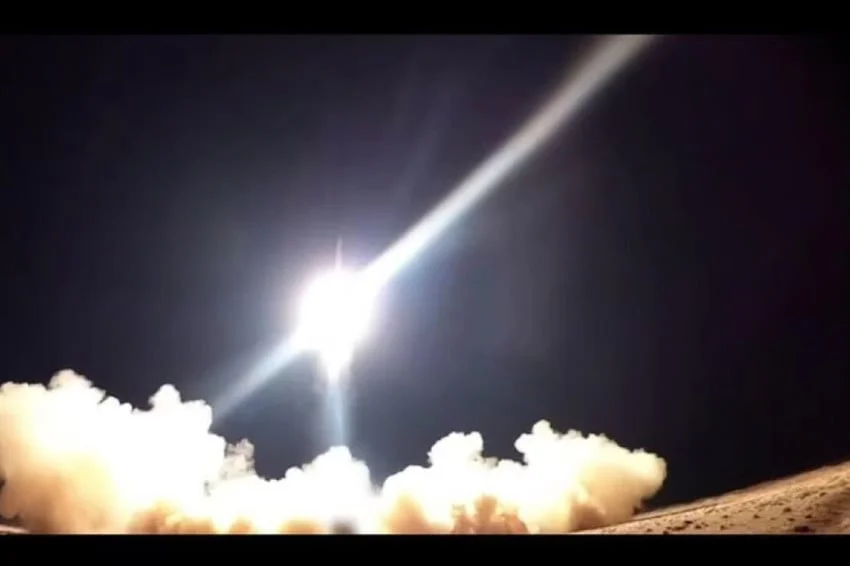
The Pentagon has confirmed the deaths of two United States military service members and the unaccounted status of a third following a significant missile and drone attack launched by Iran against an American military facility in Jordan. The brazen assault, which occurred on Saturday, marks a grave escalation in the already heightened tensions between the U.S. and Iran, and underscores the growing regional instability.
Details of the Attack and Casualties
U.S. Central Command (CENTCOM) released a statement on Saturday detailing the tragic outcome of the assault. The statement indicated that American forces, alongside allied partners, were actively engaged in defending the military site against a barrage of Iranian ballistic missiles and kamikaze drones. The exchange resulted in the aforementioned casualties.
"In addition to the fatalities, four other U.S. service members sustained injuries and were medically evacuated to a Jordanian hospital. They have since been released," the CENTCOM statement clarified, providing an update on the wounded.
The gravity of the situation was further emphasized by a post on X (formerly Twitter) by U.S. Secretary of War Pete Hegseth, who confirmed the deaths of the two service members. Hegseth’s statement conveyed a message of resolve, stating, "Their sacrifice only strengthens our determination."
This incident represents the first confirmed fatalities of U.S. personnel since the current phase of conflict between Washington and Tehran intensified earlier this month. According to reports from Axios on Sunday, July 19, 2026, this brings the total number of U.S. military deaths to 16 since the United States and Israel initiated their military campaign against the Islamic Republic in late February. The specific nature of the facility targeted and the exact timing of the attack remain points of intense scrutiny.
Iranian state media, meanwhile, has published footage purportedly showing a large fire at the Al-Muwaqqar Air Base, which is operated by the U.S. in Jordan, in the aftermath of the Iranian missile and drone offensive. The images, if authenticated, offer visual corroboration of the destructive power of the attack.
Background and Escalation of Tensions
The attack on U.S. forces in Jordan does not occur in a vacuum. It is the latest development in a rapidly deteriorating security landscape in the Middle East, significantly influenced by the ongoing conflict between Israel and Hamas, which began on October 7, 2023, with Hamas’s unprecedented attacks on Israel. This conflict has triggered broader regional instability, drawing in various militant groups and leading to increased confrontations between Iran-backed militias and U.S. forces stationed in the region.
For months, U.S. military installations in Iraq and Syria have been subjected to near-daily drone and rocket attacks, largely attributed to Iran-aligned militias seeking to pressure the U.S. to withdraw its troops and retaliate for American support of Israel. However, the attack in Jordan represents a significant departure, directly targeting U.S. personnel on the territory of a key regional partner and employing more sophisticated weaponry, including ballistic missiles.
The U.S. has consistently accused Iran of orchestrating or enabling these attacks through its support for groups like Kataib Hezbollah in Iraq and Syria, and Hezbollah in Lebanon. Iran, for its part, has often denied direct involvement while asserting its right to support "resistance movements."
The deployment of U.S. forces in Jordan is part of a broader regional security architecture aimed at deterring aggression and ensuring stability. Jordan, a long-standing U.S. ally, hosts a number of U.S. military personnel and assets, and plays a crucial role in regional intelligence sharing and counter-terrorism operations. An attack on these forces on Jordanian soil therefore carries significant diplomatic and strategic implications for both Amman and Washington.
Chronology of Events (Inferred and Reported)
While a precise minute-by-minute account may not be publicly available, a general timeline can be pieced together from the available information and the broader context:
- Late February 2026: U.S. and Israel launch their military campaign against the Islamic Republic of Iran. This action, as reported by Axios, serves as a backdrop for subsequent retaliatory measures.
- Early July 2026: Tensions between the U.S. and Iran escalate significantly, leading to a perceived increase in hostile actions.
- Friday (Date unspecified, likely July 18, 2026, based on Saturday’s announcement): Iran launches a coordinated missile and drone attack against a U.S. military facility in Jordan.
- During the attack: U.S. and partner forces attempt to defend the facility. Casualties are sustained.
- Post-attack (Friday/Saturday): Injured U.S. service members are evacuated to Jordanian hospitals. Media reports emerge, and Iranian state media publishes footage of the aftermath.
- Saturday, July 19, 2026: Pentagon, through CENTCOM, officially confirms the deaths of two U.S. service members and the missing status of a third. Secretary of War Pete Hegseth reiterates the fatalities. U.S. Central Command provides further details on the injured and evacuated personnel.
Supporting Data and Strategic Context
The deployment of U.S. military personnel in the Middle East is extensive, with thousands of troops stationed across bases in countries like Iraq, Syria, Kuwait, Qatar, Bahrain, and the United Arab Emirates, in addition to Jordan. These forces are tasked with various missions, including counter-terrorism, deterring regional adversaries, and supporting allies.
The use of ballistic missiles and kamikaze drones by Iran in this attack is particularly noteworthy. Ballistic missiles are capable of delivering payloads over long distances with significant destructive power, while kamikaze drones, or loitering munitions, can be guided to their targets with precision, making them difficult to intercept. The combination of these weapons suggests a deliberate and sophisticated attempt to inflict maximum damage and casualties.
The reported footage of the fire at Al-Muwaqqar Air Base, if confirmed, would indicate the success of at least some elements of the Iranian attack, highlighting potential vulnerabilities in U.S. air defense systems or the sheer volume and sophistication of the assault.
Official Responses and International Reactions (Inferred)
United States: The official statements from the Pentagon and Secretary Hegseth convey a message of sorrow for the loss of life but also a steadfast resolve to respond. The U.S. has a history of retaliating against attacks that result in American casualties, and this incident is likely to trigger a measured but firm response. The nature of this response will be closely watched, as it could further escalate the conflict. President Biden’s administration has been under increasing pressure to take a stronger stance against Iran’s destabilizing activities in the region.
Iran: Iranian state media’s reporting of the event and the release of footage suggest a degree of official acknowledgment and possibly a projection of strength. Iran’s consistent narrative has been one of defiance against perceived U.S. and Israeli aggression. Their actions in this instance are likely framed internally as a legitimate response to perceived provocations.
Jordan: As the host nation, Jordan will undoubtedly be under immense pressure to address the security breach on its territory and reassure its allies. King Abdullah II has consistently advocated for de-escalation and regional stability, and this attack directly challenges those efforts. Jordan’s cooperation with the U.S. on security matters is crucial, and the government will need to balance its relationship with the U.S. with its own security concerns and regional dynamics. Official statements from Amman are expected, likely condemning the attack and reaffirming its commitment to regional security in coordination with its partners.
Regional Allies and International Community: Other regional powers, including Saudi Arabia, the United Arab Emirates, and other Arab nations, will likely express concern over the escalating tensions. These countries have their own complex relationships with Iran and have often found themselves caught in the crossfire of proxy conflicts. The international community, particularly European nations and the United Nations, will likely call for restraint and de-escalation, emphasizing the need to avoid a wider regional conflagration that could have severe global economic and humanitarian consequences.
Broader Impact and Implications
The attack on U.S. forces in Jordan carries significant implications:
- Escalation of Conflict: This incident represents a dangerous escalation, moving beyond attacks on U.S. forces in Iraq and Syria to a direct assault on a key partner nation’s soil, resulting in American fatalities. It raises the specter of direct military confrontation between the U.S. and Iran, or a significant escalation of proxy warfare.
- Regional Destabilization: The Middle East is already a tinderbox. This attack further inflames existing tensions and could embolden other militant groups to launch similar assaults, leading to a wider regional conflict. The involvement of ballistic missiles indicates a growing sophistication and willingness by Iran and its proxies to employ more potent weaponry.
- U.S. Policy Reassessment: The Biden administration will be forced to re-evaluate its strategy in the region. The current approach of deterrence and targeted sanctions may be deemed insufficient. The pressure to retaliate forcefully will be immense, but the administration will also need to weigh the risks of a wider war.
- Impact on Jordanian-U.S. Relations: The attack on U.S. forces on Jordanian soil will undoubtedly strain relations, even as it strengthens the need for continued security cooperation. Jordan will be under pressure to demonstrate its ability to protect its airspace and military facilities.
- Economic and Global Ramifications: A significant escalation in the Middle East could have severe repercussions for global energy markets, supply chains, and international trade, given the region’s importance as a transit hub for oil and gas.
The coming days and weeks will be critical in determining the trajectory of this escalating crisis. The measured, yet firm, response from the United States will be closely scrutinized, as will the reactions of Iran and other regional and international actors. The loss of life underscores the grave human cost of these geopolitical tensions and the urgent need for de-escalation and diplomatic solutions.