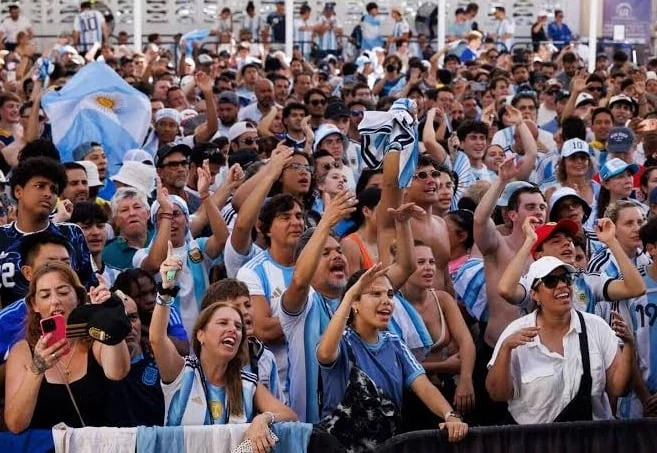
The bitter taste of defeat for Argentina in the FIFA World Cup 2026 final against Spain, a match that concluded with a narrow 1-0 victory for the Spanish side, continues to be overshadowed by a series of unfolding controversies. Beyond the on-field confrontations that captured global attention, new reports have emerged detailing the detention of several family members of Argentine players by United States law enforcement. These incidents reportedly occurred within the spectator stands of MetLife Stadium, adding a somber and troubling dimension to an already emotionally charged event.
Argentina’s quest to defend their world champion title was ultimately thwarted by a decisive goal from Spain’s Ferran Torres in the extra time of the final, which took place on Monday, July 20, 2026 (WIB). The match itself was a high-stakes affair, marked by intense physicality and dramatic turns of events, including a red card issued to Argentine midfielder Enzo Fernandez. However, it was the post-match fallout, specifically the altercations that erupted after the final whistle, that ignited widespread discussion and, as now appears, led to further complications off the pitch.
Escalation of Incidents: From Field to Stands
Initial reports of disturbances focused on the on-field skirmishes between players from both nations. These moments, often fueled by the immense pressure and disappointment of a World Cup final, are not entirely uncommon in the sport. However, the situation reportedly escalated beyond the playing field, spilling into the spectator areas designated for the families and close associates of the Argentine squad.
According to information initially broadcast by Colombian television station Noticias Caracol, and subsequently corroborated by several international media outlets, U.S. police forces intervened due to disturbances within a special enclosure allocated to the families of the Argentine players. The reports indicated that a significant number of individuals with direct ties to the "Albiceleste" squad were taken into custody by law enforcement officers. While the exact number remains unconfirmed, early accounts suggested it could be as many as a dozen or more individuals.
Further claims from the same media sources suggested that the Argentine players themselves delayed their procession to the medal ceremony podium. This delay, it is alleged, was due to their initial decision to approach the stands where the disturbances had occurred, presumably to ascertain the situation or offer support to their families. However, as of the latest updates, precise details regarding the identities of those detained, the specific nature of their alleged involvement, or the definitive cause of the incidents remain undisclosed.
A Timeline of Disputed Events
The narrative of the World Cup 2026 final, from its dramatic conclusion to the unfolding controversies, can be traced through a series of key moments:
- July 20, 2026 (WIB): The FIFA World Cup 2026 Final kicks off at MetLife Stadium, New Jersey. The match is a tense and closely fought contest between Argentina and Spain.
- Late in the Match: A pivotal moment occurs when Argentine midfielder Enzo Fernandez receives a red card, reducing his team to ten men. This event significantly alters the dynamics of the game.
- End of Regular Time: The score remains deadlocked, forcing the match into extra time.
- Extra Time: Spain scores the decisive goal through Ferran Torres, securing their victory and ending Argentina’s reign as world champions.
- Final Whistle: Immediately following the conclusion of the match, on-field confrontations erupt between players from both sides, drawing the attention of officials and spectators.
- Post-Match: Reports begin to emerge of disturbances in the stands, specifically within the area designated for Argentine players’ families. U.S. law enforcement intervenes.
- Alleged Player Delay: Media reports claim Argentine players delayed their approach to the medal ceremony to address the situation in the stands.
- Ongoing Investigations: As of the time of reporting, official statements from U.S. authorities regarding the detentions are pending, and the Argentine Football Association (AFA) has yet to issue a formal response.
Supporting Data and Context
The MetLife Stadium, located in East Rutherford, New Jersey, is a colossal venue with a seating capacity exceeding 80,000, making it one of the largest stadiums in the United States. Its selection as the host for the FIFA World Cup 2026 final underscores the global significance of the event and the logistical complexities involved in managing security for such a high-profile international gathering. The presence of numerous dignitaries, VIPs, and the families of participating athletes necessitates stringent security protocols, designed to ensure the safety and well-being of all attendees.
The World Cup, a quadrennial tournament, is the most prestigious association football competition in the world, attracting billions of viewers globally. The stakes are astronomically high, not only for the athletes on the field but also for the nations they represent. Victories and defeats carry immense national pride and economic implications. The emotional intensity of a final, particularly one involving a defending champion like Argentina, is therefore understandable. However, this intensity must be managed within the framework of sportsmanship and adherence to security regulations.
Official Responses and the Silence of Authority
As of the latest dispatches, official confirmation regarding the number of individuals detained, their specific identities, and the charges, if any, that may be brought against them, is conspicuously absent. Neither the U.S. Department of Homeland Security, which typically oversees federal law enforcement operations in such contexts, nor the local law enforcement agencies responsible for stadium security have released a formal statement addressing the alleged incidents.
Similarly, the Argentine Football Association (AFA), the governing body for football in Argentina, has remained silent on the matter. In high-profile cases involving national teams, especially after a significant event like a World Cup final, the AFA would usually be expected to issue a statement, at the very least acknowledging the reports and indicating that they are investigating or awaiting information. Their current lack of comment could suggest that they are either gathering information or that the situation is still fluid and being addressed through unofficial channels.
The absence of official statements creates a vacuum that can be filled with speculation. However, it is crucial to rely on verified information. The initial reports from Noticias Caracol and subsequent international media coverage provide the primary basis for understanding the unfolding events. The delay in official pronouncements may be attributed to the ongoing nature of any potential investigation, the need for proper verification of identities and circumstances, or internal procedural protocols within law enforcement agencies.
Broader Impact and Implications
The controversies surrounding the World Cup 2026 final extend beyond the immediate disappointment of the on-field result. The alleged detentions of family members, if confirmed, could have several broader implications:
- Reputational Damage: For the tournament organizers and the host nation, such incidents can tarnish the image of the event and raise questions about security arrangements and crowd management. A World Cup final is a global showcase, and negative press can have lasting effects.
- Player Welfare and Morale: The well-being of players is paramount. If their family members were involved in an incident that led to detention, it would undoubtedly create significant emotional distress and distraction for the athletes, potentially impacting their immediate post-match experience and their return home.
- International Relations: While seemingly a localized incident, any perceived mistreatment of citizens of one nation by another can, in some circumstances, lead to diplomatic discussions. However, this is unlikely to be a significant factor unless the detentions are found to be unjustified or discriminatory.
- Security Protocols Review: Regardless of the specific circumstances, any incident involving disturbances and detentions at a major sporting event will likely trigger a review of security protocols by FIFA and the host nation’s authorities. This could lead to stricter measures for future events.
- Fan Behavior and Responsibility: The incidents also highlight the ongoing challenge of managing fan behavior at large-scale sporting events. While players are expected to maintain composure, the actions of spectators, including family members of players, are also subject to rules and regulations. The alleged disturbances could point to a breakdown in maintaining order within the designated family enclosures.
The narrative of Argentina’s defeat in the World Cup 2026 final is, therefore, becoming a complex tapestry woven with athletic performance, on-field drama, and now, off-field controversies. The coming days are crucial for the release of official statements that can clarify the facts, provide a definitive account of the events in the stands, and address the concerns that have arisen in the wake of this momentous sporting occasion. Until then, the shadow of controversy will continue to loom over what should have been a celebration of footballing excellence. The world will be watching for the next developments in this unfolding story.