
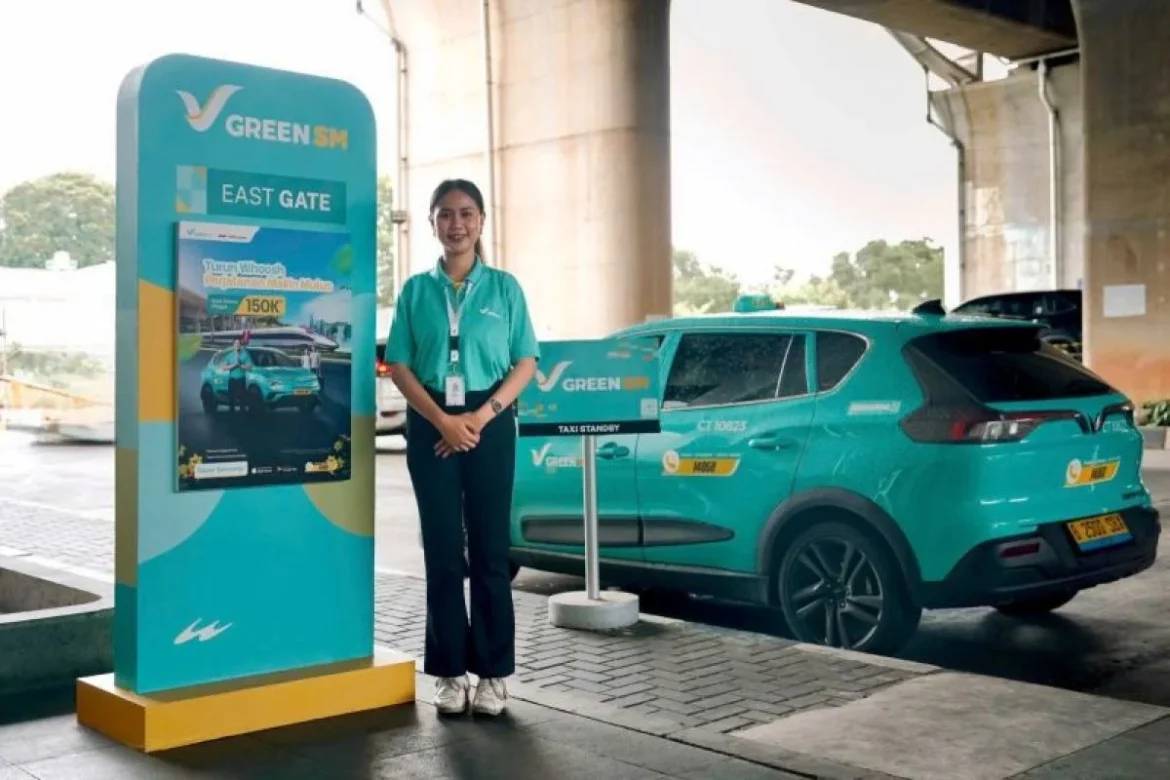
The urban transport landscape of Indonesia’s bustling capital experienced a notable shift on September 16, 2026, as Green SM, the prominent Vietnamese ride-hailing and green mobility enterprise, officially rolled out its electric motorcycle service in Jakarta. Known primarily for its pioneering electric taxi operations in the region, the company’s latest expansion marks a significant milestone: Indonesia has now officially become the very first international market outside of Vietnam to host Green SM’s two-wheeled electric vehicle (EV) fleet.
This strategic deployment introduces a modern, eco-friendly commuting alternative for urban residents while simultaneously opening new avenues of livelihood for local drivers. By leveraging electric scooters supplied by VinFast, Green SM is attempting to cement its footprint in Southeast Asia’s rapidly growing electric vehicle ecosystem. The launch is underpinned by a variety of flexible driver-centric financial structures, including an accessible rent-to-own mechanism designed to empower everyday workers.
Phase One Rollout: Strategic Footprint Across Key Jakarta Sectors
For its initial launch phase, Green SM Bike has established operational footholds across carefully selected urban zones. Services are currently live in targeted areas within South Jakarta, West Jakarta, and Central Jakarta—regions characterized by dense commuter traffic and high demand for agile, point-to-point transportation.
To power this burgeoning fleet, Green SM has introduced two distinct electric scooter models manufactured by VinFast: the VinFast Evo and the Feliz II. Both vehicles have been engineered specifically for dense urban navigation, offering zero tailpipe emissions, lower maintenance requirements, and sufficient range to handle typical daily metropolitan shifts. Concurrently, the company is actively expanding its supporting infrastructure, investing in localized battery-swapping stations and dedicated charging hubs to ensure seamless, uninterrupted operations for its drivers throughout the metropolis.
Industry analysts note that Jakarta’s acute congestion and strong governmental push toward carbon neutrality make it an ideal testing ground for commercial EV deployment. By targeting short-to-medium-range urban trips via motorcycles, Green SM is directly addressing the core of Jakarta’s daily mobility needs, where motorcycles traditionally dominate the modal share.
Flexible Financial Schemes and the Rent-to-Own Model
A focal point of Green SM’s market entry strategy is its driver acquisition model, which seeks to lower the traditional financial barriers associated with entering the ride-hailing industry. Rather than requiring drivers to purchase vehicles upfront, the company has introduced a structured rent-to-own framework.
Under this specific program, participating drivers can utilize a VinFast electric motorcycle for a daily fee starting at just Rp39,000. The structure is designed as a multi-year commitment; drivers who successfully complete a two-year operational program under the established guidelines ultimately earn full ownership of the vehicle. This approach provides long-term asset-building potential for drivers who might otherwise struggle to secure traditional vehicle financing.
For individuals hesitant to commit to a long-term ownership track, Green SM offers alternative contractual arrangements. Drivers can opt for short-term rental agreements spanning three, six, or twelve months. These flexible agreements require a modest initial deposit of Rp150,000. Furthermore, to ease the transition for newly onboarded partners during their initial settling-in period, Green SM has incorporated promotional structures into certain contracts, including a guaranteed earnings floor of up to Rp160,000 per day during the first two months of operation, supplemented by performance-based bonuses.
Comprehensive Recruitment Standards and Safety Protocols
Operating an emerging commercial EV fleet requires stringent adherence to safety and service quality standards. Consequently, Green SM has instituted a comprehensive recruitment and training pipeline for prospective driver-partners in Jakarta.
Candidates applying to become Green SM Bike operators must satisfy specific demographic and administrative criteria. Eligible applicants must be between the ages of 21 and 54 years and six months, possess an active Class C driving license (SIM C), and provide verified identification documents including a National Identity Card (KTP), Family Card (KK), and a Police Clearance Certificate (SKCK). Additionally, candidates must own a reliable smartphone capable of running the ride-hailing application efficiently.
Beyond basic documentation, prospective drivers undergo assessments regarding their familiarity with digital navigation tools and their geographical knowledge of greater Jakarta. Once selected, all incoming partners are required to complete mandatory training modules focusing on defensive driving, customer service standards, and the technical operation of electric motorcycles.
While the application and selection process itself is free of charge, successful candidates advancing to the vehicle handover stage are required to submit the standard Rp150,000 security deposit. This meticulous vetting and training process aligns closely with broader regulatory expectations in Indonesia, where transport authorities have increasingly emphasized the importance of safety standards across commercial vehicle fleets.
Broader Economic Implications and Evolving Market Dynamics
The introduction of Green SM Bike arrives at a critical juncture for Indonesia’s transportation sector, which is currently navigating a complex transition toward electrification. The country has set ambitious long-term carbon reduction targets, supported by various national incentives aimed at accelerating EV adoption across both private and commercial sectors.
From an economic standpoint, the availability of vehicles through structured leasing and rent-to-own formats provides a compelling value proposition for Jakarta’s gig economy workers. While the headline figure of Rp39,000 per day represents an operational cost rather than a purchase price, the framework offers a predictable expense model that drivers can factor into their daily earnings calculations. While actual daily take-home pay fluctuates based on completed trips, surge pricing, and performance incentives—with certain promotional programs estimating potential earnings of up to Rp160,000 daily—the predictability of the vehicle acquisition cost helps mitigate financial volatility for independent contractors.
At the same time, Green SM’s ongoing expansion in Indonesia has not been without regulatory scrutiny. The company’s broader operations in the region, including its concurrent electric taxi services, have previously drawn attention from national transport authorities—such as the Ministry of Transportation and Korlantas Polri (the Indonesian National Police Traffic Corps)—following localized operational incidents. In response, regulatory bodies and corporate leadership have engaged in collaborative dialogues focusing on rigorous safety compliance, driver welfare, and infrastructure preparedness. Observers view these interactions as a natural component of integrating novel transport technologies into established regulatory frameworks.
Future Outlook and Expansion Prospects
Looking ahead, Green SM’s leadership has indicated that the Jakarta launch of Green SM Bike is merely the first phase of a broader regional strategy. While operations are currently concentrated in specific high-demand districts of South, West, and Central Jakarta, the enterprise retains the operational capacity and strategic ambition to scale its two-wheeled footprint into surrounding satellite cities—such as Bogor, Depok, Tangerang, and Bekasi (Jabodetabek)—and potentially to other major metropolitan areas across the Indonesian archipelago.
The success of this rollout will likely serve as a vital benchmark for other foreign and domestic green mobility firms eyeing Southeast Asia’s massive ride-hailing market. By successfully merging accessible vehicle financing, sustainable VinFast hardware, and structured driver training, Green SM is positioning itself as a central player in Jakarta’s evolving urban transit ecosystem. As infrastructure matures and consumer familiarity with electric two-wheelers deepens, initiatives like Green SM Bike are poised to play a transformative role in redefining how millions of urban Indonesians commute on a daily basis.
