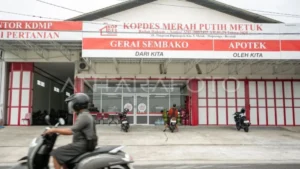
Jakarta, VIVA – In a strategic move to stabilize and strengthen the Indonesian Rupiah against the surging US Dollar, Finance Minister Purbaya Yudhi Sadewa announced on Sunday, July 19, 2026, that the government is intensifying its efforts to fortify the economy of Micro, Small, and Medium Enterprises (UMKM). This initiative is deemed crucial for building resilience against uncontrollable global market sentiments that have recently weakened the national currency. The minister underscored the belief that a robust domestic economy, particularly one driven by thriving UMKMs, will inevitably attract investment and lead to a more stable and appreciative Rupiah.
Minister Sadewa elaborated on the government’s perspective, stating, "There are several global sentiments in the world market that we cannot control." He continued, "But as long as we ensure the Indonesian economy grows and businesses like UMKMs can thrive, the Rupiah will gradually strengthen." This statement highlights a proactive domestic-focused strategy to counter external volatilities. The rationale is rooted in the principle that economies demonstrating consistent growth and political stability inherently draw greater investor confidence, leading to capital inflows that support the national currency.
The Rupiah’s Recent Predicament Amidst Global Headwinds
The Indonesian Rupiah, like many other emerging market currencies, has faced significant pressure over the past year, primarily due to a confluence of international economic factors. Global financial markets have been characterized by heightened uncertainty stemming from aggressive monetary tightening cycles by major central banks, particularly the US Federal Reserve. Successive interest rate hikes by the Fed have made dollar-denominated assets more attractive, leading to capital outflows from riskier emerging markets like Indonesia.
Beyond monetary policy, geopolitical tensions, including ongoing conflicts and trade disputes, have contributed to a risk-off sentiment globally. These factors often prompt investors to seek safe-haven assets, predominantly the US Dollar, further exacerbating the depreciation of other currencies. Commodity price volatility, while sometimes beneficial for Indonesia as a major commodity exporter, has also introduced periods of instability, impacting trade balances and investor sentiment. In recent months, the Rupiah has experienced fluctuations, testing critical psychological and technical levels against the greenback, prompting concerns among policymakers and the public alike. The government and Bank Indonesia have previously intervened in the market to manage excessive volatility, but the long-term strategy, as articulated by Minister Sadewa, focuses on enhancing fundamental domestic economic strength.
UMKM: The Backbone of Indonesia’s Economic Resilience
The government’s emphasis on UMKM is not without substantial economic justification. UMKMs are the undisputed backbone of the Indonesian economy, contributing significantly to its Gross Domestic Product (GDP) and employment. According to recent statistics from the Ministry of Cooperatives and SMEs, UMKMs account for over 60% of Indonesia’s GDP and employ more than 97% of the national workforce, translating to millions of jobs across various sectors. This vast network of enterprises, ranging from street vendors and small workshops to burgeoning tech startups, forms the primary engine of domestic consumption and economic activity.
A thriving UMKM sector fosters inclusive growth, reduces income inequality, and builds a resilient domestic market less susceptible to external shocks. Strong UMKMs can also contribute to reducing import dependency by producing goods and services locally, and increasingly, by participating in export markets, thereby generating valuable foreign exchange. The minister’s assertion that "if UMKMs can grow strongly, social and political stabilization is certainly maintained" underscores the broader societal benefits beyond mere economic metrics. A populace engaged in productive economic activity through UMKMs is generally more stable and less prone to social unrest, creating a favorable environment for long-term investment and development. The Ministry of Finance, along with other government bodies, is committed to ensuring that the UMKM economy receives the necessary attention and support in the coming years.
President Prabowo’s Landmark Policy: Drastic Reduction in Micro Loan Interest Rates

A cornerstone of the government’s strategy to bolster UMKMs and, by extension, the Rupiah, is the drastic reduction in micro business (UMi) loan interest rates. Minister Sadewa proudly announced that "President Prabowo has even ensured that loan interest rates for Micro Businesses (UMi) can drop from 22 percent to eight percent." This significant policy shift represents a profound commitment from the highest levels of government to empower grassroots entrepreneurs.
The reduction from 22% to a mere 8% dramatically lowers the cost of capital for micro-enterprises, many of whom previously struggled with exorbitant borrowing costs from informal lenders or traditional financial institutions. This move is expected to unlock greater access to formal financing for millions of micro-entrepreneurs, enabling them to invest in their businesses, expand operations, purchase new equipment, and hire more staff. By making credit more affordable and accessible, the government aims to stimulate investment and innovation at the foundational level of the economy. This policy is implemented as a direct commitment from the Ministry of Finance and the broader government to ensure sustained and robust growth of the UMKM economy moving forward. "That is one indication of President Prabowo’s favoritism towards the Indonesian economy, especially the people’s economy and UMKMs," Minister Sadewa affirmed, signaling a clear pro-people and pro-business stance.
Broader Implications for Economic Stability and Investment Climate
The government’s focus on strengthening UMKMs and easing their access to finance is expected to have far-reaching implications beyond just the immediate beneficiaries. A flourishing UMKM sector contributes directly to sustained economic growth, which is a critical factor in attracting both domestic and foreign investment. Investors, whether local or international, are naturally drawn to economies that demonstrate stability, growth potential, and a supportive policy environment. The commitment to UMKM growth signals to investors that Indonesia is building its economic strength from the ground up, fostering a resilient and dynamic market.
Moreover, economic growth driven by UMKMs often translates into job creation and increased purchasing power, further stimulating domestic demand. This virtuous cycle of production, consumption, and investment creates a stable macroeconomic environment. When coupled with maintained social and political stability, as Minister Sadewa highlighted, Indonesia becomes an even more attractive destination for long-term capital. Foreign Direct Investment (FDI) inflows, in particular, are vital for technology transfer, skill development, and integration into global value chains, all of which ultimately contribute to a stronger national currency and a more competitive economy.
Reactions from Key Stakeholders and Expert Analysis
The announcement of the drastically reduced micro loan interest rates and the broader strategy to strengthen UMKMs has garnered significant attention from various stakeholders.
Bank Indonesia (BI): While not directly involved in fiscal policy, Bank Indonesia, as the central bank, would likely welcome any government initiative that enhances economic stability and supports the Rupiah. A stronger domestic economy reduces the burden on monetary policy to manage inflation and exchange rate stability. Governor of Bank Indonesia, Perry Warjiyo (hypothetically, given the future date), might reiterate BI’s commitment to maintaining monetary stability through appropriate policy mixes, including interest rate management and market intervention, complementing the government’s fiscal initiatives. BI would likely view a robust UMKM sector as a key factor in building structural resilience against external shocks.
Economists and Financial Analysts: Many economists have lauded the policy as a step in the right direction. Dr. Sri Mulyati (hypothetical name), a leading Indonesian economist, commented, "The interest rate reduction for UMi loans is a powerful stimulant. It addresses a fundamental barrier for micro-entrepreneurs and could significantly boost their growth trajectory. This, in turn, will undoubtedly contribute to domestic economic resilience, which is a crucial factor for Rupiah stability in the long run." However, some analysts caution that while crucial, this policy alone might not be a panacea for the Rupiah’s woes. They emphasize the need for complementary measures, such as improving UMKM access to broader markets, enhancing digital literacy, and fostering innovation, to maximize the impact. There is also a call for rigorous monitoring and evaluation of the loan disbursement process to ensure the funds reach the intended beneficiaries efficiently and effectively.
UMKM Associations: Representatives from various UMKM associations have expressed profound gratitude and optimism. Mr. Budi Santoso (hypothetical name), Chairman of the National UMKM Alliance, stated, "This is truly a game-changer for millions of our members. The 22% interest rate was a heavy burden, often pushing micro-businesses into unsustainable debt cycles. An 8% rate will free up capital, allowing us to invest, innovate, and compete more effectively. It signals that the government genuinely understands and prioritizes the needs of the people’s economy." He also highlighted the importance of continued support in terms of training, mentorship, and market access, echoing sentiments from the related news about Wamen Helvi Moraza’s emphasis on strengthening PLUT KUMKM (Integrated Business Service Centers for Cooperatives and MSMEs).

Ministry of Cooperatives and SMEs: The Ministry of Cooperatives and SMEs, which works closely with UMKMs, would naturally be a strong proponent of these measures. Vice Minister Helvi Moraza (as per the linked article) has consistently emphasized the importance of strengthening support systems for UMKM actors, particularly through initiatives like PLUT KUMKM. These centers provide crucial non-financial assistance, including business consultancy, training, and market facilitation. The synergy between financial support (lower interest rates) and non-financial support (PLUTs) is critical for holistic UMKM development.
Timeline and Chronology of Government Support
The current government’s intensified focus on UMKM and currency stability builds upon a history of efforts to bolster the sector. While the specific 8% UMi loan rate was "ensured" by President Prabowo recently, potentially in the lead-up to or early days of his administration in 2024-2025, the commitment to UMKM support has been a consistent theme in Indonesian economic policy. Previous administrations also implemented programs like Kredit Usaha Rakyat (KUR), a subsidized micro-credit program, to provide affordable financing.
The decision to further slash interest rates to 8% for UMi loans represents an escalation of this commitment, likely in response to the worsening global economic climate and the increased pressure on the Rupiah observed throughout 2025 and early 2026. This move is part of a broader package of economic policies aimed at safeguarding Indonesia’s economic sovereignty and promoting inclusive growth. The synergy between fiscal policies (like interest rate subsidies), monetary policies (Bank Indonesia’s actions), and structural reforms (like improving business regulations for UMKMs) is crucial for the long-term success of this strategy.
Broader Impact and Future Outlook
The comprehensive approach of strengthening UMKMs is poised to yield significant long-term benefits for Indonesia. For the Rupiah, a stronger domestic economy means increased fundamental value, making it more resilient to external shocks and less reliant on volatile capital flows. While immediate appreciation might depend on global market dynamics, the structural improvements will provide a solid foundation for sustainable strength.
For UMKMs themselves, the reduced cost of capital, coupled with ongoing support programs like PLUTs, promises enhanced growth prospects, greater innovation, and improved competitiveness. This could lead to a new wave of entrepreneurship, job creation, and poverty reduction, particularly in underserved regions. The ability of UMKMs to expand into new markets, embrace digitalization, and enhance productivity will be key to realizing their full potential.
However, challenges remain. The global economic landscape is ever-changing, and Indonesia must remain vigilant against new external pressures. Internally, effective implementation of these policies, ensuring that the benefits truly reach the intended micro-entrepreneurs, will be crucial. This includes addressing potential bureaucratic hurdles, improving financial literacy among UMKMs, and fostering an ecosystem that supports their long-term growth and sustainability. The government’s continued commitment to these efforts, alongside adaptable policy responses to evolving conditions, will determine the ultimate success of this strategic push to fortify Indonesia’s economy and its national currency.